




Carolean Caned Back Chair
A carolean caned back chair brings stately presence to a room, pairing pierced carved woodwork with resilient woven seating.
Carolean Caned Back Chair
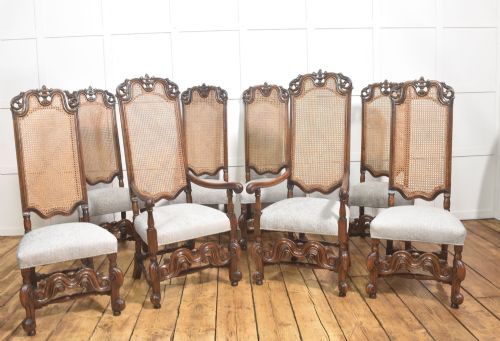
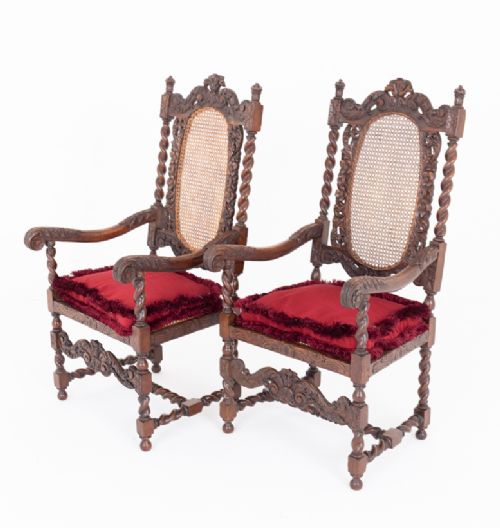
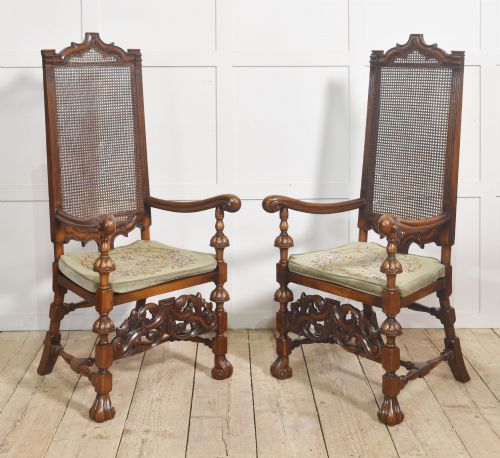
A carolean caned back chair is a form of antique seating defined by a tall, upright back panel filled with woven plant material and framed by elaborate woodwork. The pieces gathered under this search phrase span genuine late seventeenth-century examples alongside later revival interpretations produced across the nineteenth and early twentieth centuries.
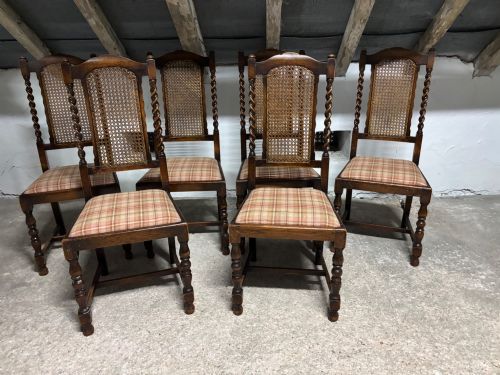
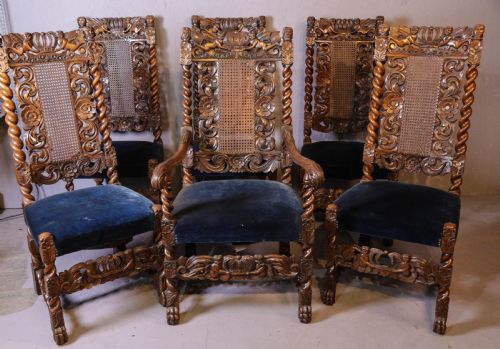
Buyers encounter single armchairs, matching pairs, and extensive dining sets comprising side chairs and carvers. Forms range from rustic country seating to heavily carved walnut and oak frames created during revival periods.
Original seventeenth-century specimens sit alongside revival pieces dating from the Victorian, Edwardian, and 1920s eras. Walnut and oak dominate the surviving material record, often paired with woven cane seats and back panels.
How they were made
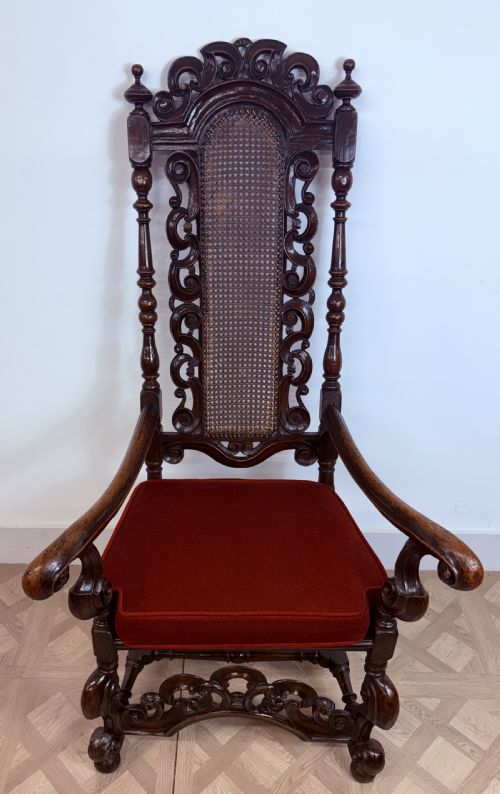
Frames are constructed from sturdy timbers such as oak and walnut, joined using traditional methods and shaped with deep, scrolling relief carvings along the crest rails and front stretchers. Artisans shaped these structural members by hand, applying pierced ornamentation to the upright splats and framing elements.
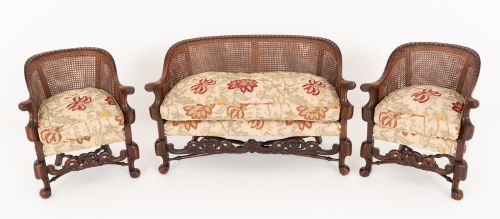
Seating panels and back inserts utilise woven cane and rattan, threaded through drilled holes in the wooden framework to create a flexible, supportive mesh. Upholstery fabric, velvet, and secondary woven textiles also appear on select variants and accompanying seating suites.
The documented pieces span from seventeenth-century originals through Victorian and Edwardian revivals up to nineteen-twenty productions.
What varies in quality
The depth and crispness of the carved ornamentation separate standard production from finer work, as skilled carvers achieved pronounced relief and intricate detail in the timber. The density and uniformity of the hand-woven cane work also indicate the level of craftsmanship invested in the piece.
Period authenticity and timber selection distinguish individual examples, with choice walnut figures commanding attention alongside robust oak frames. The integrity of the original joinery and the survival of untouched surfaces dictate the standing of each chair.
The Carolean Caned Back Chair Glossary
- Cane
- Plant material derived from the stem of rattan palms, split and woven to form resilient panels for chair backs and seats. This breathable mesh provides flexible support while maintaining a light visual profile.
- Carolean
- Pertaining to the reign of King Charles II, characterised by lavishly carved woodwork, scrolled legs, and sumptuous upholstery. Revival versions of this aesthetic emerged strongly during the nineteenth and early twentieth centuries.
- Stretcher
- A horizontal wooden brace connecting the legs of a chair to provide structural rigidity. These elements are frequently turned or carved in sympathy with the upper frame.
- Bergere
- An enclosed upholstered armchair featuring cane or wicker side panels within a wooden frame. This form provides a deep, comfortable seat often accompanied by loose cushions.
- Jacobean Revival
- A nineteenth-century design movement recreating the heavier architectural forms and dark oak finishes of the early seventeenth century. Pieces from this era often feature linear frames and geometric mouldings.
Carolean Caned Back Chair: Frequently Asked Questions
How do I spot a true period piece?
Original pieces display authentic tool marks, timber oxidation, and structural wear consistent with late seventeenth-century production methods. Examining the joinery and the underside of the frame reveals the construction age.
Revival pieces from the Victorian and Edwardian eras show machine assistance or different timber preparation techniques. Comparing the carving depth helps separate seventeenth-century originals from later interpretations.
Can I use these chairs every day?
Most sturdy oak and walnut frames accommodate regular daily use when placed on even flooring. The structural integrity of the timber supports normal seating arrangements without issue.
Care should be taken with older woven cane panels, which benefit from occasional moisture maintenance to prevent snapping. Using seat pads can reduce direct pressure on fragile historic cane.
How do I care for antique cane?
Cane requires moderate humidity to remain flexible and prevent the natural fibres from becoming brittle. Wiping the woven surface with a damp cloth periodically maintains the moisture level of the material.
Avoid placing these chairs near direct heat sources or in overly dry environments. Gentle cleaning preserves the natural finish of the wood and the integrity of the weave.
What is the difference between revival styles?
Carolean revival pieces lean towards exuberant scrolling carvings, pierced crest rails, and lighter walnut frames. They reflect the ornate tastes of the restoration court.
Jacobean revival items utilise darker oak, straighter lines, and more austere geometric turnings. Understanding these decorative shifts helps date nineteenth-century interpretations accurately.