


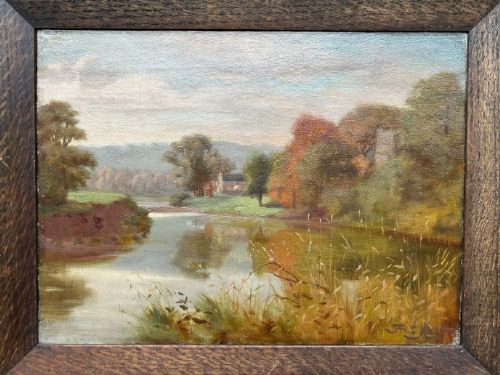
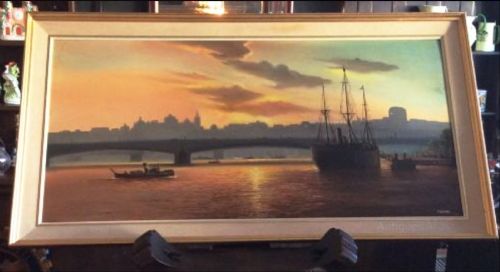
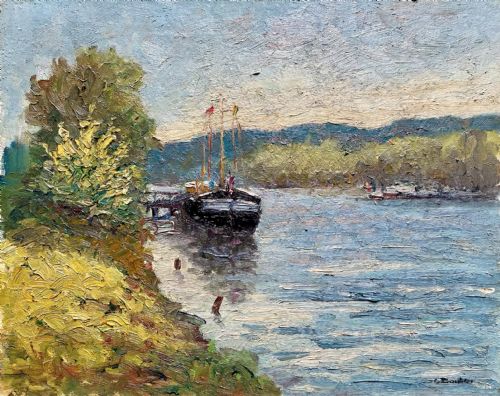
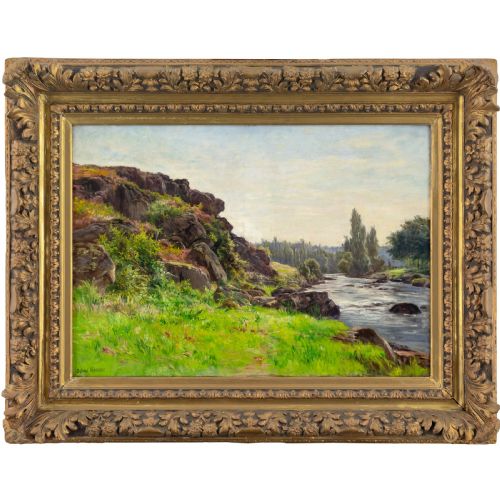
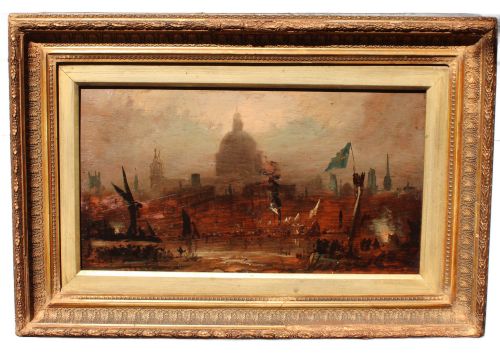
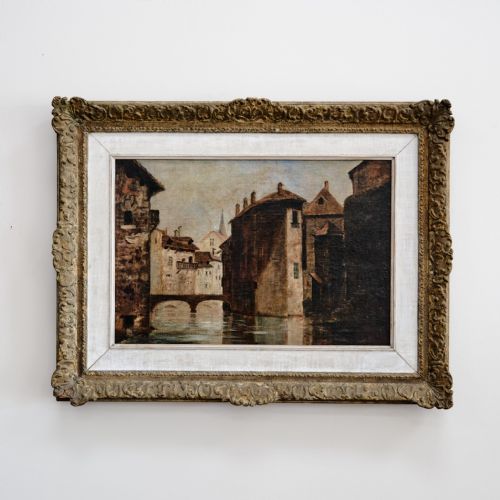
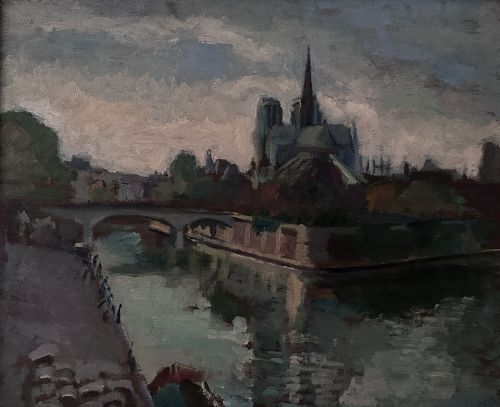
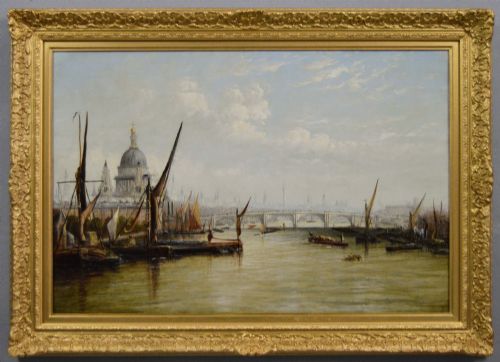

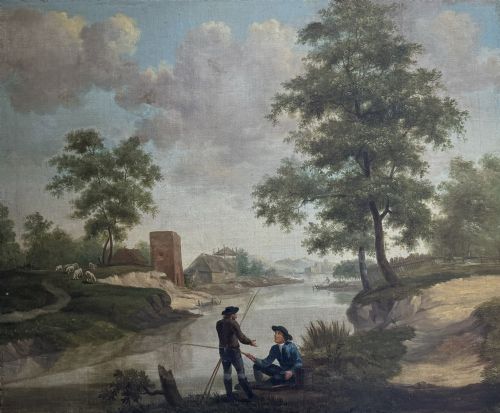
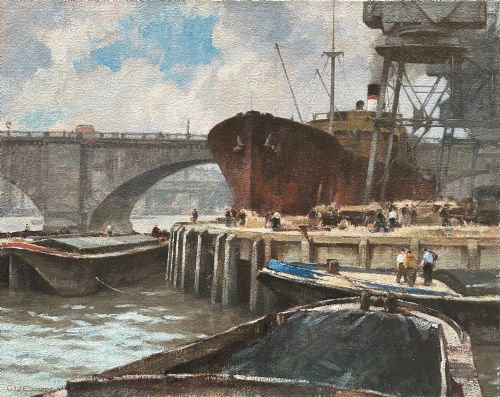
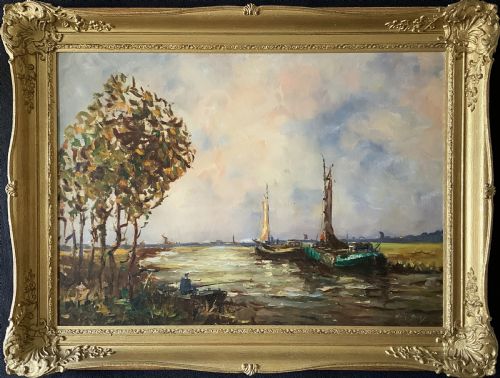
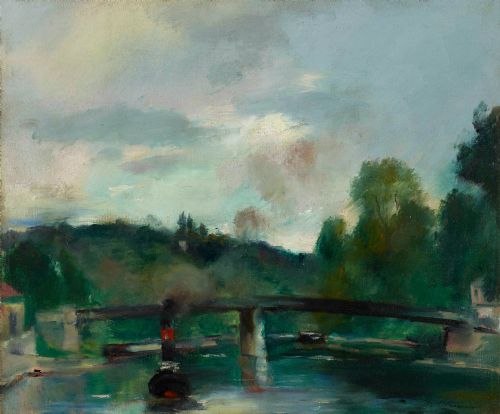
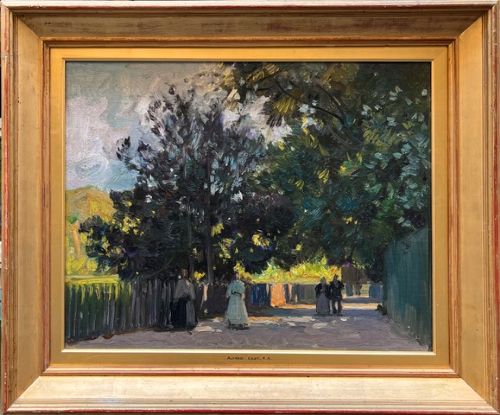
Canvas River Landscape Painting
These canvas river landscape painting selections bring the quiet movement of historic waterways straight into domestic rooms.
Canvas River Landscape Painting
A canvas river landscape painting captures waterways, bridges, and pastoral riverbanks rendered in oils across the nineteenth and twentieth centuries. Works span British, French, and Dutch traditions, ranging from intimate nineteenth-century studies to mid-twentieth-century rural and urban compositions.
Buyers encounter framed original oils produced during the Victorian era alongside later impressionist and post-impressionist interpretations. Common subjects include rural rivers, industrial bridges, and quiet tributaries populated by figures, cattle, or boats.
The selection reflects diverse regional schools, capturing specific locales from the Thames and Yorkshire rivers to continental waterways. These works provide a direct window into historical topography and shifting artistic movements.
How They Were Made
Artists applied oil paint directly onto prepared woven canvas grounds, frequently utilising wooden stretchers or mounting canvas onto board. Pigments were manipulated using bristle brushes and palette knives to build texture, depth, and luminosity across the water and sky.
Many works incorporate supportive grounds of gesso over wooden panels or stretchers to stabilise the fabric support before painting. Finished canvases were housed within decorative period wooden and gilt frames designed to complement the composition.
Listings feature nineteenth-century and twentieth-century oil paintings on canvas and board, recording British, French, and Dutch landscape traditions.
What Varies in Quality
Quality rests upon the artist's handling of light, atmospheric perspective, and fluid movement within the water. Superior examples demonstrate confident brushwork and precise tonal control that create genuine depth and spatial realism.
The sophistication of the composition and the preservation of the original pigment layer dictate the standing of a piece. Stronger works retain their original textural impasto and surface varnish without heavy, obscuring overpaint.
Kenneth Cozens·George Graham·Frederick Marriott·Gabriel Mathieu·Francis Moltino·Willem Bos·Henri Ottmann·Sir Alfred East·Albert Rieger·Herbert Royle·Paul Desire Trouillebert·Henry H Parker·Sydney Yates Johnson·John Horace Hooper·John Ferneley Senior·Honore Cavaroc·Archibald Kay·James Aumonier·AF de Breanski·Owen Bowen·Henry Cooper·J F Robson·Charles W Oswald·J W Law·Fred A Simmonds
The Canvas River Landscape Painting Glossary
- Canvas
- A heavy woven fabric stretched across a wooden frame to serve as a stable painting surface for oil colours.
- Oil Paint
- A slow-drying paint made by mixing pigments with a drying oil, typically linseed, allowing for rich blending and textured impasto.
- Gesso
- A primer mixture consisting of a binder mixed with chalk or pigment, applied to prepare canvas or wood for painting.
- Gold Leaf
- Very thin sheets of beaten gold applied to wooden frames and mouldings for decorative enrichment.
- Barbizon School
- A nineteenth-century French art movement of painters dedicated to realistic, unidealised landscape and river views.
Canvas River Landscape Painting: Frequently Asked Questions
Where should I hang a river landscape?
Choose interior walls away from direct sunlight and excessive humidity to protect the canvas and traditional gilt frame from environmental stress.
Displaying these works at eye level in principal rooms allows the fine brushwork and atmospheric lighting to be fully appreciated.
How do I identify the period of a painting?
Examine the materials utilised on the reverse, including the weave of the canvas, the construction of the wooden stretcher frame, and the style of framing.
Artist signatures, handwritten inscriptions on the stretcher bars, and stylistic conventions of regional schools offer reliable chronological markers.
What is the difference between canvas and board?
Canvas consists of woven textile stretched over a wooden frame, offering slight flexibility and traditional texture under the oil paint.
Board provides a rigid support panel, sometimes utilised for smaller studies or created by laying older canvas flat onto a wooden backing.