
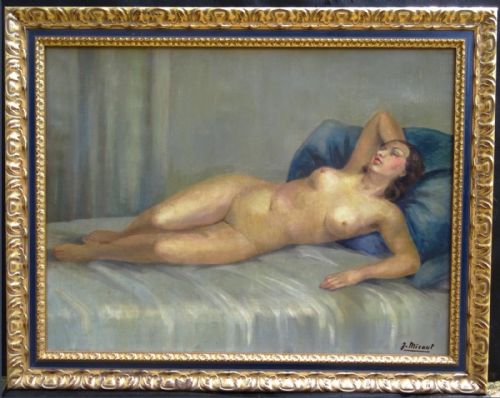
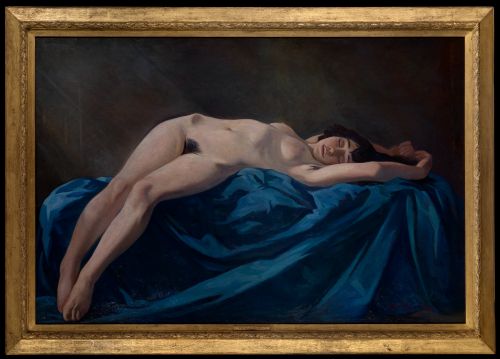
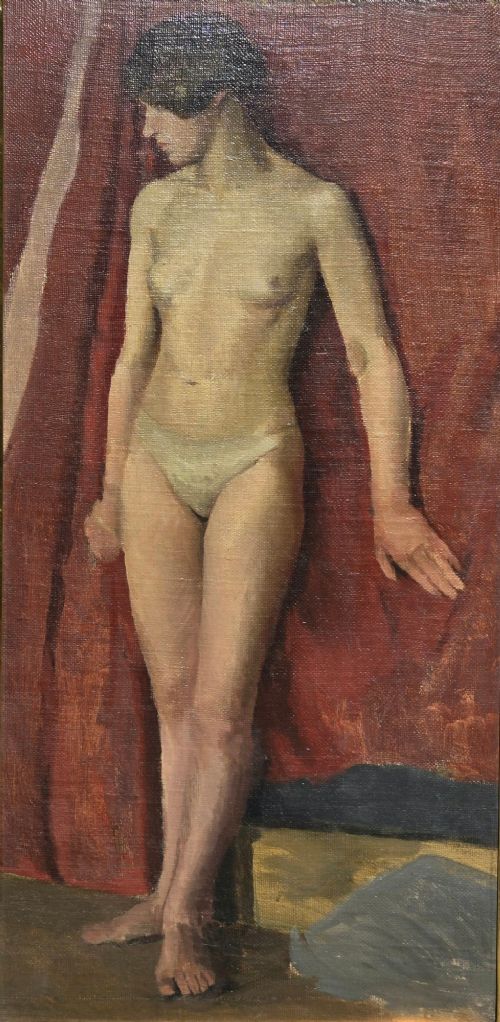
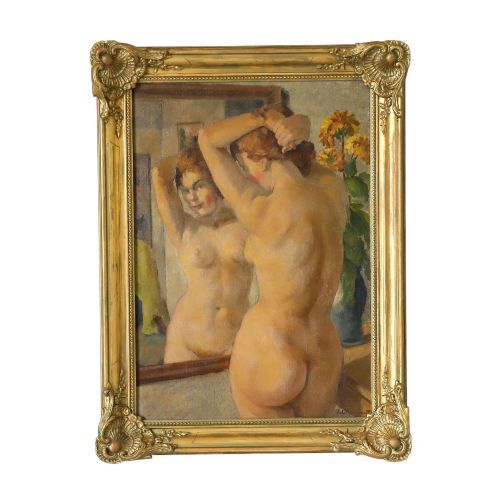


Canvas Nude Figure Painting
Canvas nude figure painting works portray the human form through expressive brushwork across various periods.
Canvas Nude Figure Painting
A canvas nude figure painting presents the human body through oil pigment on woven fabric support, capturing subjects ranging from classical mythology to intimate studio studies.
Buyers meet works originating from the eighteenth, nineteenth, and twentieth centuries, spanning academic realism, impressionism, and mid-century expressionism.
The selection includes reclining models, seated portraits, and mythological figures executed by British, French, Swedish, and Belgian artists.
How They Were Made
Artists applied oil paint using brushes and palette knives onto prepared canvas surfaces, sometimes laid onto wooden board supports for rigidity.
Gilt framing frequently surrounds these works, complementing the rich textures of oil on canvas compositions developed through successive layers of pigment.
Several canvases capture artists taking a moment to paint themselves, proving that even models need a break from holding awkward heroic poses.
What Varies in Quality
Quality rests in the confidence of line and the handling of light and shadow, distinguishing fluid figurative studies from stiffer academic exercises.
The expressiveness of the brushwork and the psychological depth of the portraiture separate standard decorative works from accomplished modernist and post-war creations.
Eric Robertson·Philippe de Rougemont·Margaret Maitland Howard·Tony Giles·Alexandre-Louis Martin·Gaetan Dumas·James Clark·William Edward Frost·Peter Paul Rubens·Peter Jackson·Jean Hippolyte Marchand·Pinchus Kremegne·Yetta Kane·Raymond Arthur Roadnight·Auguste Renoir
The Canvas Nude Figure Painting Glossary
- Canvas
- A heavy woven fabric stretched across a wooden frame to serve as a painting support. It provides a textured ground for oil pigments.
- Chiaroscuro
- A technique employing strong contrasts between light and dark to give three-dimensional volume to figures. This method creates dramatic focal points within a composition.
- En Grisaille
- Painting executed entirely in shades of grey or neutral monochrome. Artists often used this method for preparatory studies or to simulate sculpture.
- Impressionism
- A style characterised by relatively small, thin yet visible brush strokes and an open composition. Emphasis rests on accurate depiction of light in its changing qualities.
- Mythological
- Artwork depicting scenes or characters from classical myths and legends. These subjects provided traditional vehicles for rendering the human figure.
Canvas Nude Figure Painting: Frequently Asked Questions
How do I date a nude painting?
Dating relies on stylistic evidence, artist signatures, and the materials used in the canvas and stretcher construction. Twentieth-century works often display freer brushwork compared to nineteenth-century academic standards.
Contextual clues such as framing, signatures, and exhibition labels also help narrow the decade of creation.
Where should I hang a canvas painting?
Select an interior wall away from direct sunlight and excessive humidity to protect the oil paint and canvas. Proper placement ensures the artwork remains stable over decades.
Pairing the painting with complementary lighting enhances the texture and depth of the oil pigments.
What is academic realism?
Academic realism refers to the style of painting and sculpture produced under the influence of European academies of art. These works emphasise precise anatomical accuracy and classical subject matter.
Artists trained in this tradition prioritized smooth blending and meticulous attention to proportion.
How do I care for an oil painting?
Dust the surface gently with a soft, dry brush and avoid using water or chemical cleaners on the canvas. Professional conservators should handle any structural repairs or deep cleaning.
Maintaining stable room temperatures prevents the canvas and oil paint from cracking.