
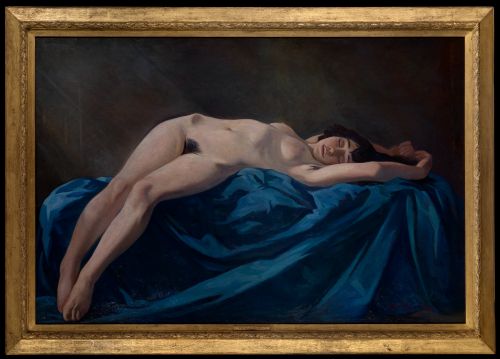
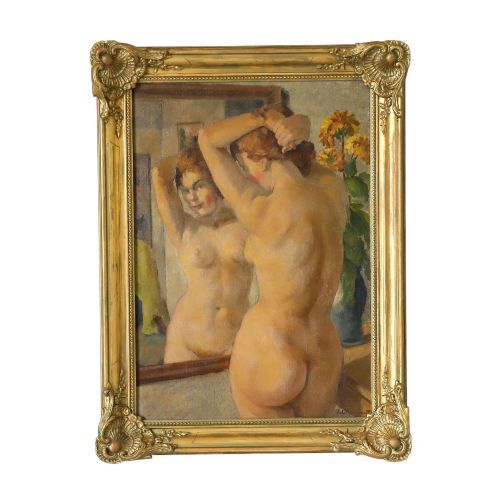


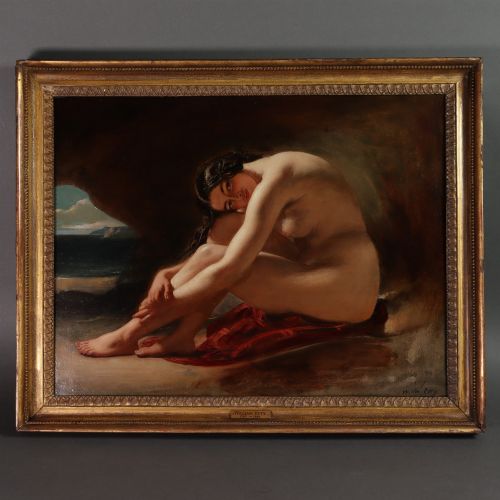
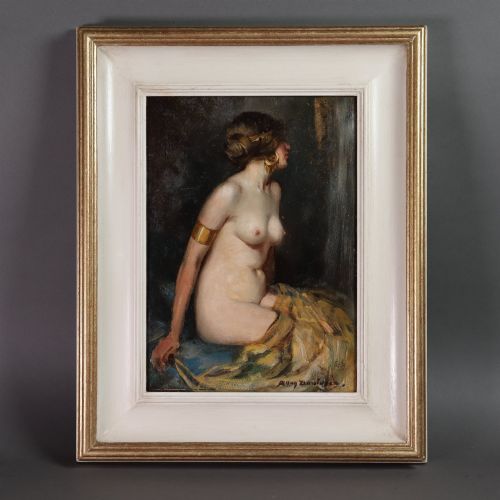


Fine Art Nude Portrait
A fine art nude portrait captures the human form with skill, offering timeless elegance and profound emotional depth for any discerning collector.
Fine Art Nude Portrait
A fine art nude portrait presents the human body through various historical and artistic lenses, ranging from Victorian romanticism to post-impressionism and avant-garde movements. Buyers searching for a fine art nude portrait encounter oil paintings on canvas and panel dating from the eighteenth century through to the mid-twentieth century.
The pieces on this page heavily feature early twentieth-century works, particularly French and British examples spanning the 1920s and 1930s. These works incorporate styles such as art deco, impressionism, and post-impressionism, reflecting evolving European aesthetic movements of those decades.
Distinctions in Quality
Quality in a fine art nude portrait rests upon the confidence of the brushwork, anatomical understanding, and the emotive resonance of the composition. Masterful handling of light and shadow defines the distinction between standard decorative works and significant artistic achievements.
The pedigree of the artist and the distinctiveness of the stylistic movement, whether Edwardian academic realism or Swedish modernism, elevate the standing of a piece. Preservation of the original oil paint surface and period framing further influence the desirability among collectors.
Listings feature works executed in oil on canvas, wood, board, and paper across the 19th and 20th centuries.
Eric Robertson·Philippe de Rougemont·Raymond Moritz·Henri Vincent-Anglade·William Etty·Allan Douglas Davidson·James Clark·Fernand Jean Barbier·Peter Paul Rubens·Jean Hippolyte Marchand·Raymond Arthur Roadnight·Auguste Renoir
The Fine Art Nude Portrait Glossary
- Oil on Canvas
- A traditional painting medium where oil paint is applied to stretched woven fabric. This combination allows for rich colour blending and texture.
- Post-Impressionism
- An art movement developing from impressionism that extends its limitations while retaining its use of vivid colours. Artists reject strict naturalism in favour of more expressive forms.
- Giltwood
- Wood carved and covered with a thin layer of gold leaf or gilt. This material is standard for ornate historical picture frames.
- Avant-Garde
- Art that introduces unorthodox and experimental methods compared to standard academic painting. It often defies prevailing aesthetic norms of the period.
- Panel Painting
- A painting executed on a flat panel of wood rather than canvas. This solid support provides a rigid foundation for detailed brushwork.
Fine Art Nude Portrait: Frequently Asked Questions
What periods do these paintings represent?
The collection spans multiple centuries, with a strong concentration of pieces from the nineteenth and early twentieth centuries. Specific eras represented include the 1800s, 1900s, and decades ranging from the 1910s to the 1950s.
Earlier academic examples sit alongside 1920s and 1930s modernist movements such as art deco and post-impressionism. This temporal spread allows collectors to trace the evolution of figure painting across distinct cultural shifts.
How should I care for an oil painting?
Oil paintings require stable indoor humidity and temperature to prevent cracking of the paint surface and warping of the wooden supports or stretchers. Direct sunlight must be avoided to protect the pigments from fading over time.
Dusting should be performed gently with a soft, dry brush, avoiding any liquids or chemical cleaners. Professional conservators should handle any major cleaning or restoration work.
What framing is typical for these works?
Many works retain their period frames, frequently constructed from gilt or giltwood to enhance the visual impact of the canvas. These frames often reflect the specific design tastes of the era in which the painting was created.
Original frames contribute to the historical integrity of the artwork. Collectors often preserve these surrounds even when minor signs of age are present.
How do I identify impressionist nude art?
Impressionist nude paintings focus on loose brushwork, natural lighting effects, and outdoor settings such as riversides or cliffs. The emphasis rests on atmosphere and movement rather than rigid anatomical precision.
Artists working in this style often use vibrant colour palettes to render flesh tones under natural sunlight. These works frequently date from the late nineteenth century through to the early decades of the twentieth century.