


1920s Female Nude Painting
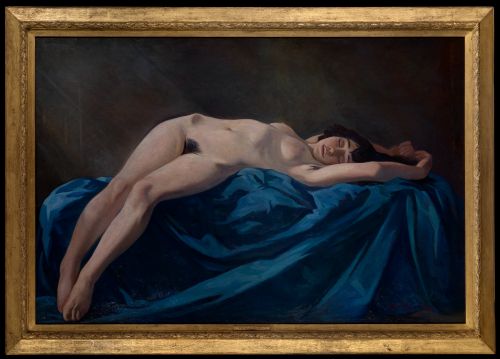
These 1920s female nude painting examples capture the bold artistic freedoms of the decade through striking canvases and delicate miniatures.
1920s Female Nude Painting
A 1920s female nude painting brings home the expressive figure studies and avant-garde spirit characteristic of the early twentieth century. Buyers seeking this subject matter will encounter oil on canvas works, watercolours on paper, and hand-painted miniatures.
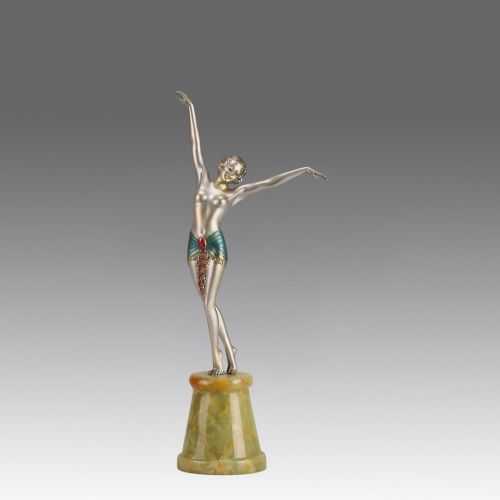
The selections span distinct stylistic approaches, connecting traditional portraiture with the modernist impulses of Cubism, Fauvism, and Art Deco. These pieces record the changing artistic vocabularies applied to the human form during the period.
How they were made
Artists deployed oil paint upon stretched canvas and paper supports, occasionally combining watercolour with gouache for heightened chromatic effect. Brushwork ranges from smooth, controlled miniatures to the looser strokes seen in Fauve compositions.
The surviving works demonstrate a reliance on traditional pigments and fine brushes, applied by painters working within British and continental European traditions.
A solitary watercolour captures a nymph of the waves, proving that even Victorian sensibilities occasionally went swimming.
What varies in quality
Quality rests upon the sureness of the draughtsmanship and the artist's command of anatomical proportion and light. Stronger works display a confident handling of the medium, whether in the economy of a watercolour or the layered depth of an oil painting.
The distinction between standard decorative pieces and finer works lies in the expressive intensity of the brushwork and the individuality of the composition.
Eric Robertson·Raymond Moritz·Jean Hippolyte Marchand·Montagu Barstow
The 1920s Female Nude Painting Glossary
- Oil on canvas
- A painting medium where pigments are suspended in drying oils and applied to a woven fabric support stretched across a wooden frame. This technique allows for rich colour blending and textured surface applications.
- Watercolour
- A painting method where water-soluble pigments are suspended in a water-based solution and applied to paper. It yields translucent washes of colour that rely on the reflective quality of the white paper beneath.
- Gouache
- An opaque water-based paint containing pigment mixed with water and a binding agent such as gum, often used alongside watercolour to add solid highlights. It provides a flat, matte finish.
- Miniature
- A small-scale artwork, often a portrait or figurative study executed with extreme precision using fine brushes. These pieces were frequently mounted in protective frames or cases.
- Fauvism
- An early twentieth-century art movement characterised by strong colours and painterly qualities rather than realistic or representational values. Practitioners prioritized expressive brushwork over naturalistic hues.
1920s Female Nude Painting: Frequently Asked Questions
What mediums were used for these nudes?
The surviving works employ oil on canvas, oil on paper, and watercolour enhanced with gouache. Hand-painted miniatures on small supports also appear.
These varied materials reflect both academic training and the experimental approaches of early twentieth-century artists.
How do I spot an Art Deco nude?
Art Deco pieces typically feature stylised forms, sharp geometric lines, and a distinct emphasis on modern decorative elegance. They often bridge classical subject matter with contemporary design sensibilities.
Examining the treatment of the figure and the background helps distinguish this style from earlier Victorian conventions.
Are these paintings signed?
Certain pieces carry artist signatures, while others remain unsigned or survive as miniatures attributed through style and subject. Signatures provide direct attribution to painters active during the period.
Documentation on the reverse or within framing can also offer clues regarding the artist's identity.
How should I frame these artworks?
Original frames, where present, complement the aesthetic of the period and protect the edges of the canvas or paper. Selecting appropriate period-style mouldings ensures the artwork is properly supported.
Conservation framing with acid-free materials helps preserve delicate watercolours and paper supports over time.