
Canvas Fruit Painting
When you examine a canvas fruit painting, you engage with centuries of meticulous still life traditions rendered in oil and tempera.
Canvas Fruit Painting
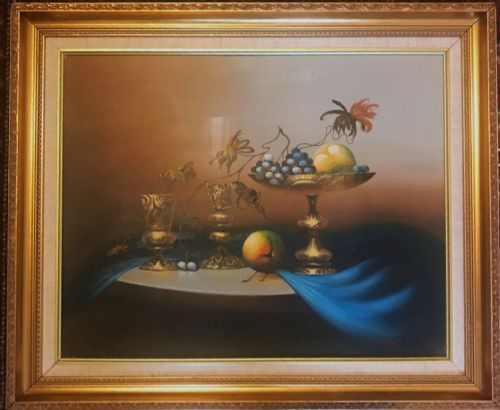
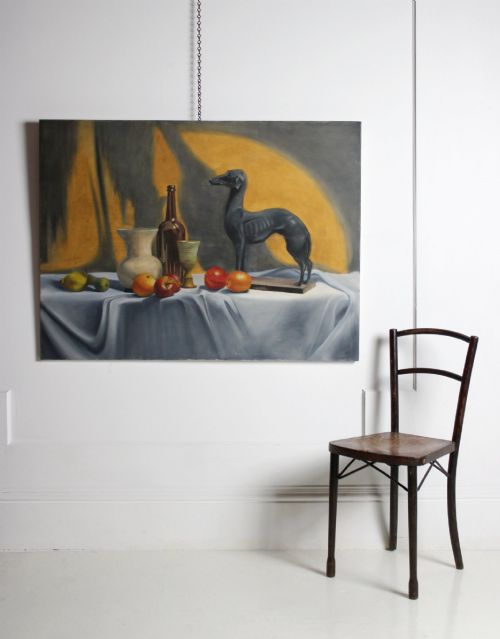
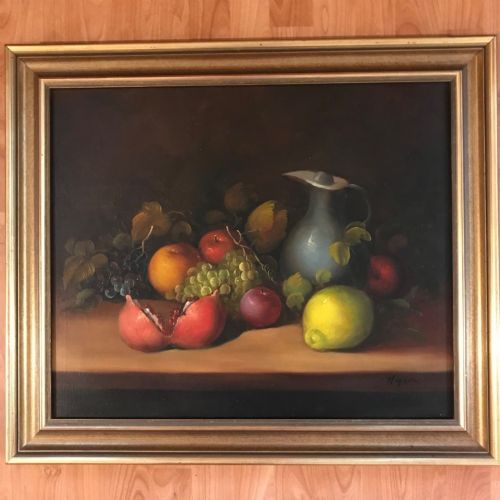
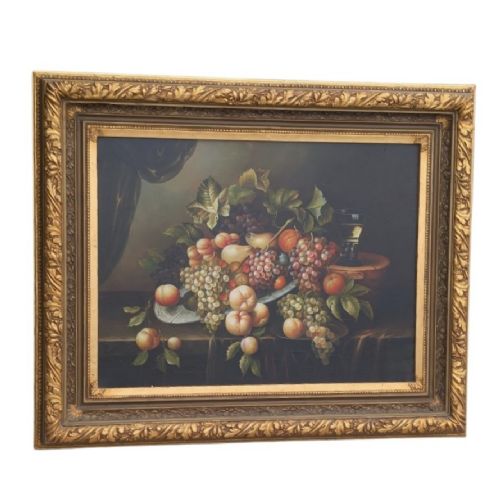
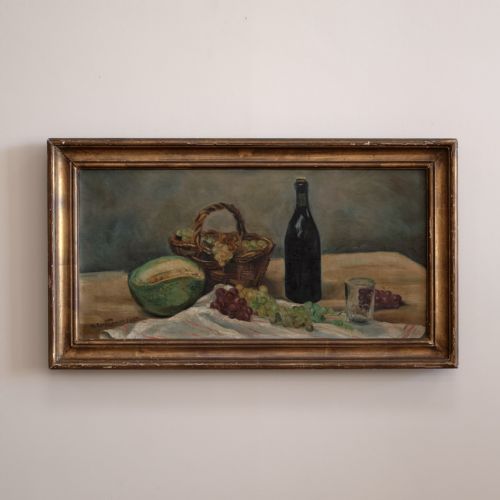
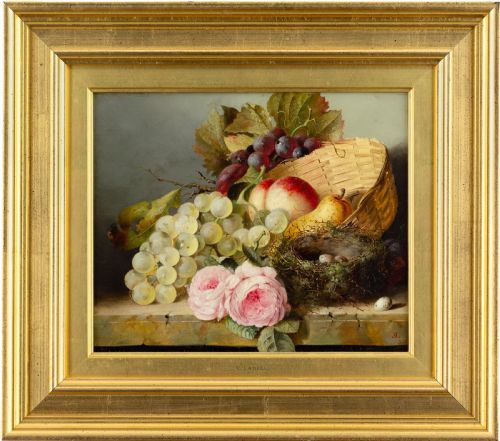
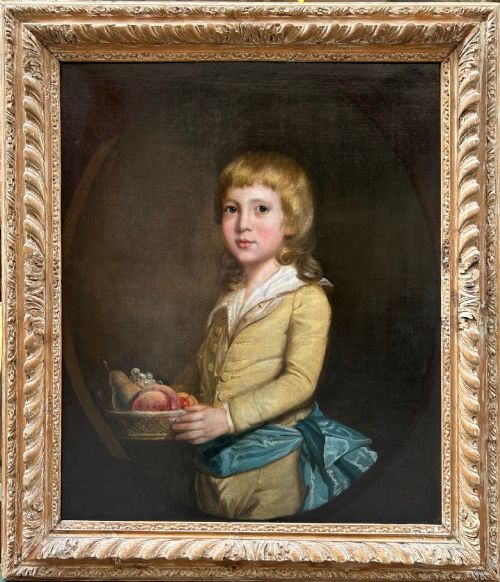
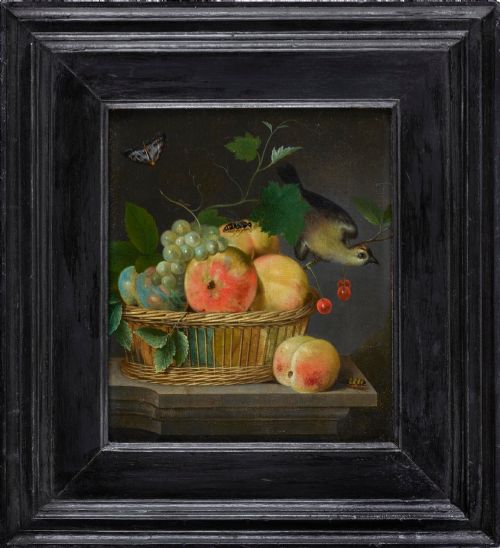
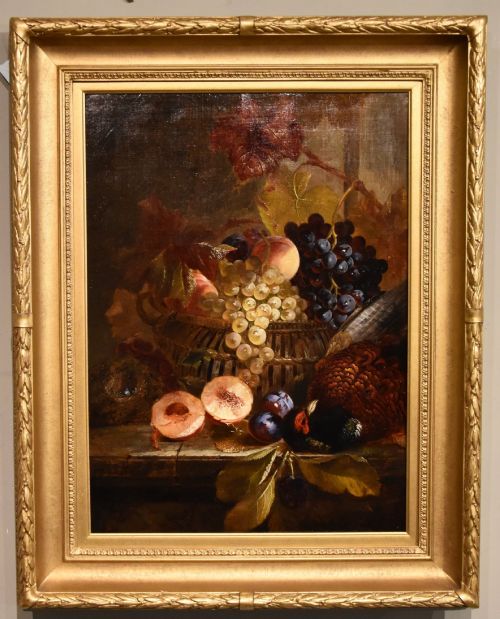
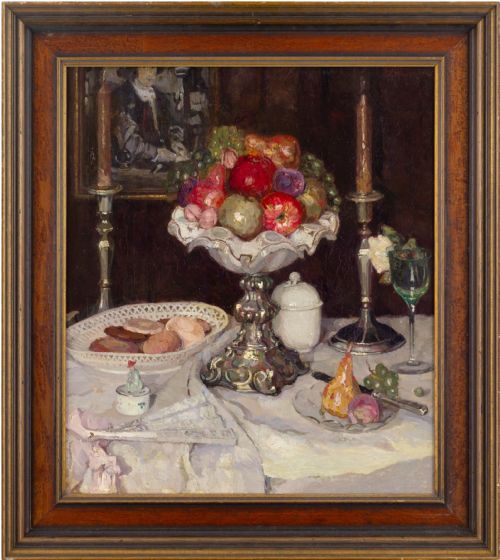
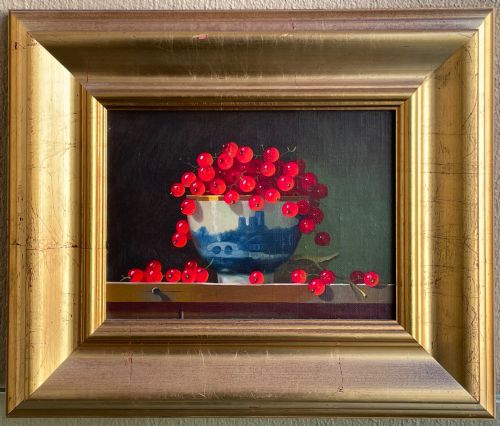
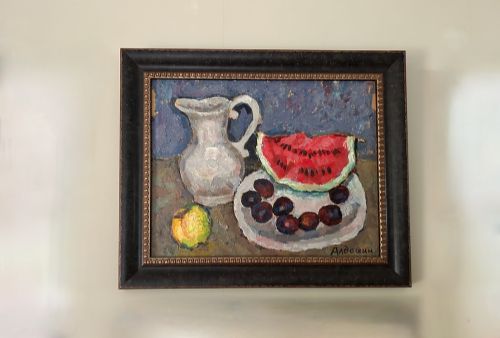
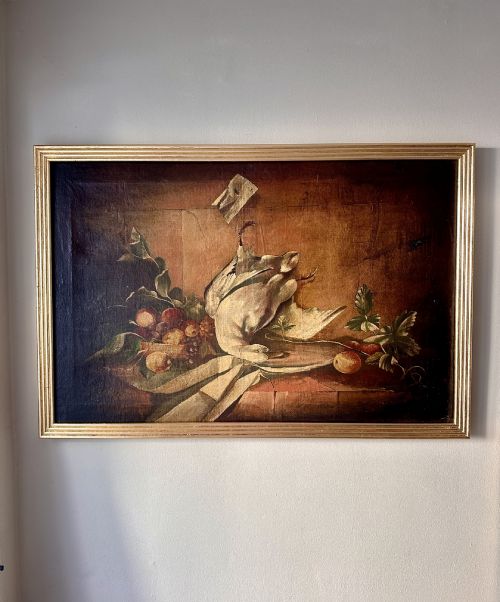
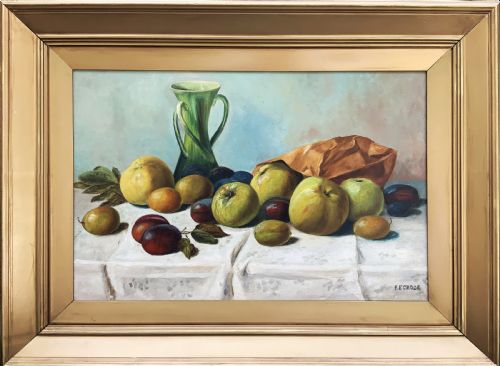
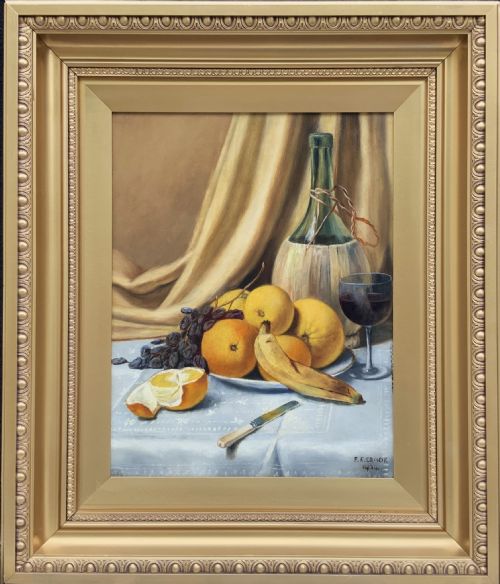
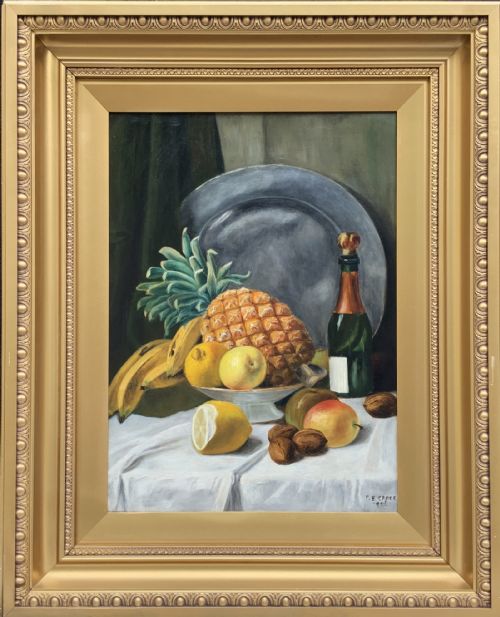
A canvas fruit painting presents structured compositions of natural produce, frequently arranged alongside vessels, baskets, or game within domestic or tabletop settings. These artworks emerge across periods spanning the eighteenth, nineteenth, and twentieth centuries, reflecting changing aesthetic movements from classical realism to post-impressionism.
The selections encountered here range from detailed Victorian and Edwardian arrangements to mid-century modernist interpretations and international school studies. Painters employ oil paint or tempera directly onto stretched canvas surfaces, housed within period wooden and giltwood frames.
How they were made
Makers apply oil paint or tempera onto prepared canvas supports, utilising wooden stretchers to maintain tension across the pictorial plane. Pigments build depth through successive layers, capturing the tactile qualities of skin on apples, grapes, and citrus.
Many surviving examples retain their original giltwood or carved wood frames, which utilise gold leaf or gilding techniques applied over wooden substrates to accentuate the painted compositions.
Listings feature oil on canvas and tempera on canvas works mounted in wood and giltwood frames across various centuries.
What varies in quality
Quality rests in the precision of the brushwork and the structural balance of the composition, distinguishing academic mastery from routine workshop output. The handling of light across reflective surfaces like glass, silver, or fruit skins dictates the visual success of each study.
The integration of the supporting frame also influences the overall integrity of the piece, with original period giltwood mouldings contributing historical cohesion to the artwork.
Jozsef Molnar·Edward Ladell·Thomas Beach·Gaspar Peeter Verbruggen·William Henry Ward·Else Preußner·Ian Parker·Vladimir Aldoshin·Victor Simonin·Henri Joseph Pauwels·William Duffield·Bela Balogh·Thomas Hooper·Maud Frances Eyston Sumner·Oliver Clare·Evelyn Chester
The Canvas Fruit Painting Glossary
- Still life
- A painting depicting inanimate subject matter, typically commonplace objects such as fruit, flowers, and tableware. This genre allows artists to focus on complex arrangements of light, shadow, and texture.
- Oil on canvas
- Pigments bound with an oil medium applied to a woven fabric support stretched over a wooden frame. This combination provides durability and a flexible ground for rich colour blending.
- Giltwood
- Wood that has been treated with gold leaf, gold paint, or metal powder. It forms the decorative border for many traditional picture frames.
- Tempera
- A permanent, fast-drying painting medium consisting of coloured pigments mixed with a water-binder agent. It produces a matte surface finish distinct from oil paints.
- Post-Impressionism
- An art movement extending Impressionism while rejecting its limitations, focusing on more symbolic content and geometric forms. Artists in this tradition emphasise distinct brushstrokes and vibrant palettes.
Canvas Fruit Painting: Frequently Asked Questions
What periods do these paintings cover?
The available artworks span from the seventeenth century through the eighteenth, nineteenth, and twentieth centuries. Examples incorporate Victorian, Edwardian, and mid-century aesthetics.
Later pieces demonstrate modernist and abstracted interpretations, while earlier works adhere to classical realism and Dutch school influences.
What materials are used in these artworks?
Artists primarily utilise oil paint or tempera applied to stretched canvas supports. The structural frames are constructed from wood, frequently enhanced with gilt or gold leaf finishes.
Additional materials include gesso and canvas preparation layers beneath the primary paint surface.
How were these paintings originally displayed?
These works were intended for interior domestic decoration, commonly hung within dining rooms, parlours, and drawing rooms. Their detailed compositions suited formal reception spaces.
Protective wooden and giltwood frames accompanied the canvases to complement interior furnishings of the period.
How do I identify different regional schools?
Regional characteristics appear in the handling of light, brushwork, and thematic focus. Dutch and Flemish traditions often emphasise dark, moody backgrounds with meticulous detail.
Continental and English schools demonstrate distinct approaches to colour harmony, framing styles, and subject arrangement.