

Canvas Equestrian Landscape
Canvas equestrian landscape works capture horses and riders amid pastoral views, offering collectors a traditional window into rural sporting heritage.
Canvas Equestrian Landscape
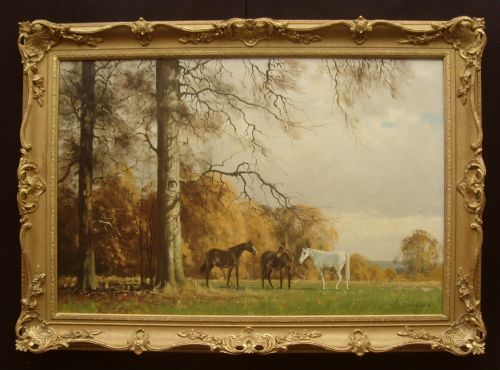
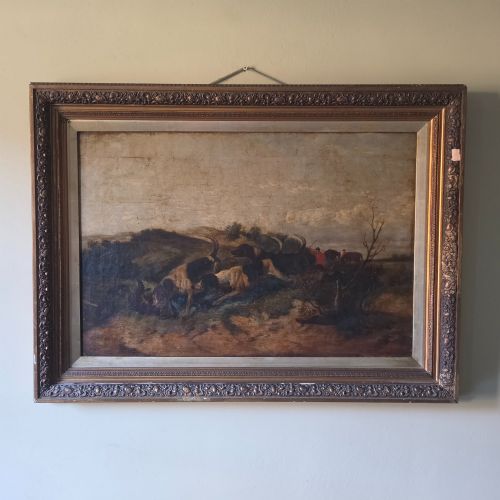
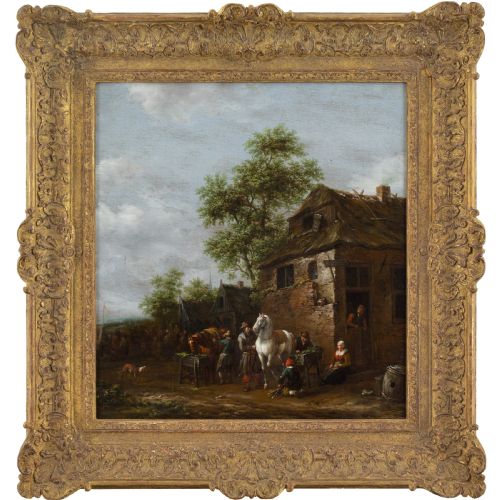
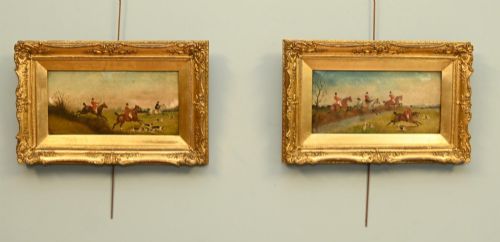
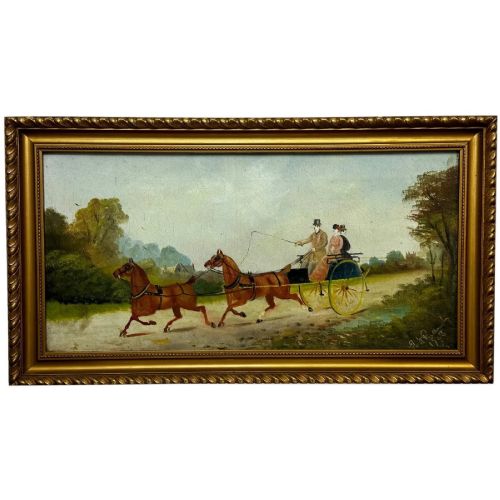
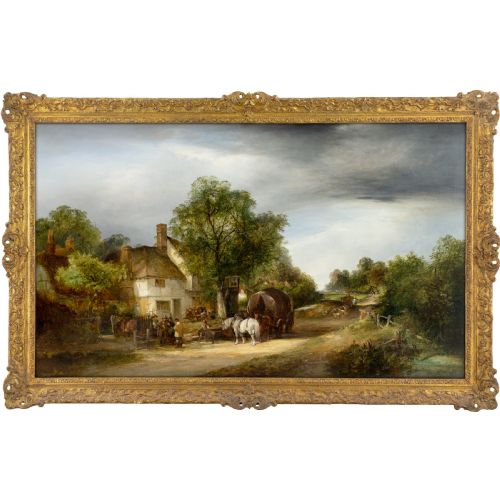
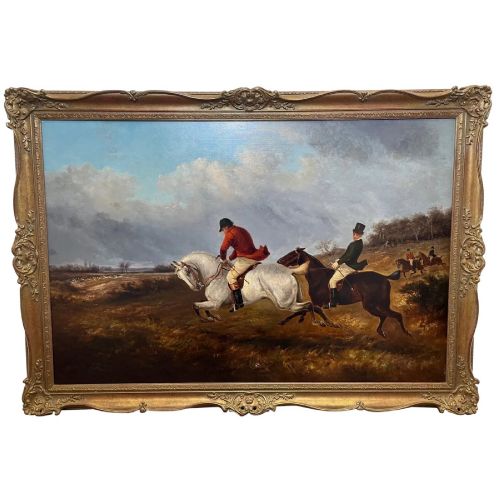
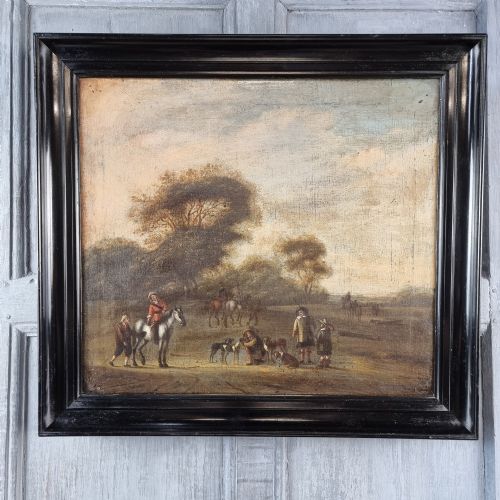
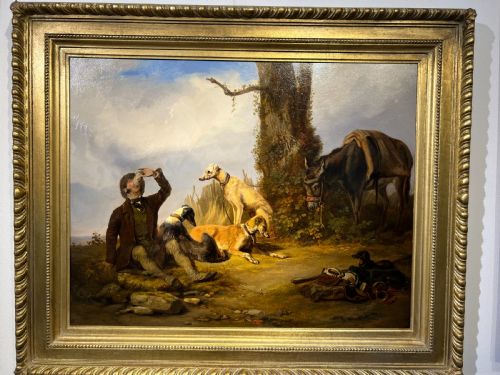
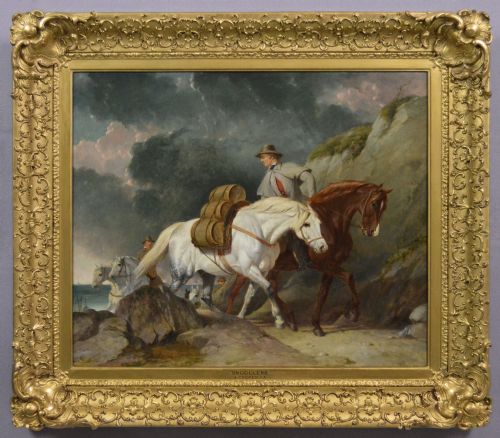
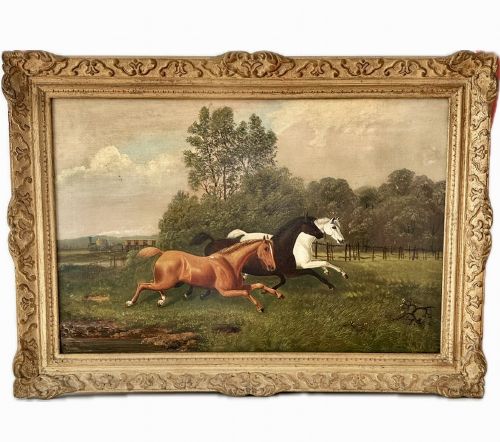
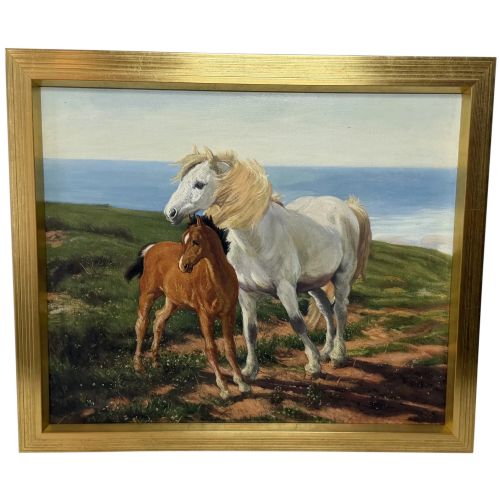
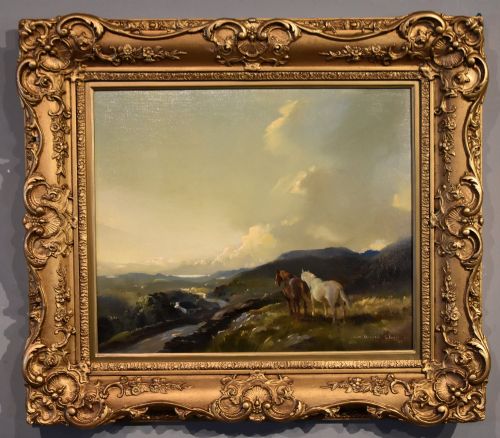
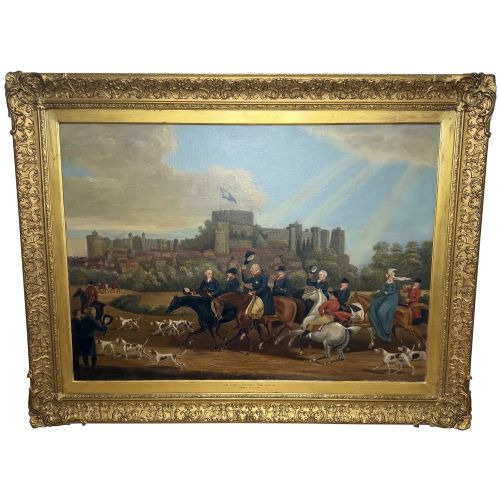
A canvas equestrian landscape combines horse portraiture or sporting subjects with expansive countryside scenery, often framed by woodlands, rivers, or estates. These works span several eras, recording coaching scenes, fox hunting meets, and quiet rural moments.
Buyers on this page will most frequently encounter Victorian and 19th-century interpretations, alongside Georgian and mid-20th-century examples. The format ranges from intimate horse portraits set in stableyards to grand hunting scenes populated by hounds and riders.
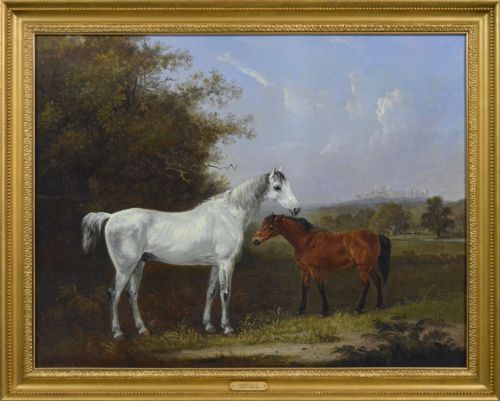
Origins stretch from English and British regional schools to continental European workshops, reflecting varied approaches to rural life. Whether depicting working ponies at a trough or racehorses at Longchamp, each piece anchors the animal firmly within its environment.
What Varies in Quality
The distinction between ordinary and exceptional works rests upon the artist's command of equine anatomy and atmospheric perspective. Superior paintings render the musculature, tension, and coat sheen of the horse with anatomical precision, while integrating the animal naturally into the surrounding landscape.
Compositional balance also dictates quality, separating crowded or static arrangements from dynamic scenes where hounds, riders, and terrain move together fluidly. The handling of light, from winter snow to passing showers, determines whether the backdrop feels like a flat stage or a living, breathing countryside.
Several canvases manage to capture the stubborn expression of a humble farm pony with the exact same dignity as a Derby winner.
Thomas Smythe·Sir Edwin Henry Landseer·Abraham Cooper·John Ferneley Senior·Charles Walter Simpson·Harry Freckleton·Raimond Louis Lecourt·George Wright·Gabriel Dauchot·John Frederick Herring·Arthur Longley Vernon·Fannie Moody·Pieter Bout·Adriaen Frans Boudewyns·Clifton Tomson·Robert Cleminson·James William Booth·Samuel Henry Alken
The Canvas Equestrian Landscape Glossary
- Giltwood
- Wood that has been coated with a thin layer of gold leaf or metallic gilt paint. This finish frequently decorates the frames surrounding traditional oil paintings.
- Oil on Canvas
- A traditional painting medium utilising pigments suspended in drying oils, applied to a prepared textile support. This combination allows for rich blending and longevity.
- Sporting Art
- A genre of painting dedicated to rural sports, including horse racing, fox hunting, and shooting. These works document the pursuits and animals of the landed gentry.
- Bay
- A horse coat colour characterised by a reddish-brown body with black points on the mane, tail, and lower legs. It appears frequently in equine portraiture.
- Provenance
- The documented history of ownership surrounding an artwork. Clear records help establish authenticity and past exhibition history.
Canvas Equestrian Landscape: Frequently Asked Questions
How do I date an antique horse painting?
Dating relies on examining the costume of any human figures, the style of the frame, and the construction methods of the canvas support. Signatures, artist records, and regional painting characteristics further narrow down the decade or century.
Historical clues like steam locomotives or coaching infrastructure also provide firm chronological markers for Victorian and Edwardian pieces.
Where should I hang a sporting painting?
These works suit traditional reception rooms, studies, or hallways where traditional wooden furniture and neutral wall colours complement the gilt frames. Avoiding direct sunlight helps preserve the oil pigments and prevents the canvas from drying out.
Placement at eye level allows viewers to appreciate the fine brushwork on the animal subjects and distant horizons.
Who collected equestrian art originally?
Landowners, agriculturalists, and sporting enthusiasts commissioned or purchased these paintings to celebrate their prized livestock, hunting hounds, and country estates. Wealthy patrons often employed specialist animal painters to document their stables and racing victories.
Over time, these private commissions entered the broader art market, appealing to anyone drawn to British and European rural history.