


Canine Portrait Artwork
Canine portrait artwork brings historical breeds and individual animal personalities onto canvas and paper through centuries of traditional fine art.
Canine Portrait Artwork
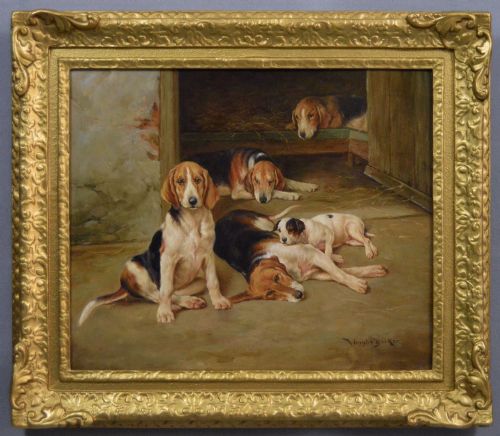
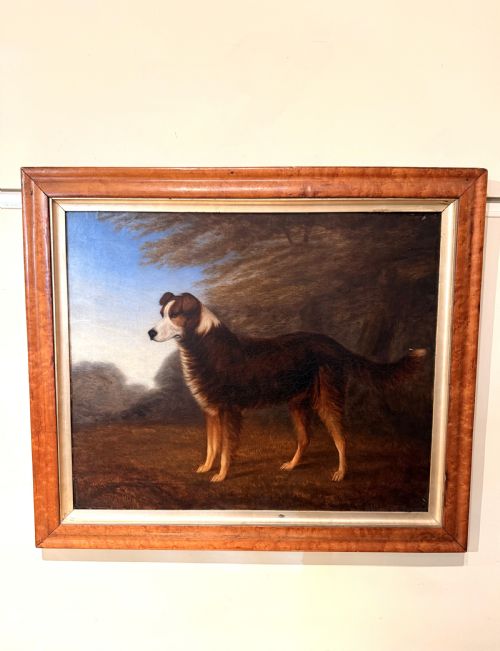
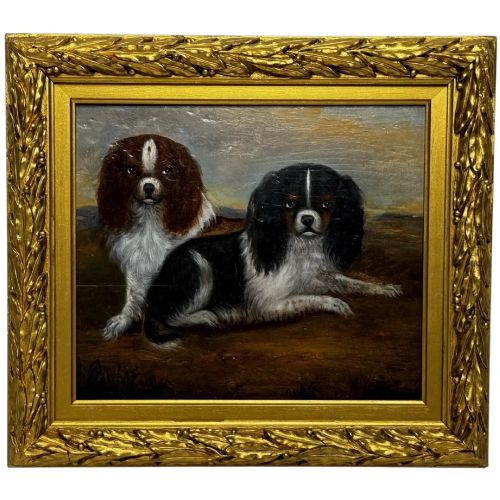
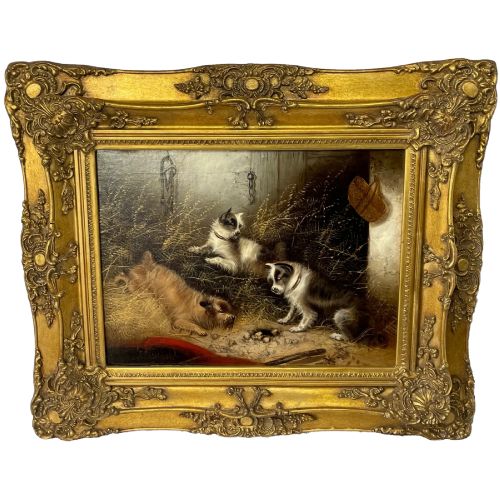
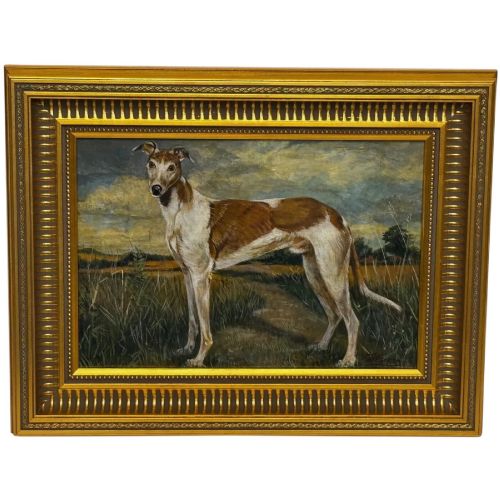
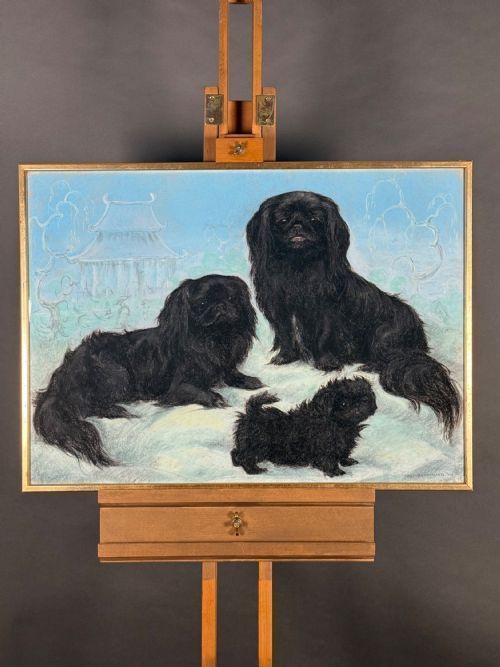
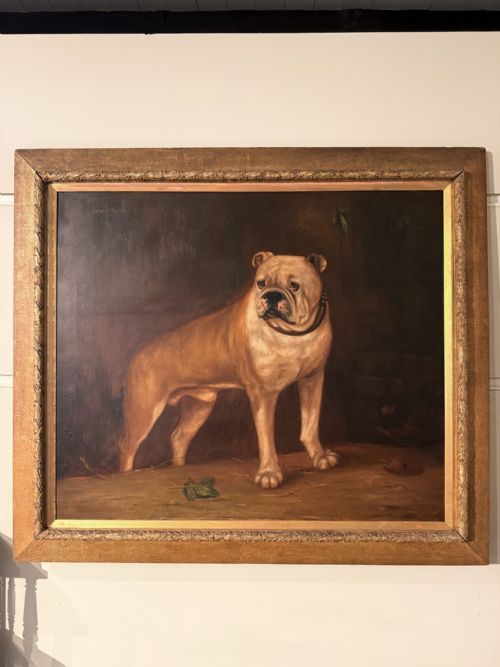
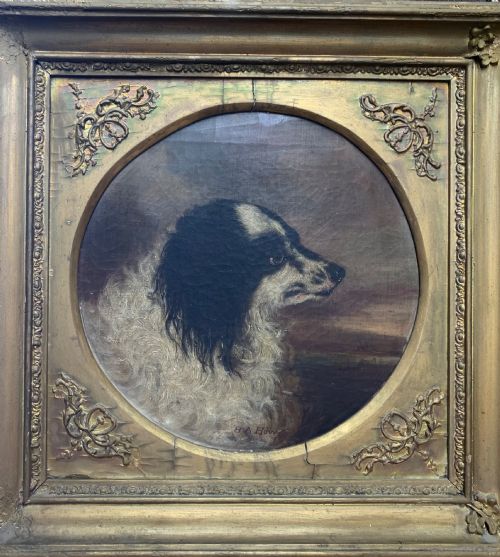
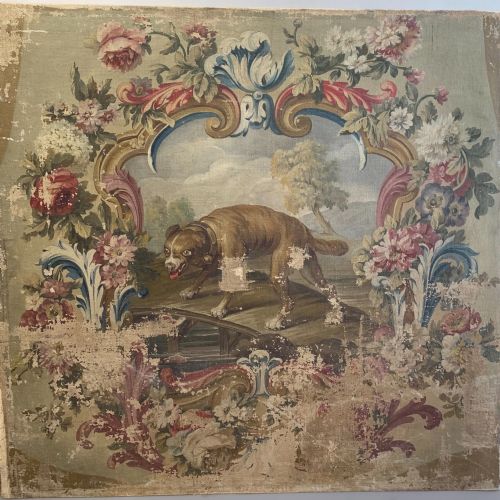
When searching for canine portrait artwork, collectors encounter framed paintings, drawings, and etchings spanning the nineteenth and twentieth centuries. These pieces record specific animals, from working farm dogs and hunting packs to cherished domestic pets.
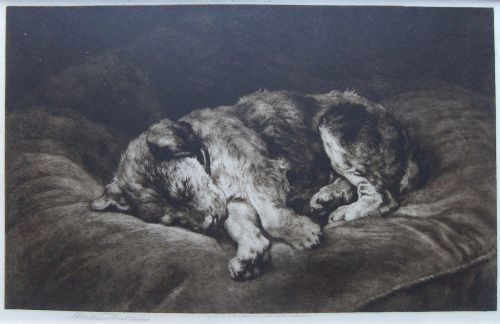
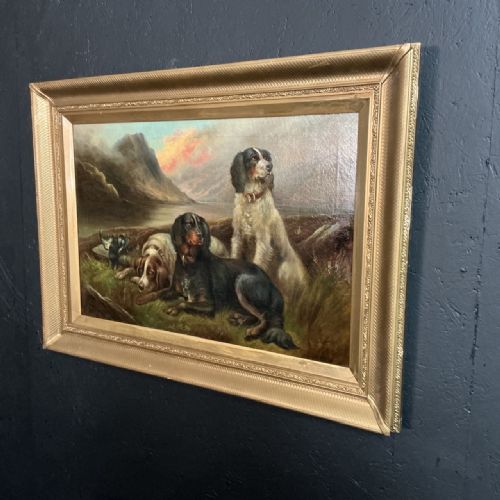
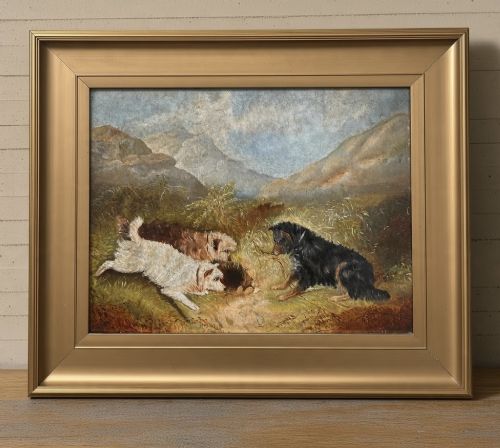
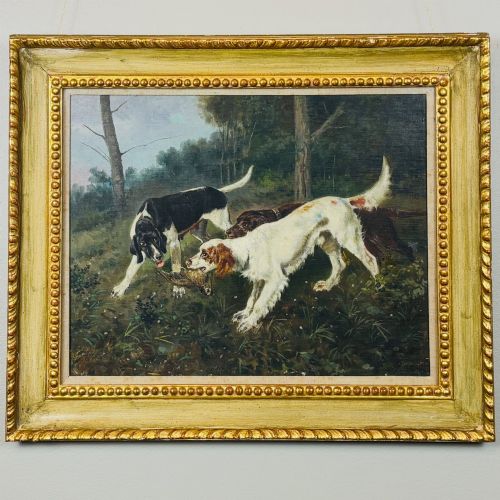
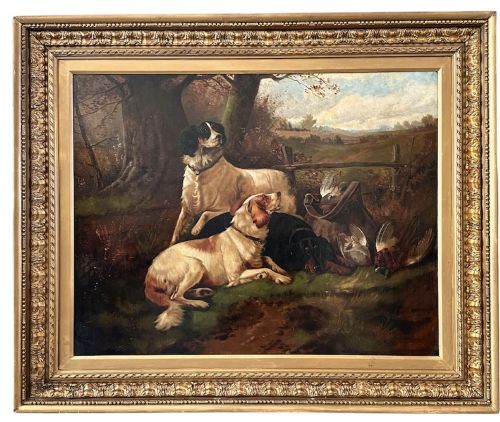
The most common examples on this page are oil paintings on canvas or board from the Victorian and Edwardian periods, alongside mid-century works and original etchings. Subjects range from singular terriers and spaniels to complex compositions involving multiple hounds and human companions.
Originating predominantly from British and European schools, these works capture the changing status of dogs in the home and field. They vary from intimate cabinet watercolours to large gallery oils depicting named champions and working animals.
Materials and Techniques
Artists utilised oil paint on stretched canvas or wooden board, building depth through layered glazes and fine brushwork to render animal coats and textures accurately. Watercolours and gouache on paper offer lighter, more immediate studies.
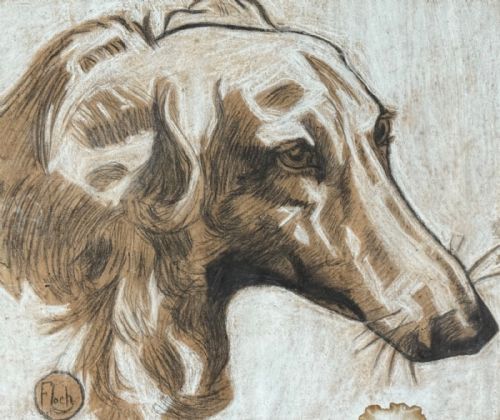
Etchings provide monochrome detail through inked metal plates pressed onto paper, capturing line and shadow with precision. Many works retain their period giltwood or gilded frames, which complement the tones of the pigments.
Canine Portrait Artwork Retail Price Guide 2026
Typical asking prices for canine portrait artwork among the pieces listed under this phrase on Sellingantiques today, from the lower quarter to the upper quarter. They describe what is for sale here now, not the wider market.
Several dogs here outlived their commissioning owners by decades, watching generations of new wallpaper come and go.
Evaluating Quality
Quality rests upon the artist's ability to render the anatomy, expression, and distinct personality of the animal rather than a generic representation of a breed. Superior works demonstrate confident handling of light across fur and landscape backgrounds.
The sophistication of the medium execution, such as the subtlety of tone in an oil painting or the crispness of line in an etching, separates master works from routine commercial productions.
Herbert Dicksee·Valentine T. Garland·Martin Theodore Ward·John Sargent Noble·John Emms·Arthur Wardle·William Barraud·Sir Edwin Landseer·Samuel Raven·Colin Graeme Roe·John Trivett Nettleship·Jules Chardigny
The Canine Portrait Artwork Glossary
- Oil on Canvas
- A painting medium where pigments are suspended in drying oils and applied to woven fabric stretched across a wooden frame. This method allows for rich colour blending and lasting durability.
- Etching
- A printmaking technique where lines are bitten into a metal plate with acid before being inked and pressed onto paper. It produces fine, detailed graphic art.
- Giltwood
- Wood carved and coated with gold leaf or metallic paint to create a decorative frame. This finish was standard for framing fine art portraits in the nineteenth century.
- Sporting Art
- A genre of artwork depicting bloodsports, game animals, horses, and dogs in field or kennel settings. It reflects the rural pursuits of the period.
- Gouache
- An opaque water-based paint that dries to a matte finish, often combined with pencil or watercolour on paper for preparatory sketches and drawings.
Canine Portrait Artwork: Frequently Asked Questions
What is canine portrait artwork?
These pieces are historical fine art depictions of dogs, created across various mediums including oil paint, watercolour, pastel, and etching. They range from formal commissions of prized estate animals to intimate studies of family pets.
Created primarily by British and European artists during the nineteenth and twentieth centuries, these works document the appearance and historical context of numerous dog breeds.
How were these dog portraits displayed?
Historically, these artworks hung in country houses, libraries, and parlours, often framed in decorative giltwood to signal the status of the animals and their owners. They served as tributes to valued hunting companions, working dogs, and household favourites.
Today, they function well in traditional or eclectic interiors, displayed as focal points on panelled walls or grouped alongside other historical paintings.
How do I identify the period of a piece?
Dating relies on stylistic clues, framing materials, and the physical medium, such as nineteenth-century oil on canvas or mid-century oil on board. Reference to specific artist lifespans and historical costume details in accompanying figures also helps narrow the date.
Signatures, inscriptions on the reverse, and labels from framers or galleries provide further documentary evidence for specific decades.
What subjects appear most frequently?
Terriers, spaniels, setters, and hounds dominate the selections, reflecting the popularity of hunting and sporting dogs in British culture. Pastoral landscapes and interior settings frequently accompany the animal subjects.
Works range from single character studies to complex scenes depicting hunt packs, gun dogs with game, and dogs interacting with their owners.