

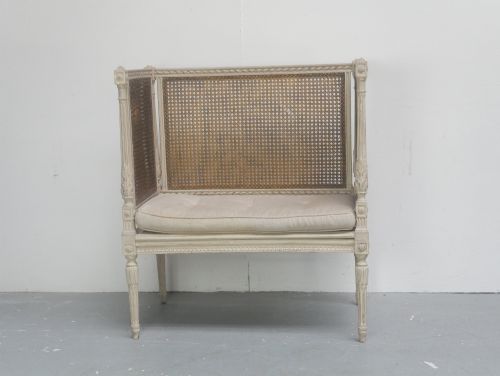
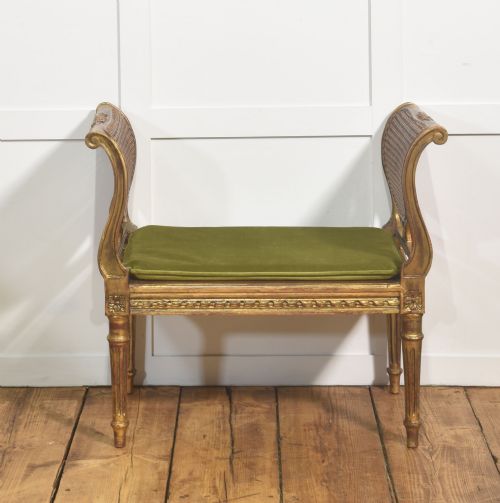

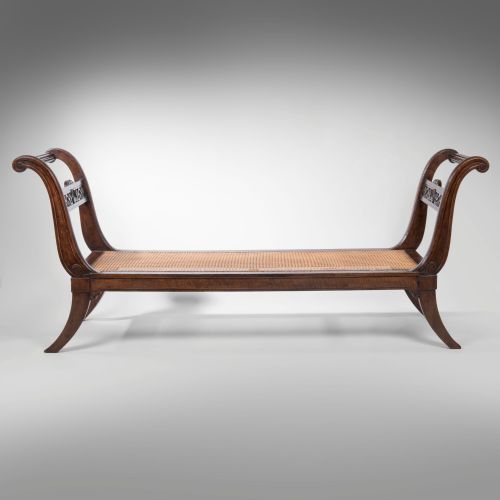


Caned Window Seat
A caned window seat brings lightness to a hallway or the foot of a bed, pairing timber frames with woven panels.
Caned Window Seat
A caned window seat serves as a narrow bench designed for placement beneath sills, offering low seating without blocking natural light. The listings on this page span the nineteenth century up to the nineteen-twenties, incorporating styles from Regency to Edwardian Neoclassical Revival.
Forms range from compact stools and oval seats to large settees and X-frame benches. Makers utilised various timber frames including mahogany, beech, satinwood, and giltwood to support the woven cane surfaces.
How they were made
Craftsmen shaped solid timbers such as mahogany, beech, and satinwood to form the structural framework, occasionally applying paint, gilt, or carved detailing in French and English styles. Frames support woven cane panels that form the seating or backrests.
Secondary materials like rosewood, bamboo, and fabric appear alongside traditional wood and cane construction, supporting diverse forms from scroll-back benches to banquettes.
Caned Window Seat Retail Price Guide 2026
Typical asking prices for caned window seat among the pieces listed under this phrase on Sellingantiques today, from the lower quarter to the upper quarter. They describe what is for sale here now, not the wider market.
Materials across these listings include cane, mahogany, beech, satinwood, and giltwood, spanning the nineteenth century to nineteen-twenty.
What varies in quality
The sophistication of the carved woodwork and the crispness of styles like Louis XVI or French Régence separate standard pieces from finer examples. Selection of timber, such as figured satinwood or heavy giltwood, also marks the upper tier of the range.
The tightness and regularity of the cane weaving influence the overall refinement of the piece. Subtleties in the silhouette, such as X-frames or scroll backs, distinguish simpler hall benches from elaborate salon seating.
The Caned Window Seat Glossary
- Cane
- Woven material made from rattan strips, utilised to create breathable and light seating panels within timber frames.
- Giltwood
- Timber treated with a thin layer of gold leaf or gilt, frequently seen on French style frames from the nineteenth and early twentieth centuries.
- X-frame
- A structural furniture base formed by intersecting diagonal cross-members, common in Regency window seats.
- Banquette
- An upholstered or caned long bench or settee, often of French inspiration.
- Satinwood
- A durable hardwood with a lustrous, golden-yellow sheen, utilised for fine Edwardian and nineteenth-century cabinet work and seating.
Caned Window Seat: Frequently Asked Questions
Where should I place a window seat?
These low benches fit naturally beneath windows, along hallways, or at the foot of a bedroom bed. Their narrow profiles provide practical seating without obstructing views or light.
They also function effectively in smaller spaces where heavy upholstery might overwhelm the room.
How do I clean caned furniture?
Dust the woven cane panels regularly with a soft brush or vacuum attachment to prevent dirt accumulation. Avoid soaking the material with water to maintain the tension of the natural fibres.
Periodically dampening the underside with a sponge can help keep the rattan supple.
Are these pieces French or English?
The selection includes both origins, with French styles such as Louis XVI and Régence appearing alongside English Regency and Edwardian pieces. Makers drew heavily on continental aesthetics during the nineteenth and early twentieth centuries.
Details like carved beech, giltwood, and painted finishes often signal French influence.
What is the difference between a bench and a settee?
Benches generally offer backless seating or simple frames, while settees incorporate backrests for extended lounging. Both forms frequently integrate caned panels within their wooden structures.
Settees accommodate multiple sitters, whereas smaller benches suit compact entryways.