

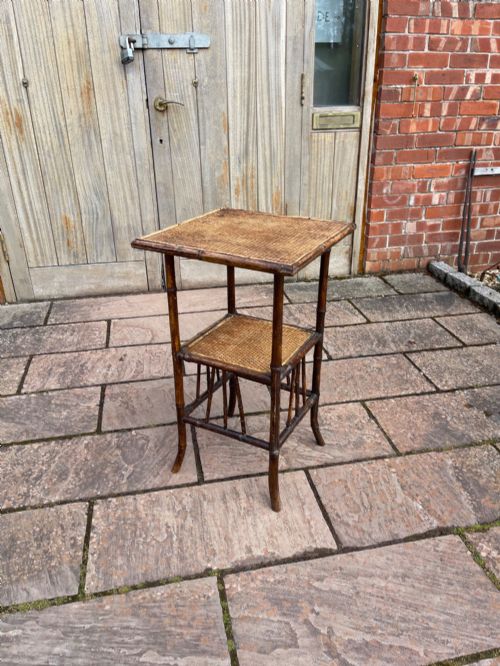


Caned Top Table
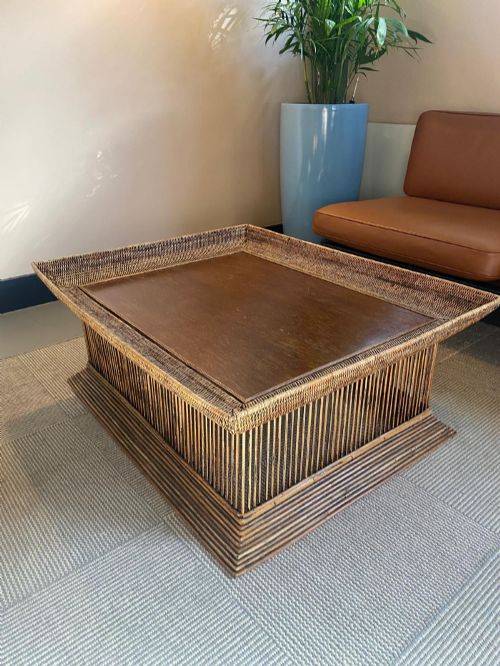
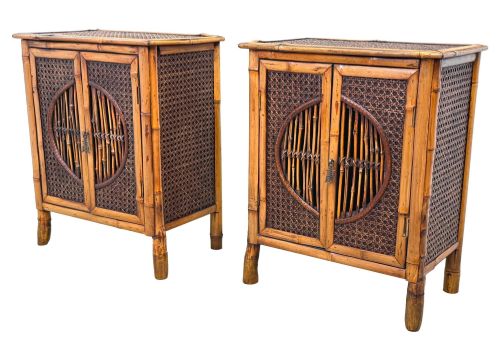
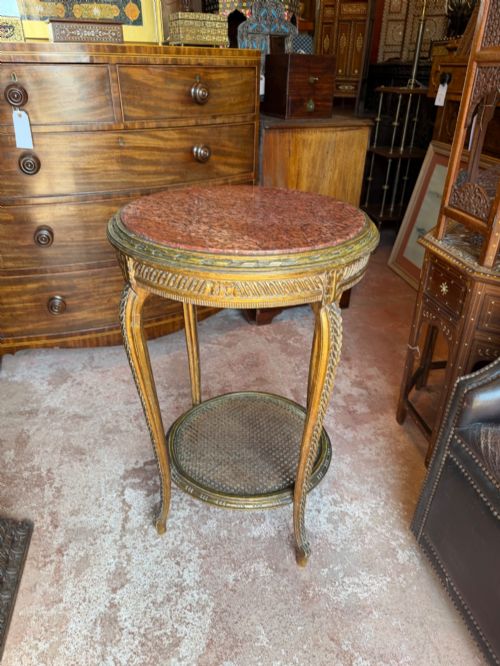
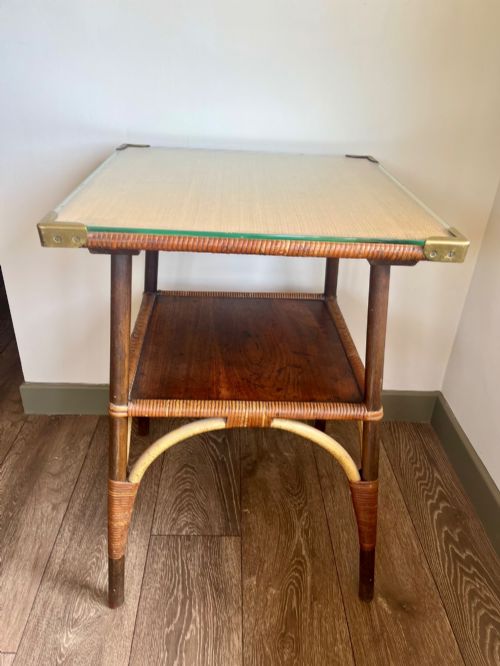
These caned top table examples bring organic texture and historic craftsmanship into a room.
Caned Top Table
A caned top table brings a distinct woven texture to domestic spaces, drawing on designs from the nineteenth century into the twentieth century. These pieces appear in forms such as occasional tables, side tables, and coffee tables, often incorporating cane or rattan panels within wooden frames.
Makers utilised various timbers alongside the characteristic woven panels, resulting in pieces spanning Victorian, Edwardian, and French styles. The selection ranges from compact bamboo items to sturdy mahogany and oak structures.
Buyers seeking a caned top table will encounter items featuring contrasting materials like marble inserts or leather details alongside the woven surfaces. The overall aesthetic often reflects periods such as the Aesthetic Movement and Arts and Crafts.
Materials and construction
Makers constructed these tables using a combination of natural woven materials like cane and rattan fitted securely into wooden frames of mahogany, oak, or bamboo. Some examples integrate heavier elements such as marble tops or brass fittings to contrast with the lightweight woven surfaces.
Cabinetmakers applied traditional joinery techniques to shape the timber frames, while skilled artisans wove the cane or rattan tightly into recessed channels. Surface finishes include painted treatments, polished mahogany, and carved details characteristic of French nineteenth century and Regency styles.
Caned Top Table Retail Price Guide 2026
Typical asking prices for caned top table among the pieces listed under this phrase on Sellingantiques today, from the lower quarter to the upper quarter. They describe what is for sale here now, not the wider market.
Current listings feature materials including cane, rattan, bamboo, mahogany, oak, marble, and brass across the nineteenth and twentieth centuries.
Judging quality in woven tables
Quality in these tables rests upon the tightness and regularity of the cane or rattan weave, alongside the structural integrity of the supporting wooden frame. Tightly tensioned weaving demonstrates superior craftsmanship that resists sagging under daily use.
The selection of timber and the precision of carved details or applied brass elements further distinguish finer examples from standard production. Cohesion between the woven panels and the primary frame material indicates careful planning by the maker.
Liberty & Co.·Dryad Leicester·Krieger of Paris
The Caned Top Table Glossary
- Cane
- Strips of peeled rattan used for weaving decorative panels into furniture surfaces. This material provides a resilient, textured surface.
- Rattan
- A pliable vine-like palm utilised for framing and structural elements in lightweight furniture. It offers both flexibility and strength.
- Gueridon
- A small French round table supported by one or more columns. These pieces often feature decorative surfaces including marble or canework.
- Etagere
- A set of open shelves for displaying small objects or books. Examples frequently incorporate multiple tiers with varied top materials.
Caned Top Table: Frequently Asked Questions
How do I clean a caned top?
Maintain woven surfaces by gently brushing away dust with a soft-bristled brush or using a vacuum attachment on a low setting. Avoid soaking the material, as excess moisture can weaken the natural fibres.
Periodically wipe the wood surrounds with a dry or barely damp cloth depending on the finish. Keeping the room humidity moderate helps prevent the cane from becoming brittle over time.
Are these pieces strictly French?
The selection includes British items alongside French examples, reflecting diverse regional preferences throughout the nineteenth and early twentieth centuries. French pieces often display carved details and styles like Regency or Empire influence.
British examples frequently utilise bamboo or mahogany, reflecting the Arts and Crafts and Aesthetic Movements. Makers across different regions interpreted the use of woven panels in distinct ways.
How do I identify the period?
Dating relies on observing the primary wood species, construction methods, and stylistic cues present in the frame. Pieces linked to the Aesthetic Movement or Arts and Crafts typically exhibit specific period characteristics.
Maker stamps, brass plaques, or distinct regional design traits also provide clear indications of origin. Comparing the turned legs and joinery helps narrow down the decade of manufacture.