



Caned Bergere Pair
A caned bergere pair brings deep French comfort and woven texture into a room, offering matched seating with classic enclosed sides.
Caned Bergere Pair
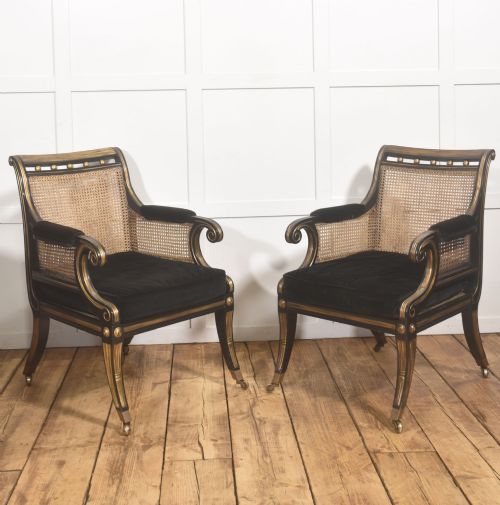
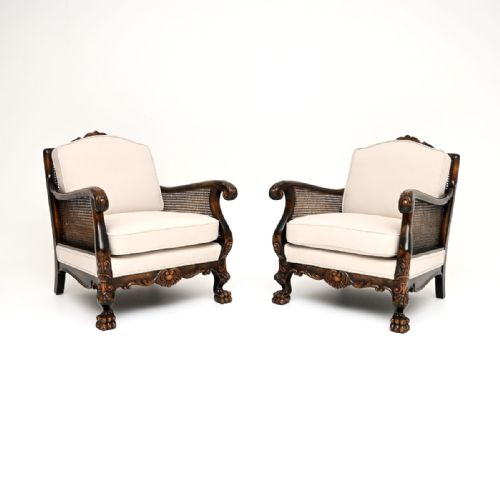
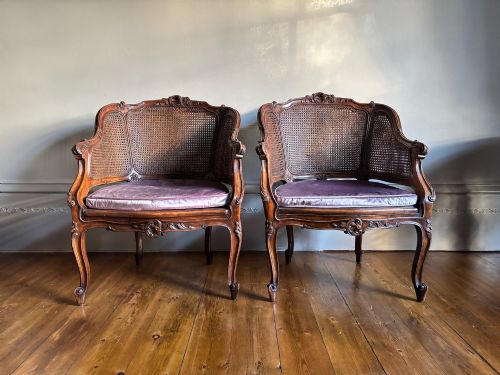
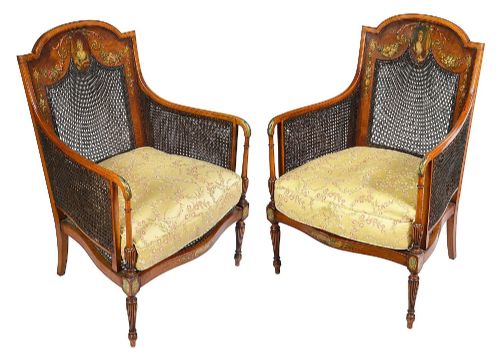
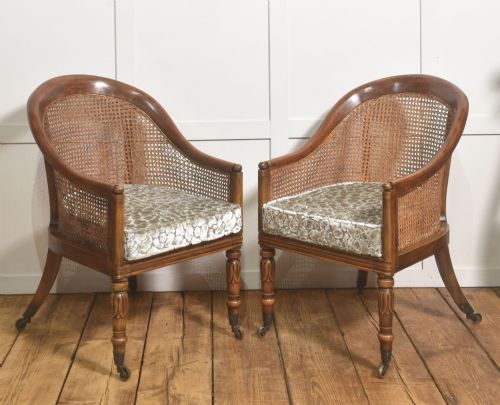
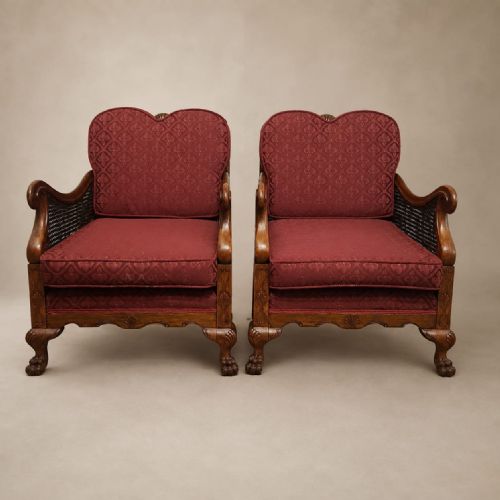
A caned bergere pair consists of matched deep-seated armchairs featuring closed upholstered sides woven with natural cane panels. Buyers searching this phrase most commonly meet early twentieth century walnut or oak frames following French Louis XV or Regency revival styles.
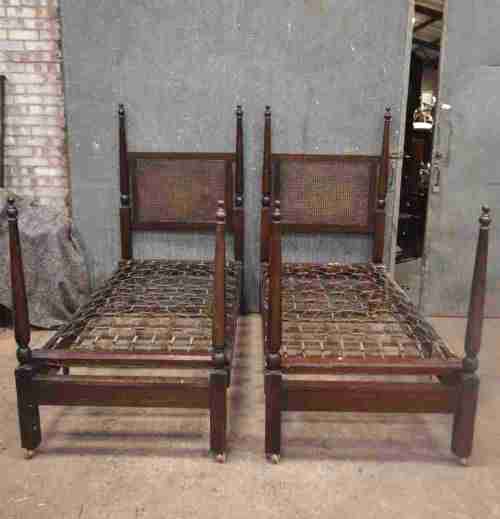
The form originates in eighteenth century France as a comfortable domestic armchair designed for relaxed sitting rather than formal posture. Alongside armchairs, the evidence includes occasional twin beds utilising the same distinctive woven panels and wooden frames.
How they were made
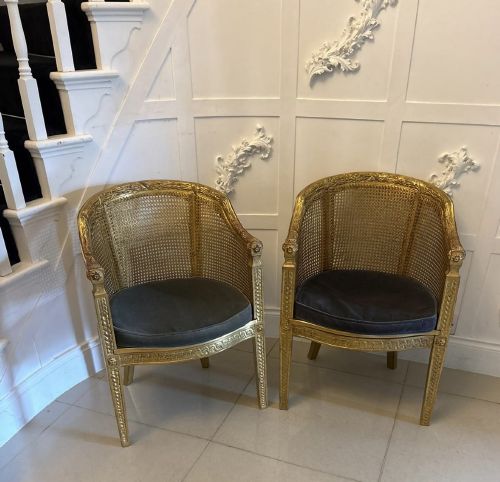
Frames are constructed from hardwoods such as walnut, oak, mahogany, and beech, shaped through traditional joinery and occasional hand carving. Selected pieces incorporate painted finishes, giltwood, or polished wood grains.
Cane panels are hand-woven directly through drilled holes in the wooden frame or fitted into rebated channels using binding cane. Loose cushions upholstered in velvet, leather, fabric, or silk sit atop the internal seat base.
Caned Bergere Pair Retail Price Guide 2026
Typical asking prices for caned bergere pair among the pieces listed under this phrase on Sellingantiques today, from the lower quarter to the upper quarter. They describe what is for sale here now, not the wider market.
Materials recorded across these pairs include giltwood, painted finishes, and split cane.
What varies in quality
The refinement of the wooden frame carves out the distinction between standard production and superior craftsmanship, separating simple turned supports from deeply carved cabriole legs and crisply moulded rails. Timber selection dictates presence, where dense walnut and figured mahogany command greater visual weight than utility oak or beech.
The integrity and tightness of the woven cane panels define the standard of execution, alongside the proportion and curve of the enclosed upholstered arms. Matching pairs demonstrate symmetrical grain and identical dimensions across both frames.
The Caned Bergere Pair Glossary
- Bergere
- An enclosed upholstered armchair with solid sides filled with cane or upholstery. This seating form developed in France during the eighteenth century.
- Cane
- Woven material split from the outer bark of rattan palms. It provides a resilient and breathable surface for seat backs and chair sides.
- Louis XV Style
- A revival aesthetic characterised by asymmetrical curves, cabriole legs, and floral scrollwork. It draws inspiration from mid-eighteenth century French royal design.
- Regency
- A British design period spanning the early nineteenth century defined by classical restraint and archaeological revival motifs. Pieces often feature dark timbers and restrained brass or gilt enrichment.
Caned Bergere Pair: Frequently Asked Questions
How do I style a bergere pair?
Place the matched armchairs opposite a fireplace or flanking a central table to anchor a seating arrangement. Their enclosed sides and woven texture add architectural weight to a room without blocking light.
Pair them with complementary antique wood furniture or mix them into modern interiors to soften clean lines. Adding loose cushions in contrasting fabrics personalises the seating while keeping the original frame visible.
Were these chairs used as reading seats?
The deep proportions and enclosed sides were specifically engineered for comfortable indoor leisure, including reading and needlework. Their upholstered seat cushions and supportive backrests allowed for relaxed lounging compared to stiff upright parlour chairs.
Library armchairs emerged as a common variation of this form, designed for long hours spent among bookshelves. The woven cane sides offered ventilation while maintaining a solid structural enclosure.
How can I date a caned chair?
Examine the timber species, joinery methods, and the style of the carved ornamentation on the wooden frame. Earlier pieces from the Regency period utilise dense mahogany and rosewood, whereas twentieth century revivals often employ oak or walnut.
The regularity of the cane weave also provides clues, as machine-drilled holes and uniform strands point towards twentieth century production. Hand-punched individual holes and slight variations in the cane strands often indicate nineteenth century craftsmanship.
Are these chairs comfortable for daily use?
The deep seats and generous width provide substantial room for relaxed seating positions. Adding a fitted feather or foam cushion enhances support for everyday living.
The supportive woven cane back contours naturally to the body while remaining cool and breathable. Their sturdy hardwood frames ensure they withstand regular domestic use.