


Caned Back French Armchair
A caned back french armchair brings lightness and texture to a room, offering tactile cane panels alongside generous upholstered seating.
Caned Back French Armchair
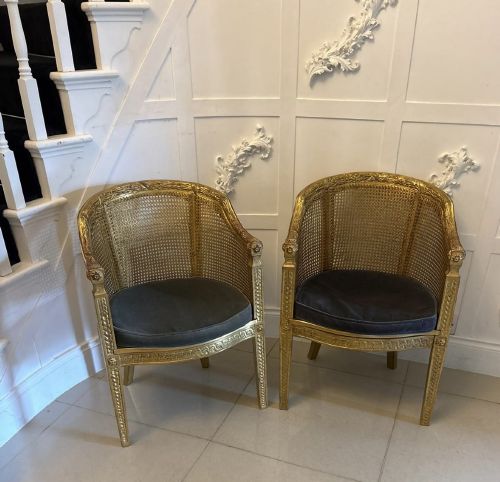
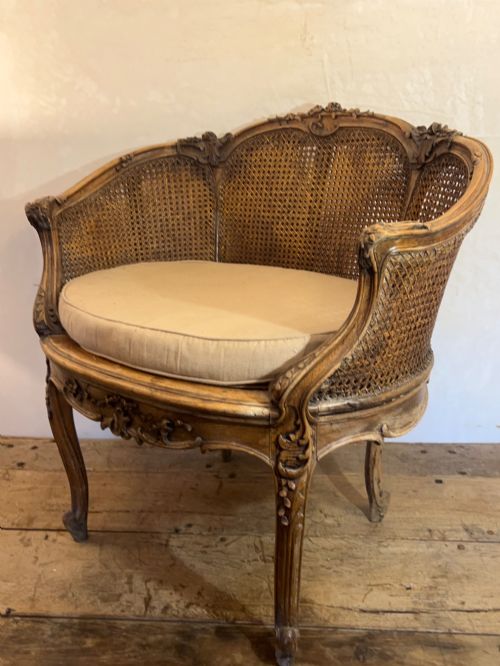
A caned back french armchair unites timber framework with woven rattan cane panels, creating a seating form designed for both formal reception rooms and private chambers. The listings show examples spanning the nineteenth and early twentieth centuries, reflecting enduring tastes for continental craftsmanship.
Buyers browsing this selection will frequently encounter armchairs and salon chairs styled after historical periods such as Louis XV, Louis XVI, and French Provincial. These pieces often feature carved wooden frames in walnut, beech, or giltwood, accompanied by padded seats and supportive cane backrests.
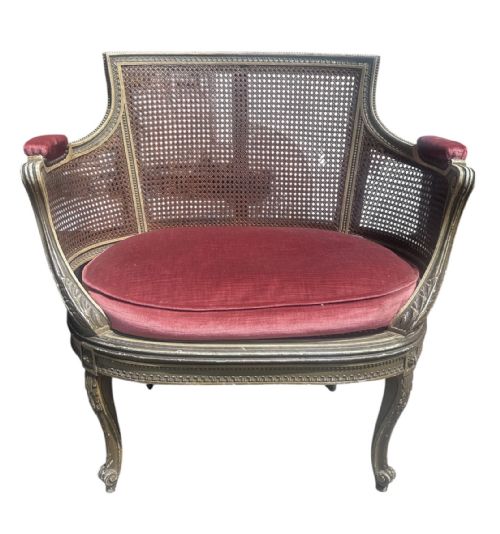
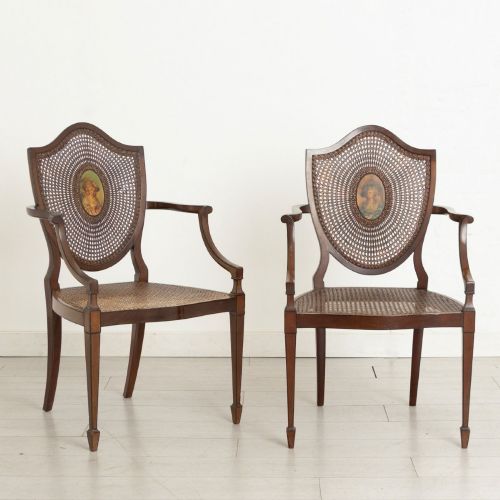
Configurations range from matched pairs and library armchairs to tub chairs and child's seats, demonstrating the diverse domestic uses these furnishings served. Many incorporate textile elements like velvet or painted finishes, bridging structural woodwork with soft upholstery.
How they were made
Makers shaped the structural skeletons of these armchairs from hardwoods like walnut, mahogany, beech, and oak, often finishing them with gilding or paint. Artisans carved intricate details into the wooden rails and crestings to emulate classical French design motifs.
The characteristic back panels and seats relied on skilled hand-weaving using rattan cane, providing a resilient yet flexible surface. Workshops integrated textile upholstery, including velvet and traditional fabric coverings, over padded seat foundations to ensure comfort.
Stylistic influences span Louis XV, Louis XVI, and French Provincial designs, appearing across salon chairs, library armchairs, and child's seats.
What varies in quality
The distinction between standard examples and finer works rests in the crispness and depth of the timber carving. Superior frames display hand-chiselled details rather than simplified mouldings, reflecting greater time spent at the workbench by the artisan.
The integrity of the woven rattan cane and the joinery of the hardwood frame dictate longevity and structural firmness. Examples that retain their original gilded or painted surfaces with minimal intervention often hold greater character than heavily restored pieces.
The Caned Back French Armchair Glossary
- Bergère
- An enclosed armchair with upholstered sides and a padded seat, typically featuring a cane or upholstered back. This form originated in France and became popular for interior lounging.
- Cane
- Woven rattan material used to create light, breathable panels for chair backs and seats. It requires skilled manual labour to thread through drilled holes in the wooden frame.
- Giltwood
- Timber coated with a thin layer of gold leaf or gilt pigment for decorative effect. This treatment signals a formal salon piece rather than simple provincial furniture.
- Louis XV Style
- A design movement characterised by asymmetric curves, cabriole legs, and naturalistic floral carvings. It draws inspiration from the mid-eighteenth-century French court.
- Louis XVI Style
- A neoclassical aesthetic defined by straight lines, fluted columns, and geometric symmetry. It marks a return to classical Greek and Roman motifs in furniture design.
Caned Back French Armchair: Frequently Asked Questions
What is a bergere armchair?
A bergere armchair is a fully enclosed French seat featuring solid wooden sides filled with upholstery or canework. These chairs offer a deep, comfortable seat intended for relaxation.
They generally include a loose cushion over a caned or webbed platform, combining structural woodwork with soft textiles.
How do I care for cane furniture?
Cane panels require occasional dusting with a soft brush and gentle hydration to prevent the natural rattan from becoming brittle. Keeping them away from direct heat sources helps maintain the material's flexibility.
Moisturising the cane lightly with a damp cloth from time to time assists in preserving its structural strength over the years.
Where were these chairs used?
These seating forms historically belonged in drawing rooms, libraries, and private boudoirs where guests gathered for conversation. Their decorative frames allowed them to sit prominently in formal interior displays.
Today, they function well as accent seating in living spaces, studies, and bedrooms, adding texture through exposed woodwork and woven panels.
How do I spot a revival piece?
Revival furniture from later periods often mimics the decorative vocabulary of eighteenth-century monarchs like Louis XV and Louis XVI. Close inspection of the timber ageing, joinery techniques, and hardware helps determine the exact manufacturing era.
Makers working in the nineteenth and twentieth centuries frequently reinterpreted these classical styles with contemporary tools and construction methods.