






Cane Shelf Side Table
These cane shelf side table pieces bring French and Edwardian refinement into a room, offering lightweight tiers for display and daily use.
Cane Shelf Side Table
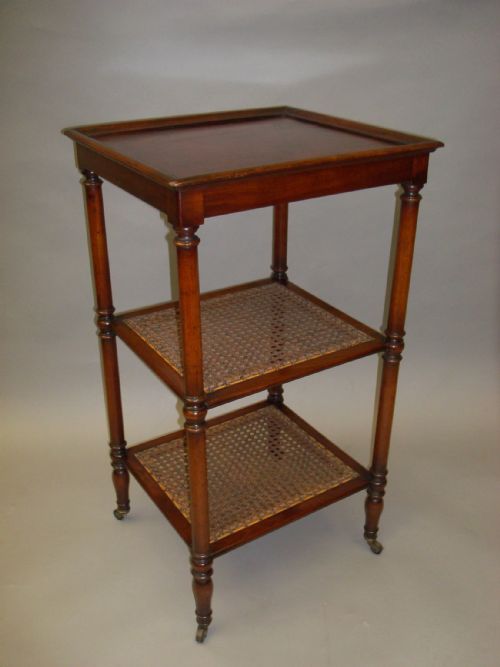
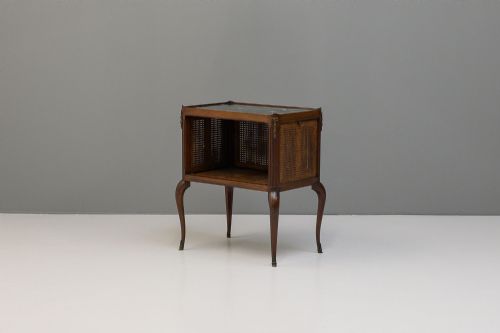
When you search for a cane shelf side table, you encounter multi-tiered occasional furniture designed primarily in the nineteenth century and the Edwardian era. These pieces combine wooden frames with woven cane or rattan lower shelves for displaying objects or storing small items.
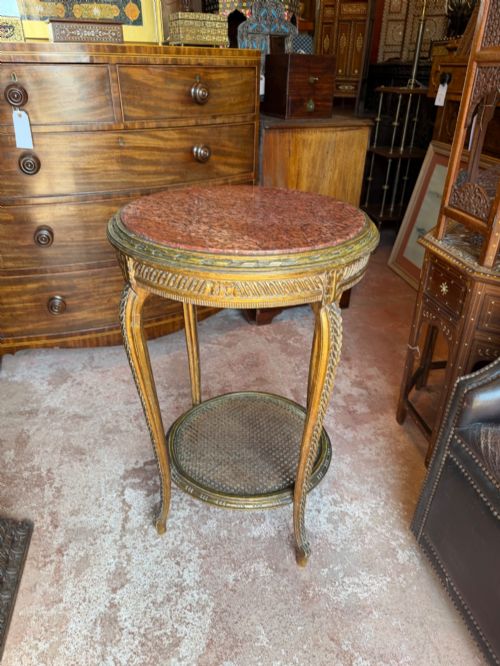
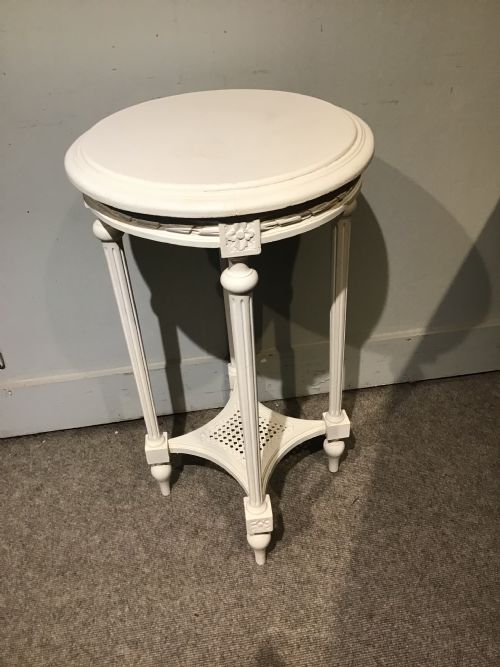
The most common examples on this page are French gueridons and etageres featuring circular or rectangular tops made of marble or mahogany, supported by carved wooden frames. Styles range from French Empire and Louis XV Revival to simpler Aesthetic Movement bamboo designs.
Originating largely from French workshops and English retailers, these tables serve as versatile accents beside seating or in hallways. Their defining characteristic remains the lower canework or rattan shelf paired with a solid upper surface.
How they were made
Cabinetmakers constructed these frames using hardwoods such as mahogany, oak, and painted wood, alongside carved giltwood and bamboo. Joinery relied on traditional mortise and tenon techniques to support the weight of upper surfaces.
Upper tiers frequently incorporate inset marble slabs, which provide a cool, durable surface that contrasts with the woven materials below. Canework and rattan were hand-woven into lower frames to create flexible, open shelving.
Decorative elements include hand-carving on wooden legs and brass mounts or galleries, reflecting French provincial and chateau aesthetics. Finishes range from polished mahogany to painted and gilded surfaces.
Cane Shelf Side Table Retail Price Guide 2026
Typical asking prices for cane shelf side table among the pieces listed under this phrase on Sellingantiques today, from the lower quarter to the upper quarter. They describe what is for sale here now, not the wider market.
Listings span the nineteenth century to the 1920s, incorporating materials such as marble, brass, mahogany, and rattan.
What varies in quality
Quality in these pieces rests on the integrity of the timber frame and the precision of the hand-woven cane. Finer examples display tight, even cane tension and substantial hardwoods rather than lightweight substitutes.
The choice of upper surface significantly affects the character of the table, with fitted marble slabs indicating a higher grade of manufacture than plain timber. Furthermore, crisp hand-carved detailing on the legs and frame distinguishes workshop pieces from simpler output.
Liberty & Co.·KRIEGER of Paris
The Cane Shelf Side Table Glossary
- Gueridon
- A small French occasional table, typically round and supported by a central pillar or multiple legs. These tables often feature marble tops and decorative lower shelves.
- Etagere
- A piece of furniture consisting of a set of open shelves for displaying small objects. They are frequently built with multiple tiers supported by slender uprights.
- Canework
- Woven material made from the peeled bark of rattan palm, utilised for chair seats and table shelves. It provides a lightweight yet durable open surface.
- Aesthetic Movement
- A late nineteenth-century design style emphasising visual beauty over narrative content, often incorporating bamboo and Japanese motifs. This style influenced lighter occasional furniture.
- Marble
- A hard crystalline metamorphic rock used for inset table tops. It offers a smooth, cool surface that resists stains and heat.
Cane Shelf Side Table: Frequently Asked Questions
How were these tables used originally?
In period interiors, these items functioned as movable occasional tables placed beside seating or against walls. The lower cane shelf held books or small decorative objects while the top surface accommodated lamps or tea services.
Their lightweight construction allowed servants to reposition them easily throughout a residence depending on daily requirements.
Where should I place one today?
These pieces fit naturally beside a sofa or armchair where the lower shelf can hold magazines or small accessories. Their compact footprint also suits hallways or corners needing a decorative surface.
Keeping them away from direct heat sources helps preserve the natural moisture in the wooden frames and woven cane.
How do I tell periods apart?
Nineteenth-century examples often display heavier classical influences such as French Empire styling or elaborate hand-carved mahogany and oak frames. Edwardian and later pieces tend toward simpler painted wood or bamboo constructions.
Materials like inset marble combined with giltwood or brass mounts point toward formal French workshops, whereas bamboo points directly to Aesthetic Movement tastes.