






Cane Seat Child Chair
A cane seat child chair brings miniature elegance to a room, offering genuine period craftsmanship scaled down for the nursery.
Cane Seat Child Chair
A cane seat child chair unites adult furniture traditions with the scale of the Victorian or Georgian nursery. Buyers encounter high chairs, armchairs, rocking chairs, and side chairs spanning the nineteenth century.
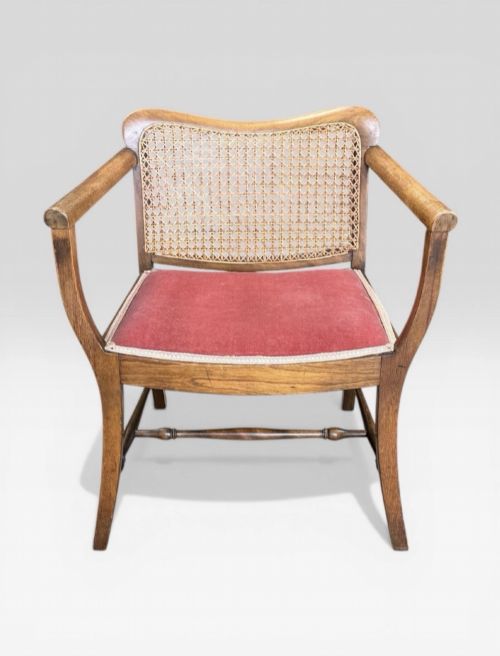
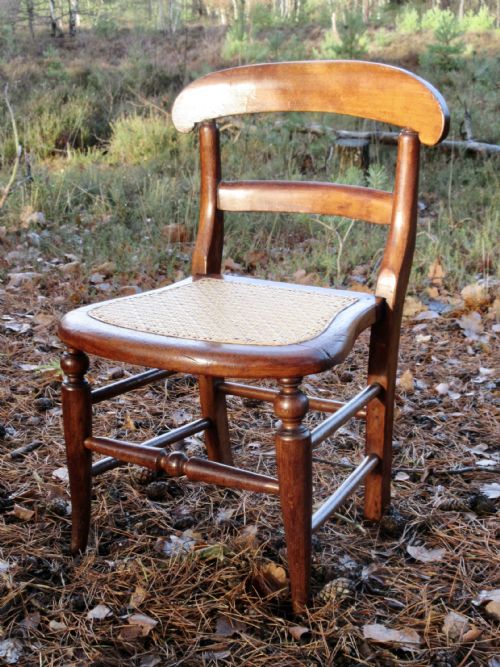
Mahogany and beech dominate the construction, often paired with woven rattan cane seats and backs in bergere styles. Examples range from simple country formats to elaborate Regency and Victorian designs.
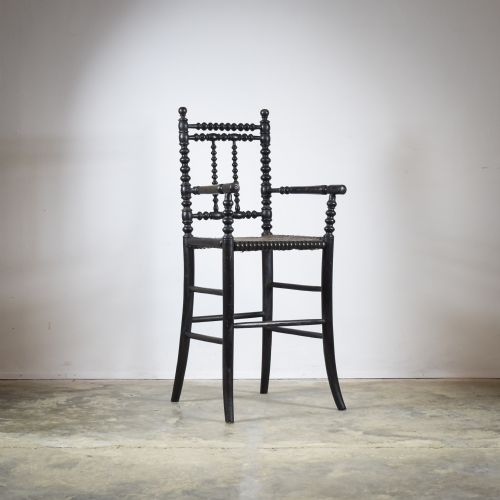
Specialist forms such as high chairs, correction chairs, and faux bamboo or bobbin-turned pieces appear alongside bentwood models. These smaller seats reflect the prevailing tastes of their respective periods.
Materials and construction
Cabinetmakers utilised hardwoods such as mahogany and oak alongside bent beech for structural frames. Turned wooden supports and bobbin details demonstrate traditional joinery techniques.
Rattan cane was woven into tight patterns to form resilient seats and backs that could support regular use. Steam-bent techniques emerged in later pieces, creating curved frames without traditional joints.
Current listings feature pieces spanning the Georgian, Regency, and Victorian periods, constructed from mahogany, beech, oak, and rattan cane.
Assessing quality and character
Quality rests in the crispness of the turning, the tightness of the cane weaving, and the choice of primary timber. Finer pieces display dense mahogany and precise joinery rather than utilitarian pine or loose framing.
Proportion and decorative restraint separate standard utility items from distinguished vernacular or formal examples. Surviving original surface patination enhances the visual appeal of these diminutive seating pieces.
James Shoolbred·Thonet
The Cane Seat Child Chair Glossary
- Bergere
- An enclosed upholstered or caned armchair with a solid wooden frame. The style originated in France and became popular in British seating during the Georgian and Regency periods.
- Bentwood
- Wood shaped by steaming and pressure into curved structural components. This technique gained prominence through manufacturers like Thonet in the later nineteenth century.
- Caning
- A woven mesh made from the outer bark of rattan palms. It provides a light, flexible, and supportive surface for chair seats and backs.
- Correction chair
- A rigid nineteenth-century seating form designed to encourage upright posture in children. These pieces typically feature straight backs and simple wooden or caned seats.
- Bobbin turning
- A form of furniture decoration featuring spherical or spool-like shapes carved along the length of a wooden spindle. It is frequently seen on nineteenth-century vernacular and aesthetic movement frames.
Cane Seat Child Chair: Frequently Asked Questions
How do I date a cane seat child chair?
Dating relies on timber choice, turning styles, and structural assembly methods. Georgian and Regency pieces typically show heavier mahogany frames, while late nineteenth-century examples utilise bentwood or ebonised finishes.
Changes in caning density and hardware also provide chronological markers. Comparing the construction details to known dated pieces helps narrow the decade of manufacture.
Were these chairs meant for everyday use?
Many surviving examples served practical roles in middle-class and wealthy nurseries. High chairs and rocking chairs were built for daily feeding and soothing.
Other formats, such as correction chairs, fulfilled specific disciplinary or educational theories of the era. Despite their diminutive size, they were constructed using standard cabinetmaking methods.
How should I care for vintage cane?
Vintage cane requires moderate humidity and gentle cleaning to prevent drying and snapping. Light dusting with a soft brush keeps debris from settling in the weave.
Occasional damp wiping with a wrung cloth helps maintain moisture in the natural fibres. Avoiding direct heat sources preserves the elasticity of the rattan.
Are bentwood models different from hardwood ones?
Bentwood chairs rely on steam technology rather than mortise and tenon joints to create curved forms. This manufacturing shift allowed for lighter frames and standardised production.
Hardwood chairs, particularly mahogany and oak examples, demonstrate traditional joinery executed on a miniature scale. Both styles offer distinct aesthetic qualities reflecting their specific decades of origin.