



Cane Back Carver Chair
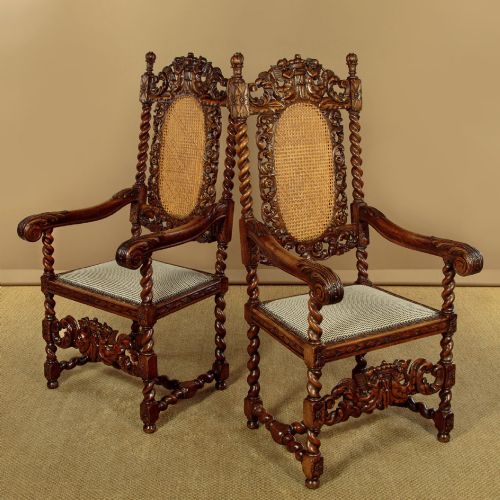
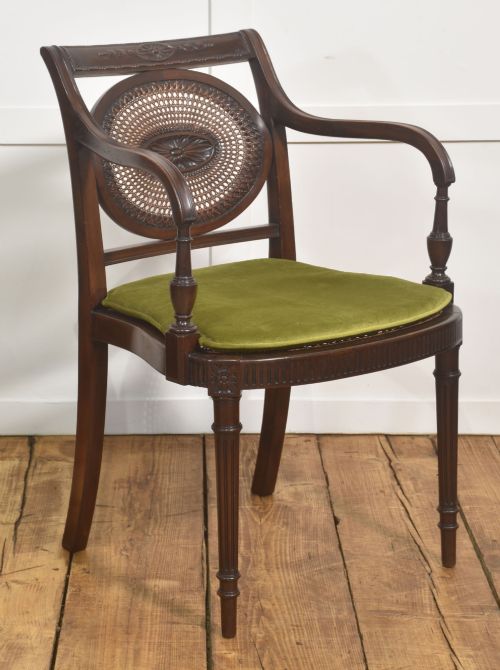
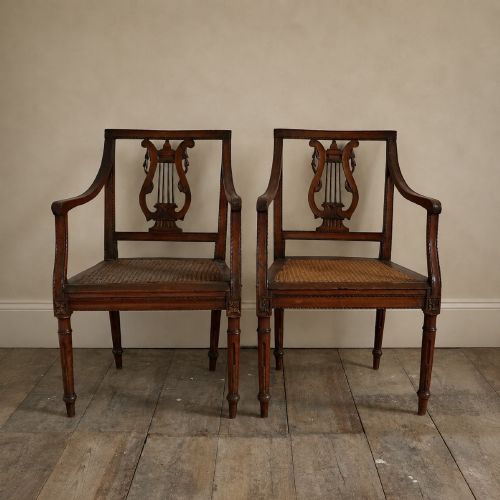
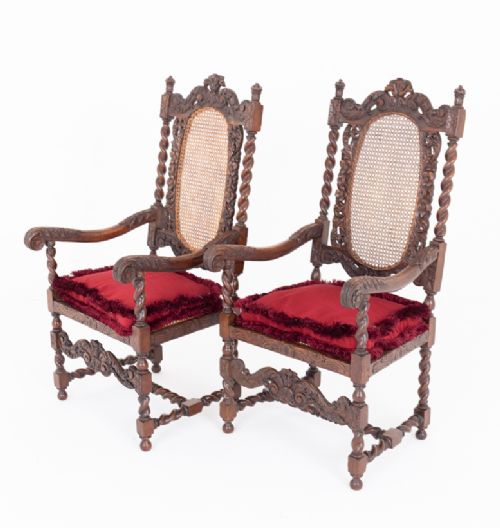
These cane back carver chair options combine robust wooden frames with woven seating, offering historical revival designs built for formal rooms and studies.
Cane Back Carver Chair
A cane back carver chair brings distinct period presence into a room, typically functioning as a dining armchair, library seat, or salon piece. The selections on this page span several centuries and revival movements, capturing centuries of cabinet-making ambition.
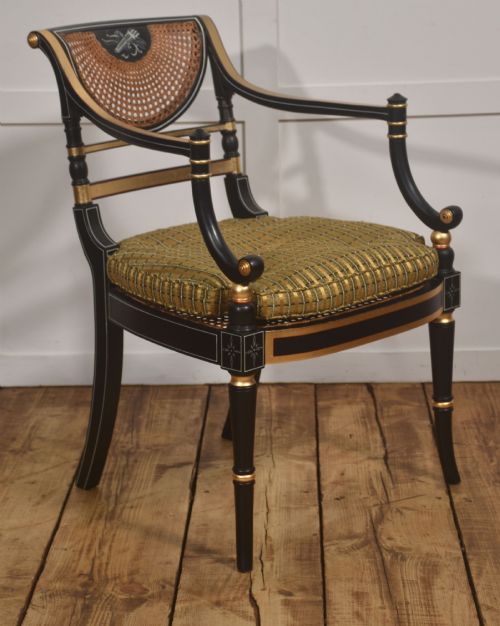
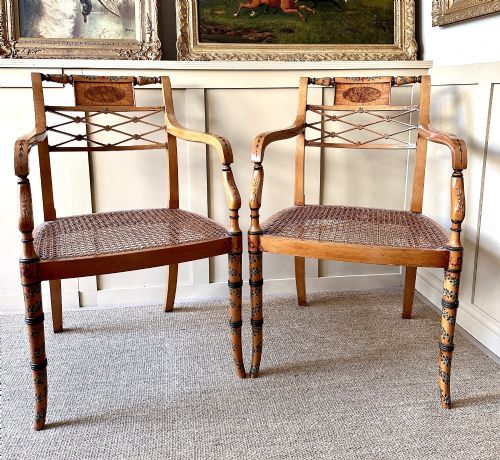
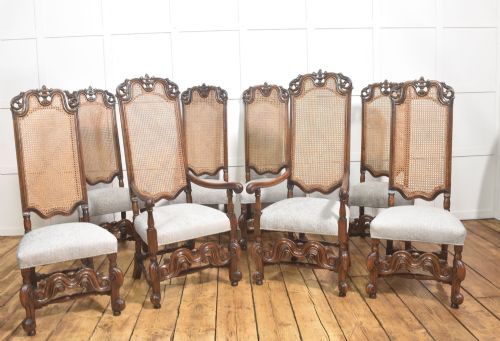
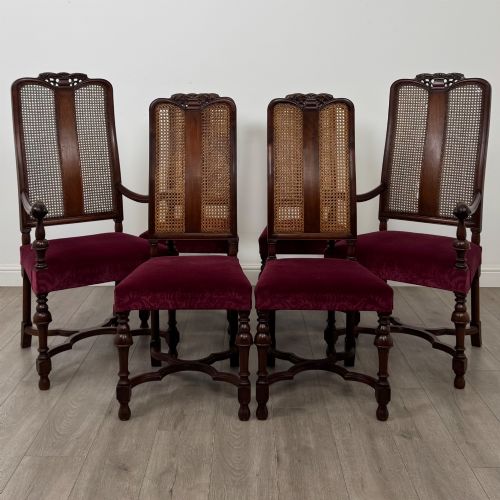
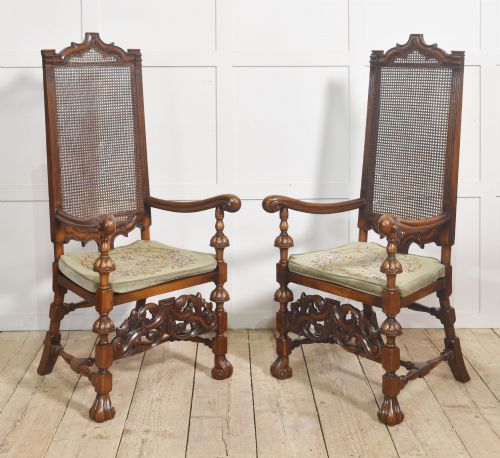
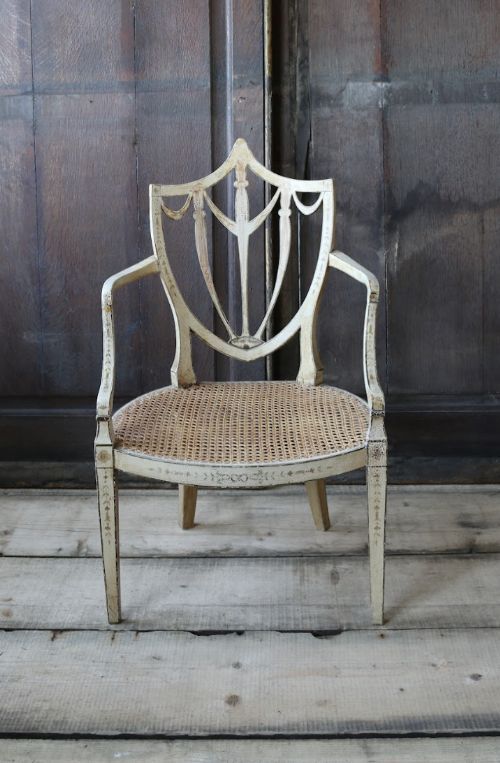
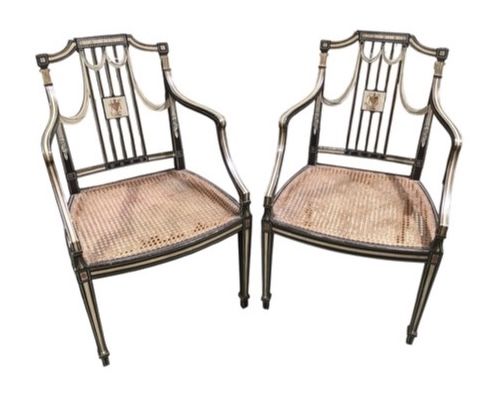
The most frequent examples you will encounter date from the nineteenth and early twentieth centuries, heavily influenced by earlier seventeenth and eighteenth-century aesthetics. These include Jacobean, Carolean, and Regency revival models that adapt historical seating for later domestic use.
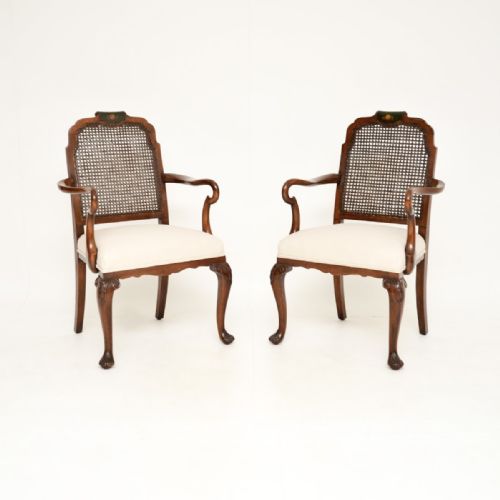
Formations range from tall, upright high-back walnut dining chairs to broader library armchairs and painted shield-back drawing room seats. Buyers often find pairs or sets designed for communal dining or matched drawing room placement.
Materials and construction methods
Makers constructed these frames using sturdy hardwoods such as oak, mahogany, and walnut, frequently complemented by ebonised finishes, paint, or lacquering. Structural joinery relies on traditional pinning and mortise-and-tenon techniques to support the load of an armchair.
The characteristic cane work is hand-woven through pierced wooden frames, creating a resilient, flexible mesh for backs and seats. Some iterations integrate upholstered cushions in fabric or velvet, paired with intricate hand-carving along the wooden rails and crests.
Cane Back Carver Chair Retail Price Guide 2026
Typical asking prices for cane back carver chair among the pieces listed under this phrase on Sellingantiques today, from the lower quarter to the upper quarter. They describe what is for sale here now, not the wider market.
Some chairs require re-upholstery, allowing future owners to choose fabrics that completely alter the character of a drawing room set.
Judging execution and finish
Quality in these chairs rests upon the crispness of the timber carving and the tightness of the cane weaving. Superior examples display deeply chiselled ornamentation on the crest rails and arms, executed without softening of the fine detail.
The integrity of the frame joints and the choice of primary timber dictate the structural longevity of the piece. Dense, well-figured walnut and mahogany with intact, evenly tensioned caning represent the upper echelon of surviving examples.
The Cane Back Carver Chair Glossary
- Carver chair
- An armchair, usually designed for the head of a dining table or as a companion to smaller side chairs. These pieces feature integrated armrests to provide additional support.
- Caning
- A seating and backrest material created by weaving split rattan or similar plant fibres through drilled holes in a wooden frame. This technique yields a durable, breathable surface.
- Revival
- A nineteenth or twentieth-century design movement that reinterpreted historical aesthetics such as Jacobean, Carolean, or Regency styles. Makers utilised older motifs to satisfy contemporary demand for traditional grandeur.
- Shield-back
- A chair back shaped in the outline of a heraldic shield, popularized during the eighteenth century. This silhouette frequently appears on fine dining and drawing room seating.
- Bergere
- An enclosed upholstered armchair with solid wooden sides and a cane or upholstered back. The design prioritises deep-set comfort for drawing rooms and libraries.
Cane Back Carver Chair: Frequently Asked Questions
How do I care for cane seating?
Maintain cane panels by dusting them regularly with a soft brush and preventing the material from drying out completely. Occasional light dampening of the underside helps keep the natural fibres pliable.
Avoid placing these chairs directly next to intense heat sources or in prolonged direct sunlight. Proper humidity control prevents the woven strands from becoming brittle and snapping.
Can I use these chairs for everyday dining?
Many examples on this page were built specifically as dining chairs and handle daily use effectively. Sturdy timber frames and sound caning provide reliable support for regular seating.
Heavily carved or antique revival models often suit formal dining spaces better than casual kitchens. Check the frame stability and cane tension before committing a chair to heavy daily service.
How do I identify a revival style?
Revival pieces combine nineteenth or twentieth-century manufacturing methods with decorative motifs borrowed from seventeenth or eighteenth-century eras. Look for crisp machine or hand-tooling alongside timber treatments typical of later decades.
Cabinet-makers during the Victorian and Edwardian periods frequently recreated Jacobean and Regency aesthetics for modern homes. Examining the interior construction and wood ageing helps clarify the true production period.