




Cane and Wood Bed
These cane and wood bed pieces combine woven natural panels with robust timber frames, offering a classic sleeping arrangement built to endure.
Cane and Wood Bed
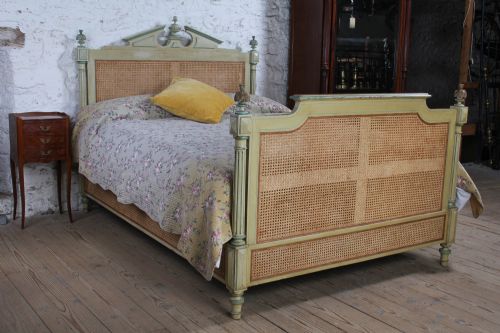
When you search for a cane and wood bed, you are looking at substantial sleeping frames and daybeds that combine timber structures with woven plant material. The versions you are most likely to meet on this page date from the nineteenth century up through the nineteen-twenties, incorporating various historical revival designs.
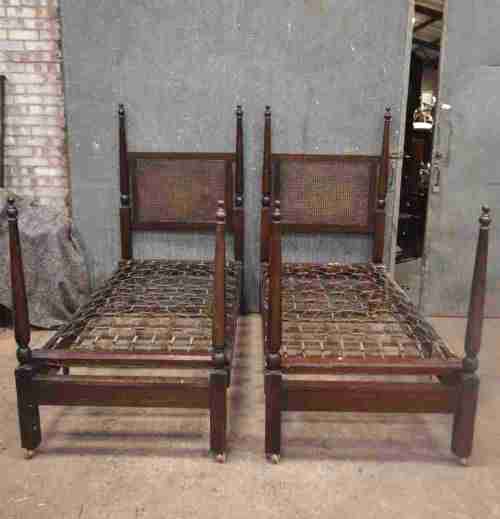
The assortment includes full-sized bed frames, daybeds, single beds, and chaise longues. Styles range from French Louis XVI and Empire designs to Anglo-Indian and Art Deco forms, reflecting diverse international influences.
Makers utilised oak, painted timber, ebonised wood, and solid Rio Rosewood alongside woven cane panels and linen upholstery. These pieces function as both central bedroom furniture and versatile day seating.
How they were made
Carpenters constructed the primary frames from sturdy timbers such as oak, painted timber, ebonised wood, and Rio Rosewood, often applying carved details or gilding. These structural elements provided the necessary load-bearing strength for daily use.
Craftsmen wove rattan cane into the headboards, footboards, and seating sections to create breathable, flexible panels. This combination of rigid wood and pliable woven material balanced structural support with lighter decorative surfaces.
Cane and Wood Bed Retail Price Guide 2026
Typical asking prices for cane and wood bed among the pieces listed under this phrase on Sellingantiques today, from the lower quarter to the upper quarter. They describe what is for sale here now, not the wider market.
Materials recorded across the inventory include oak, Rio Rosewood, painted timber, ebonised wood, and woven rattan cane.
What varies in quality
The sophistication of the timber carving and the precision of the joinery set finer examples apart from simpler utilitarian frames. Elaborate gilding, ebonising, or specialised wood selection like Rio Rosewood indicate higher workshop ambition.
The tightness and regularity of the woven cane panels reveal the skill involved in manufacturing. Well-executed weaving maintains uniform tension across complex curves found in French style headboards and daybeds.
The Cane and Wood Bed Glossary
- Cane
- A material derived from the peeled bark of rattan palms, woven into open or closed patterns for furniture panels. It provides a flexible and breathable surface for headboards and seat bases.
- Daybed
- A piece of furniture functioning as both a couch and a bed, suitable for lounging and sleeping. These often feature an extended frame with raised ends.
- Ebonised
- Wood treated with a stain or finish to imitate ebony. This dark, formal treatment was popular in nineteenth-century cabinet making.
- Louis XVI Style
- A neoclassical design vocabulary characterised by straight lines, symmetry, and classical ornamentation. Pieces in this style often incorporate carved woodwork and painted finishes.
Cane and Wood Bed: Frequently Asked Questions
What is a cane and wood bed?
A cane and wood bed is a sleeping frame or daybed constructed from timber and featuring woven rattan panels. These pieces combine structural woodwork with breathable woven inserts.
They appear in various historical revival styles, spanning from nineteenth-century designs to early twentieth-century interpretations.
How do I care for cane panels?
Maintain woven cane by dusting it gently and keeping the material adequately humidified to prevent brittleness. Avoid placing the furniture near direct heat sources that might dry out the natural fibres.
Support the woven sections properly and avoid placing excessive point loads directly onto the cane mesh.
Are these beds standard modern sizes?
Historical bed frames often differ from contemporary standard mattress dimensions. Many older frames were built to accommodate specific regional or custom mattress sizes.
Check the internal dimensions of each frame carefully before attempting to fit a modern mattress.
How do I identify French style beds?
French style frames typically display classical revival motifs such as ribbon twists, fluted columns, and painted or gilded timber surfaces. They often incorporate rounded corbeille ends and exposed carved woodwork.
Design influences range from formal Louis XVI aesthetics to nineteenth-century chateau styles.