

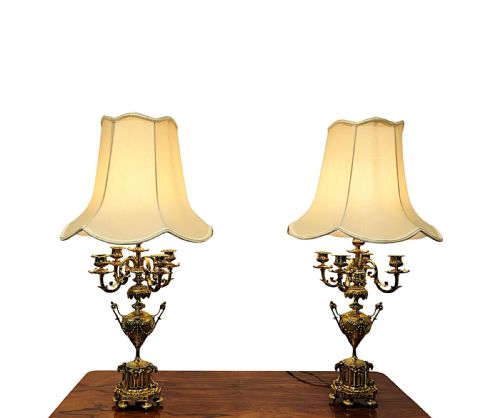
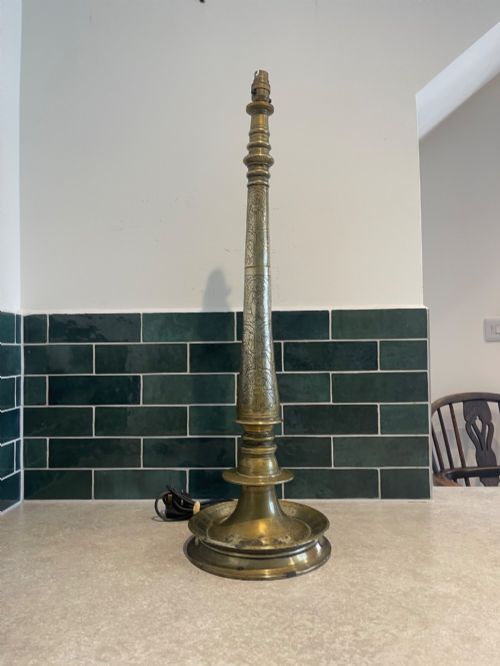
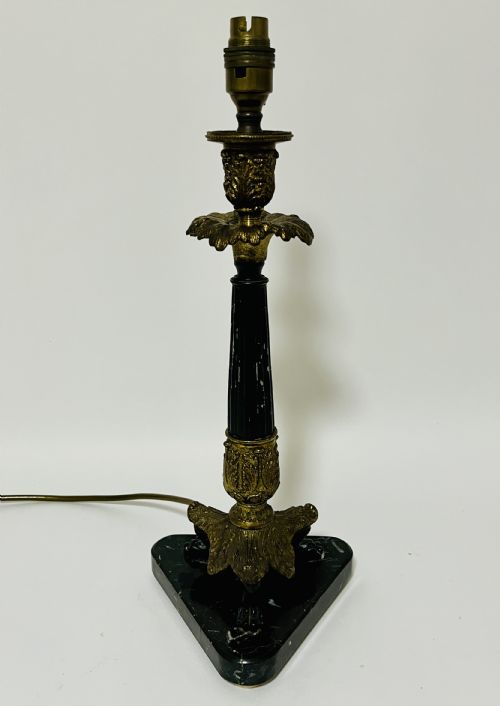
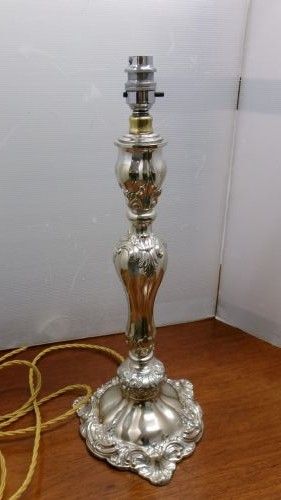


Candlestick Style Table Lamps
These candlestick style table lamps bring height and sculptural presence to a room, offering functional illumination derived from earlier lighting forms.
Candlestick Style Table Lamps
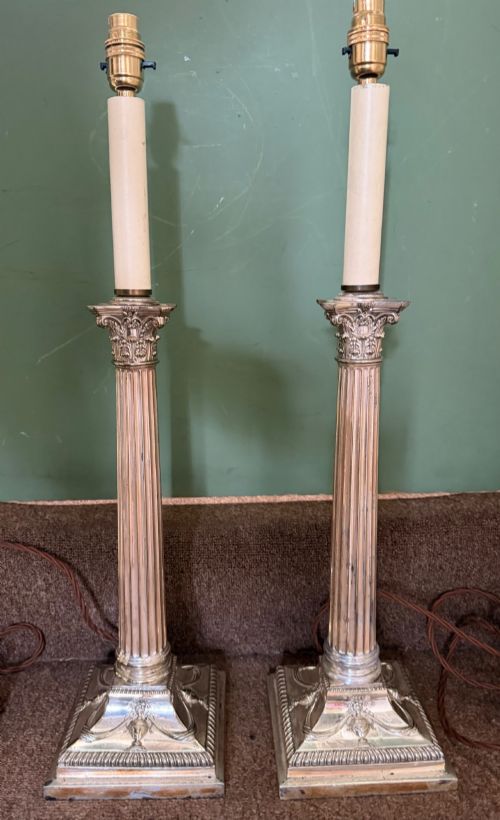
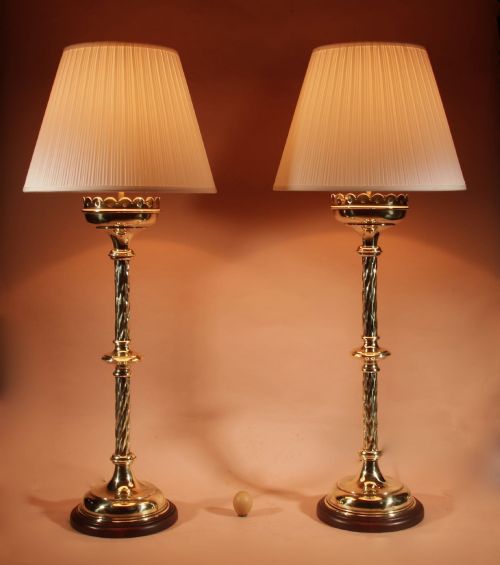
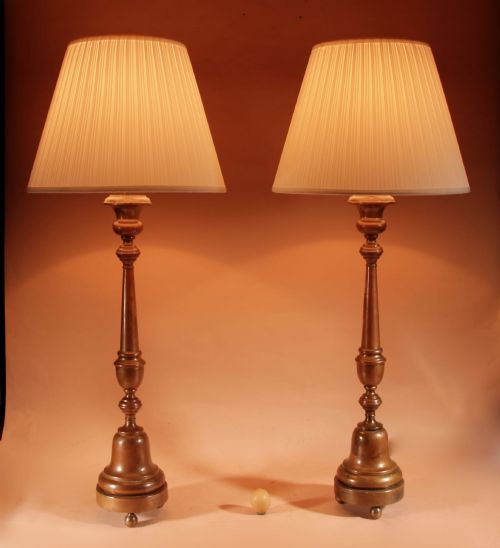
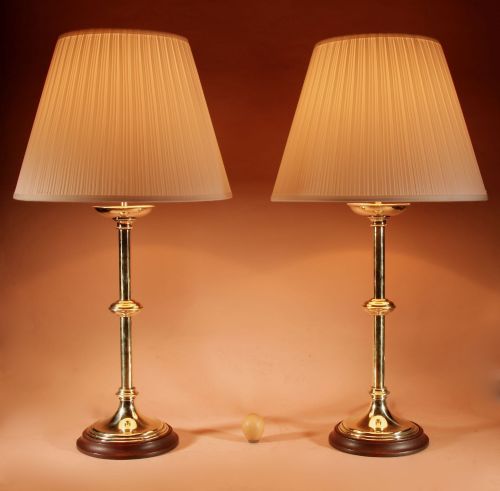
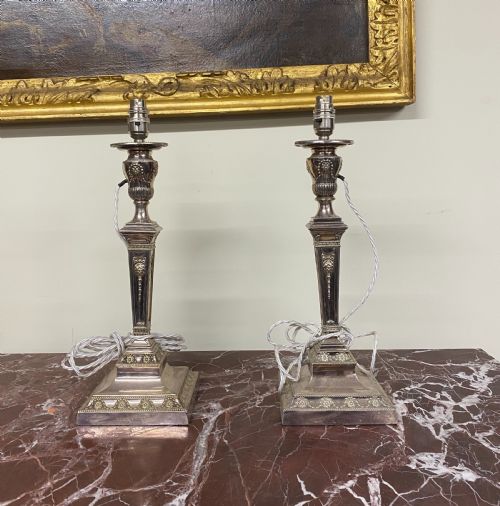
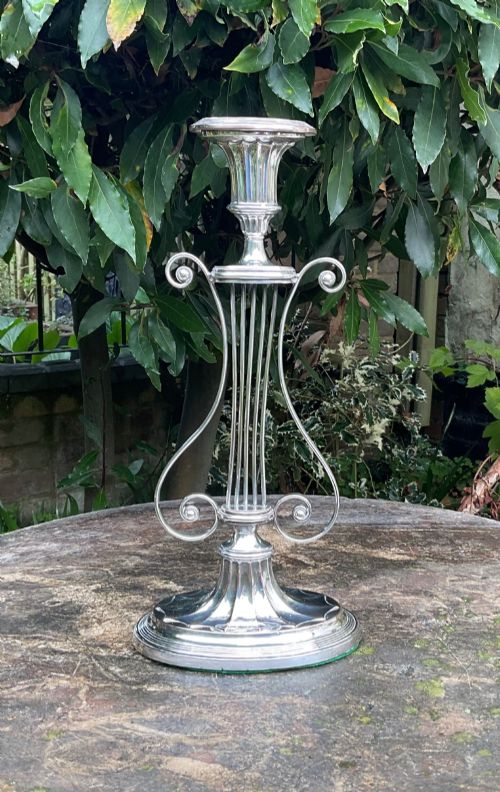
Candlestick style table lamps adapt traditional lighting supports, incorporating forms originally designed for wax candles into electrified fittings. These pieces draw on historical vocabularies including neoclassical columns, Gothic revival standards, and French Empire designs.
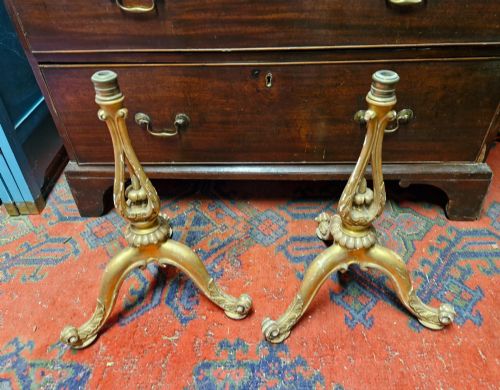
The selection here spans the eighteenth through to the early twentieth centuries, encompassing Victorian and Edwardian examples alongside earlier adaptations. Brass and bronze columns, carved timber bases, and gilt ormolu fixtures dominate the material forms available.
Many items originate from domestic and ecclesiastical settings, including converted altar candlesticks and candelabra. Pairs appear frequently alongside single tall floor and table standards, offering symmetrical options for interior placement.
Construction and Materials
Metals form the structural backbone of these pieces, utilising cast brass, bronze, silver plate, and ormolu. Founders employed techniques such as lost-wax casting and metal spinning to create complex column shafts and decorative bases.
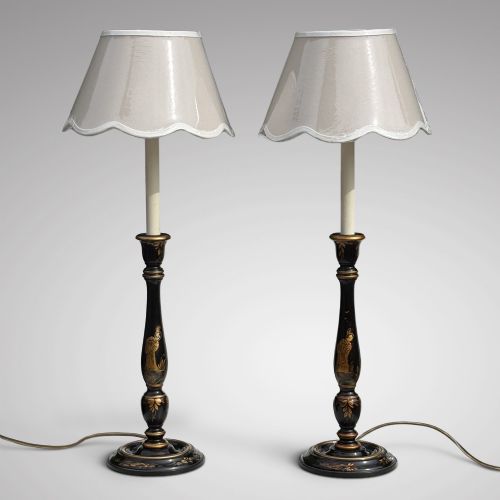
Timber versions rely on hand carving and gilding, often utilising gesso grounds to receive leaf or paint layers. Toleware and fabric elements introduce colour and softer textures to painted metal bodies and associated shades.
Candlestick Style Table Lamps Retail Price Guide 2026
Typical asking prices for candlestick style table lamps among the pieces listed under this phrase on Sellingantiques today, from the lower quarter to the upper quarter. They describe what is for sale here now, not the wider market.
The selection includes pieces spanning the 18th, 19th, and early 20th centuries, executed in brass, bronze, timber, and ormolu.
Evaluating Quality
The distinction between tiers rests upon the crispness of casting and the depth of hand chasing in metalwork. Superior examples retain sharp architectural details on capitals and bases, whereas lesser pieces show smoothed contours from worn production moulds.
Weight and stability indicate substance, with heavy cast brass or bronze bases offering superior physical balance compared to thinner alternatives. The integrity of original gilding, patination, and the subtlety of carved timber enrichment separate standard production from masterwork execution.
The Candlestick Style Table Lamps Glossary
- Ormolu
- Gilded bronze, produced by applying a mercury and gold amalgam to a bronze base and heating it to drive off the mercury. This technique creates a durable, rich golden surface typical of French decorative pieces.
- Toleware
- Lacquered or painted sheet metal items originating in Europe. The process involves applying multiple layers of varnish and pigment to tin-plated steel or iron.
- Corinthian Column
- An architectural order featuring a slender fluted shaft and an ornate capital decorated with acanthus leaves. This classic design frequently forms the main body of neoclassical metal lamps.
- Candelabra
- A branched candlestick holder designed to support multiple candles simultaneously. Many antique examples are later converted into table lamps by running electrical wiring through the central shaft.
Candlestick Style Table Lamps: Frequently Asked Questions
How do I choose between brass and bronze lamps?
Brass offers a bright golden metallic tone that polishes to a high shine or retains a warm historical patina. Bronze provides a darker, heavier appearance that suits formal interiors.
Consider the existing metal finishes in your room when selecting between these two durable materials.
Were these lamps originally made for electricity?
Most pieces from the nineteenth century and earlier began life as wax candle holders or oil lamps. Artisans subsequently converted them for modern electrical use by drilling channels and adding fittings.
This conversion process preserves the antique decorative base while accommodating contemporary lighting requirements.
How do I date a candlestick lamp?
Dating relies on stylistic markers such as neoclassical proportions, Gothic Revival tracery, or Edwardian turning patterns. Material composition and casting techniques also provide clear indicators of the period.
Comparing the base construction to documented historical furniture styles helps narrow the era of manufacture.
Where should I place a tall candlestick lamp?
Tall standards and column lamps work effectively on sturdy sideboards, large consoles, or dedicated floor areas where their height commands attention. They provide elevated vertical illumination that balances low seating arrangements.
Ensure the surface supports the weight and height of heavier bronze or timber bases.