

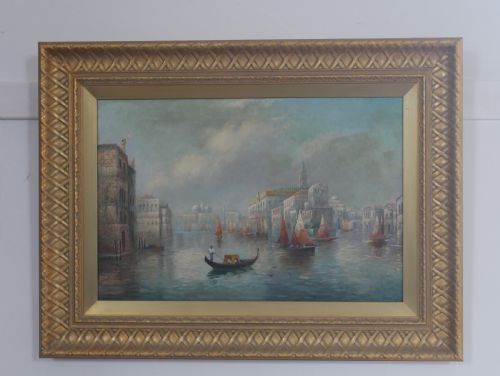


Canal Oil Painting
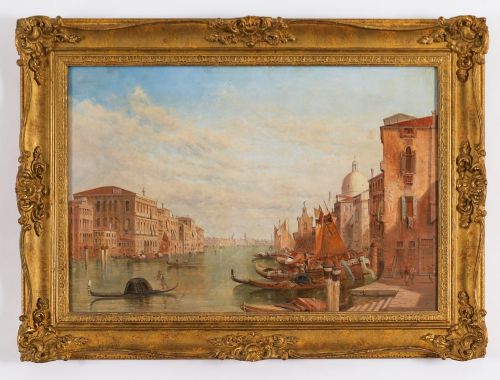
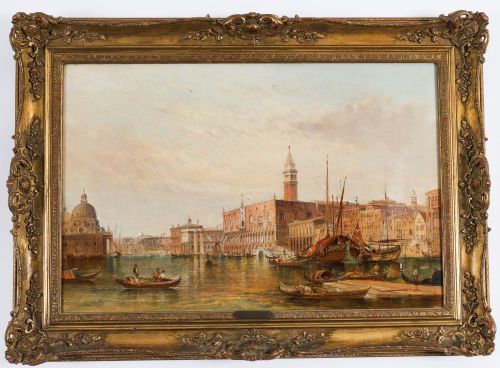
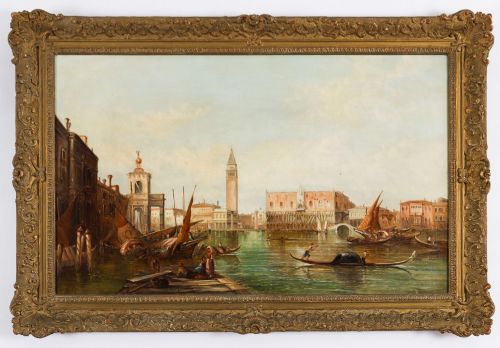
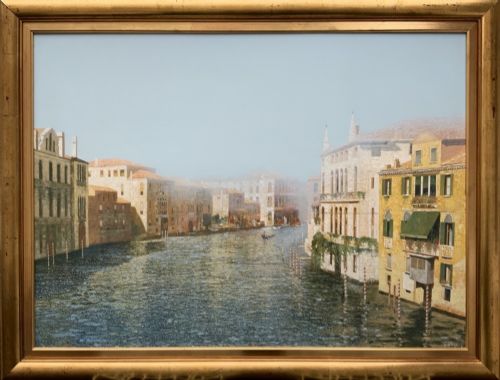
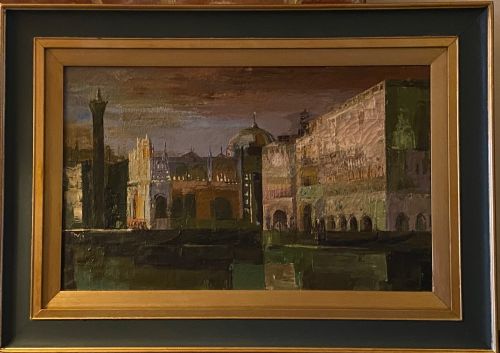
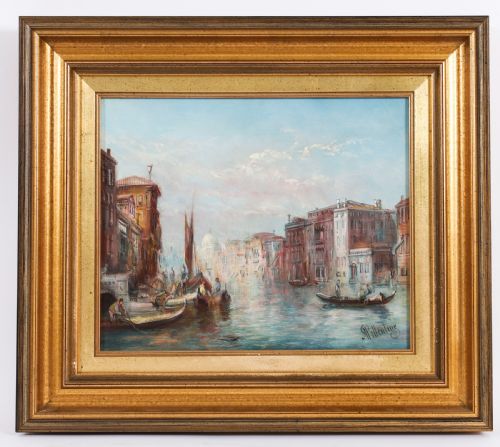
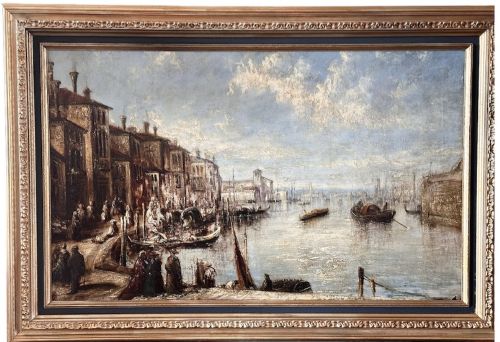
A canal oil painting captures the atmospheric movement of water and light, bringing historic waterways and Venetian vistas directly into a room.
Canal Oil Painting
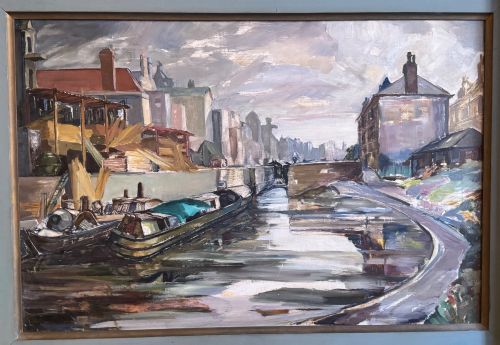
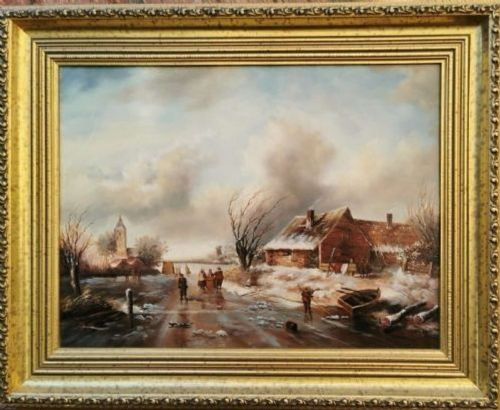
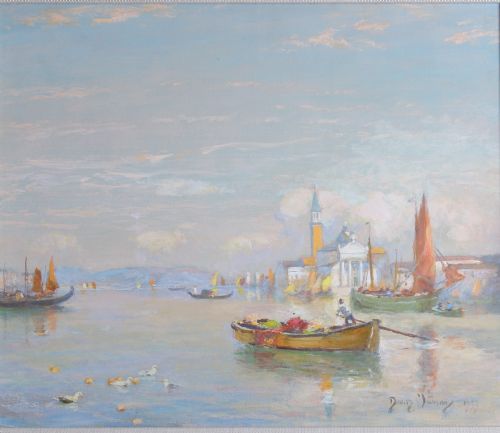
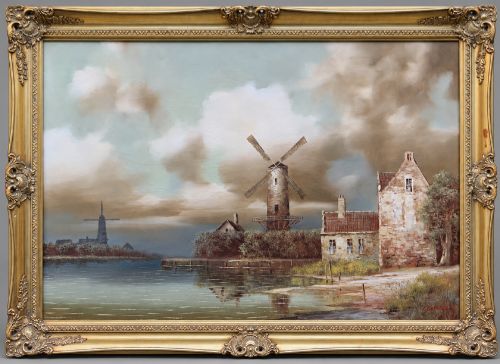
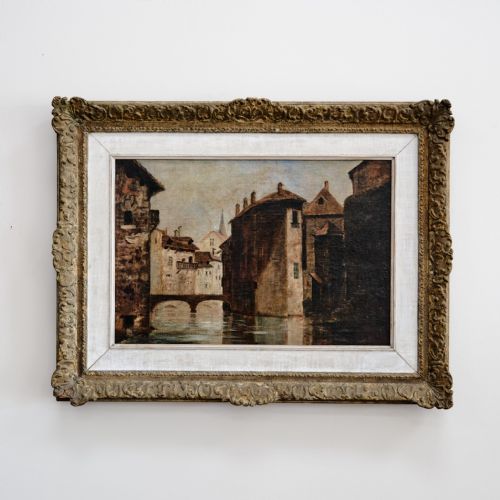
A canal oil painting depicts urban waterways, rivers, and locks, with a strong focus on Venetian scenes alongside Dutch windmills and British rivers. These artworks span from the nineteenth century into the mid-twentieth century, capturing bustling quaysides, historic palazzos, and tranquil winter landscapes.
Buyers encountering this selection will frequently find nineteenth-century representations of Venice alongside mid-century Dutch manner landscapes. The compositions range from sweeping architectural townscapes to intimate river views showing figures on bridges and barges.
The subjects draw heavily on European travel and continental cityscapes, utilising oil paint to render the distinct reflections of light upon water. These pieces function as historical records of urban waterways as well as decorative works of fine art.
Materials and Technique
Artists painted these works primarily using oil paint applied to stretched canvas or wooden boards, allowing for rich texture and deep colour blending. The medium enabled painters to build up thick layers of pigment, particularly when rendering the luminous surface of water and atmospheric skies.
Many of the nineteenth-century and mid-century frames utilise gesso and giltwood to create ornate, reflective borders that complement the oil paintings. These frames were frequently carved and gilded to enhance the visual impact of the townscape or marine scene within.
Canal Oil Painting Retail Price Guide 2026
Typical asking prices for canal oil painting among the pieces listed under this phrase on Sellingantiques today, from the lower quarter to the upper quarter. They describe what is for sale here now, not the wider market.
Listings feature works spanning the nineteenth century, 1930, 1950, and 1960, executed in oil on canvas, wood, and giltwood.
Assessing Artistic Merit
Quality rests in the handling of light and perspective, distinguishing works with vibrant atmosphere from stiff topographical records. Stronger paintings demonstrate a confident command of brushwork, particularly in the rendering of water reflections and architectural detail.
The distinction between ordinary decorative works and superior examples lies in the vitality of the composition and the artist's ability to capture movement on the water. Skilled execution of light across historic facades elevates a canvas far above standard studio production.
Alfred Pollentine·Jane Vivian·William Raymond Dommersen·Antonietta Brandeis·Antoine Bouvard Senior
The Canal Oil Painting Glossary
- Oil on Canvas
- A traditional painting medium where pigmented oil is applied to a woven fabric support. This combination allows for lasting flexibility and rich depth of colour.
- Giltwood
- Wood that has been treated with a thin layer of gold leaf or metallic powder. This material frequently frames nineteenth-century fine art.
- Impressionism
- An art style focused on accurate depiction of light and its shifting qualities. Practitioners prioritised open brushwork and everyday subject matter.
- Gesso
- A plaster-like mixture applied to wood or canvas as a base for painting or gilding. It provides a smooth, prepared surface for the artist.
- Townscape
- A painting or drawing depicting a city or urban area. These works often centre on canals, streets, and historic architecture.
Canal Oil Painting: Frequently Asked Questions
What periods do these paintings cover?
The works span from the nineteenth century through to the mid-twentieth century, encompassing Victorian interpretations, Dutch manner landscapes, and mid-century impressionism.
This broad timeline reflects changing artistic approaches to capturing urban waterways and architectural townscapes across Europe.
Where were these canal scenes painted?
Many compositions focus on Venetian waterways such as the Grand Canal, alongside Dutch river scenes, Flemish canals, and British waterways.
Artists frequently travelled to continental Europe to record historic palazzos, locks, and quaysides.
How should I hang an oil painting?
These works require sturdy wall fixings, particularly when housed in heavy giltwood frames. Position them away from direct sunlight and excessive moisture to protect the canvas and paint layers.
Proper placement ensures the gilt frames and oil pigments remain stable over time.
Are these works signed by the artist?
Some canvases bear the signature of established painters such as Alfred Pollentine or Antonietta Brandeis, while others remain unsigned studio pieces.
Attributions often rely on recorded styles, subject matter, and period documentation.