



Canal Artwork
When you search for canal artwork, you enter a visual tradition spanning Venetian waterways and Dutch locks rendered in oil and watercolour.
Canal Artwork
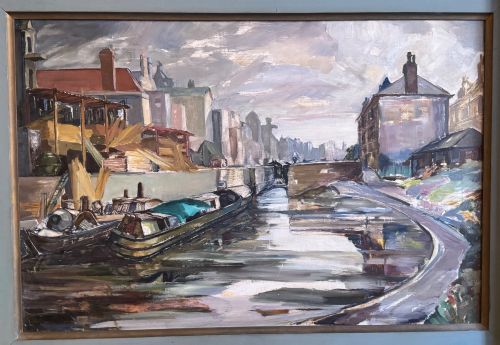
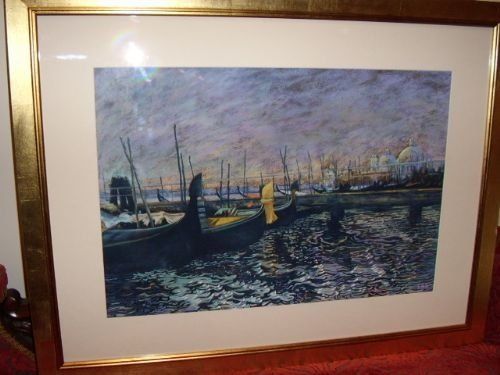
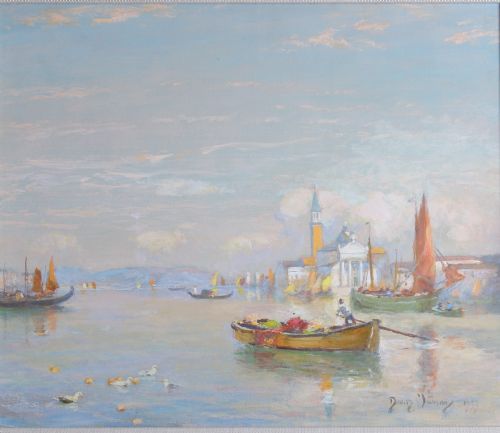
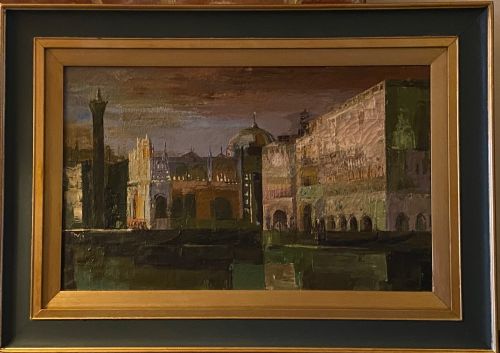
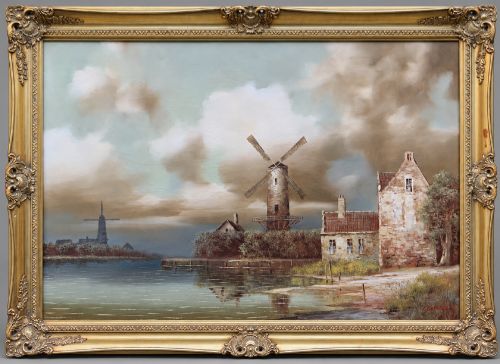
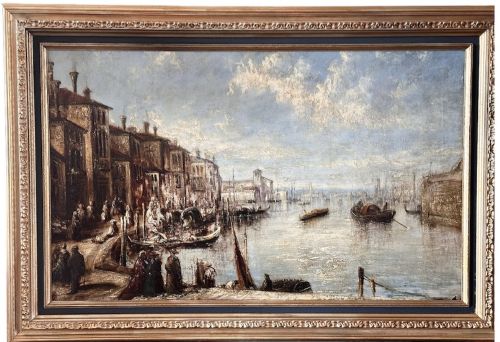
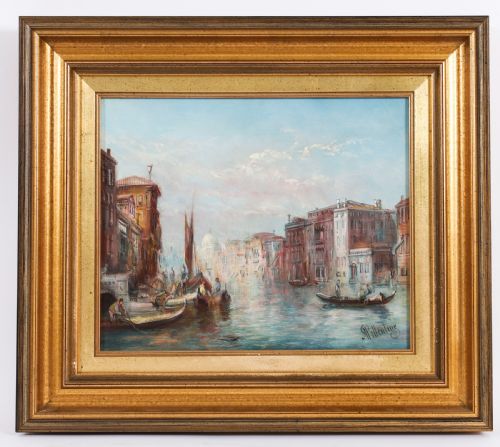
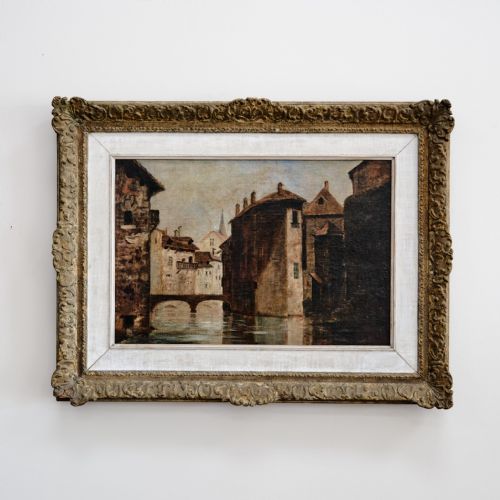
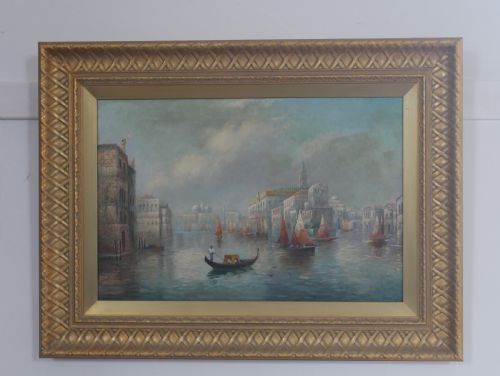
Canal artwork encompasses paintings and watercolours depicting urban waterways, lock gates, and riversides, with Venetian scenes appearing frequently alongside British and Dutch river views. These pieces span the nineteenth century through to the mid-twentieth century, capturing industrial canals and grand Italian palazzos alike.
The versions most commonly met on this page include nineteenth-century oils on canvas and early twentieth-century watercolours. Artists recorded bustling gondola traffic on the Grand Canal or quiet barges on northern European waterways, employing styles that range from Victorian fine art to mid-century impressionism.
Materials and techniques
Makers laid oil paint onto canvas and wood panels to build rich textures, frequently capturing the reflective qualities of water and light upon historic stone architecture. Watercolours on paper offered a lighter medium for recording architectural detail and atmospheric haze during travels abroad.
Framing often utilised gilt wood to complement the painted surfaces, while glass protected works executed on paper. Artists balanced precise draughtsmanship with looser impressionistic brushwork to render rippling water and distant cityscapes.
Canal Artwork Retail Price Guide 2026
Typical asking prices for canal artwork among the pieces listed under this phrase on Sellingantiques today, from the lower quarter to the upper quarter. They describe what is for sale here now, not the wider market.
Listings feature works created between the nineteenth century and the mid-twentieth century, utilising oil on canvas, watercolour, and gouache.
Distinctions in quality
The capability of the hand behind the brush dictates the success of these paintings, separating lively depictions of light on water from stiff topographical records. Stronger compositions command attention through confident handling of perspective, particularly in complex architectural settings like Venetian bridges and palazzos.
Condition and originality play a significant part in the standing of a piece, particularly regarding the preservation of the original paint layer and the absence of heavy restoration. Works that retain their period framing and clear signatures by documented artists demonstrate higher distinction within this category.
Sir David Murray RA·Sushila Singh·Alfred Pollentine·Francis Moltino·Richard Henry Wright·Edwin Lord Weeks·Thomas Baker·Fred Lawson·E A Minardo·Claude Jousset·Frederick Tully Lott·Antonietta Brandeis·Marc Aldine·Antoine Bouvard Senior·E Perez Senet·Jane Vivian·William Raymond Dommersen·Vittore Zanetti Zilla·Herbert Royle·Hercules Brabazon Brabazon
The Canal Artwork Glossary
- Oil on Canvas
- A painting medium where pigments suspended in oil are applied to a stretched cloth support. This combination allowed artists to work slowly, blending tones to capture the shifting light on water.
- Watercolour
- A paint consisting of water-soluble pigments applied to paper. It yielded translucent washes that suited rapid sketching of atmospheric canal views.
- Impressionism
- A style of painting focused on capturing the visual impression of a moment, especially the shifting effects of light and colour. Practitioners often used rapid brushstrokes to render water reflections.
- Gilt Wood
- Wood that has been coated with a thin layer of gold leaf. Frames finished in this manner frequently surround nineteenth-century oil paintings.
Canal Artwork: Frequently Asked Questions
What periods do these paintings come from?
The selections span the nineteenth century through to the mid-twentieth century, capturing shifting artistic tastes across multiple decades.
Victorian pieces sit alongside Dutch impressionist works and mid-century modern interpretations of urban waterways.
How were these watercolours and oils framed?
Many oil paintings utilise traditional gilt wood frames that complement the rich tones of the canvas.
Works executed on paper typically feature protective glass alongside wooden or card surrounds to safeguard the delicate pigments.
Where do these canal scenes usually take place?
Venice forms a primary focus, with numerous depictions of the Grand Canal, gondoliers, and historic palazzos by various European painters.
Other works record British locks and Dutch riversides, reflecting a broad geographic interest in inland waterways.
How do I care for an antique oil painting?
Keep the canvas away from direct sunlight and dramatic shifts in room temperature to prevent cracking in the paint layers.
Dust the surface gently with a soft, dry brush and avoid using chemical cleaning agents on the pigment.