
Calico Reading Chair
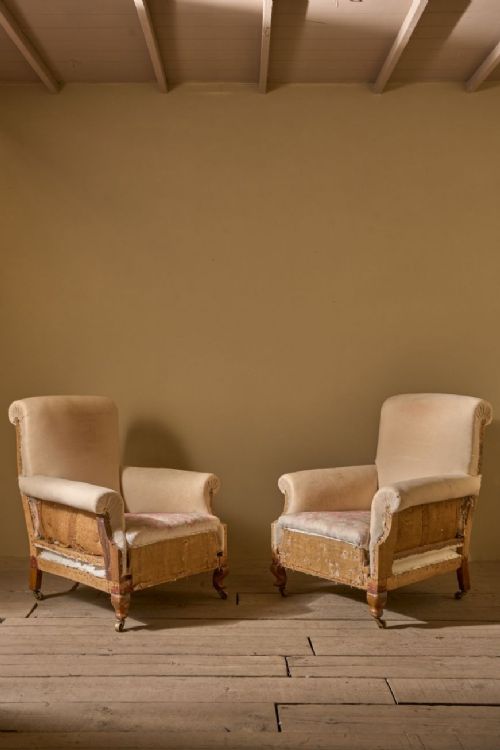
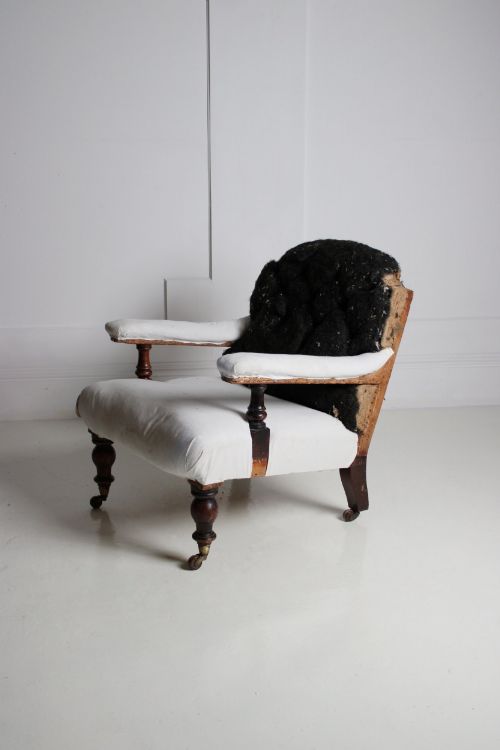
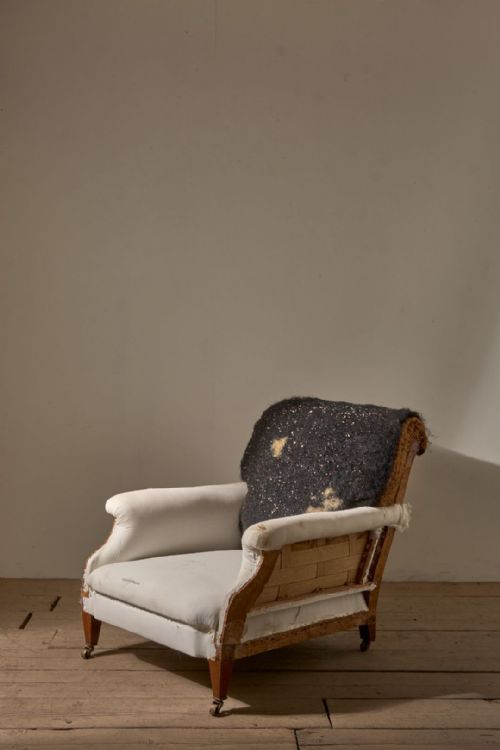
A calico reading chair provides deep, comfortable seating designed for long hours with a book, typically arriving unadorned and ready for bespoke upholstery.
Calico Reading Chair
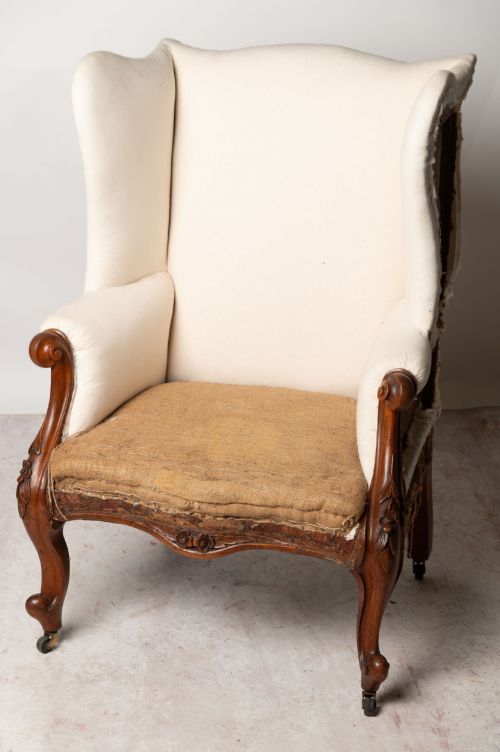
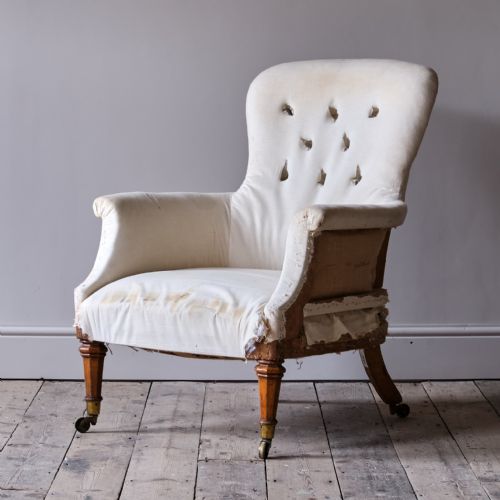
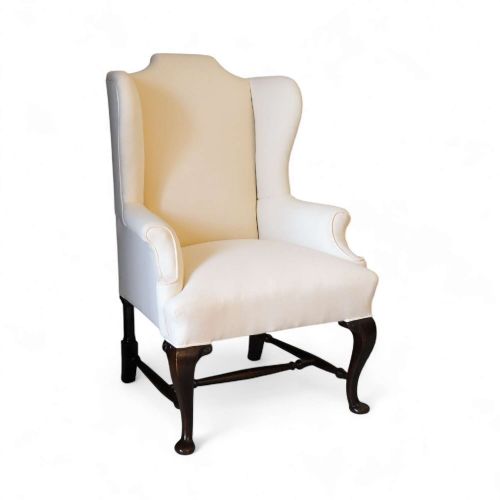
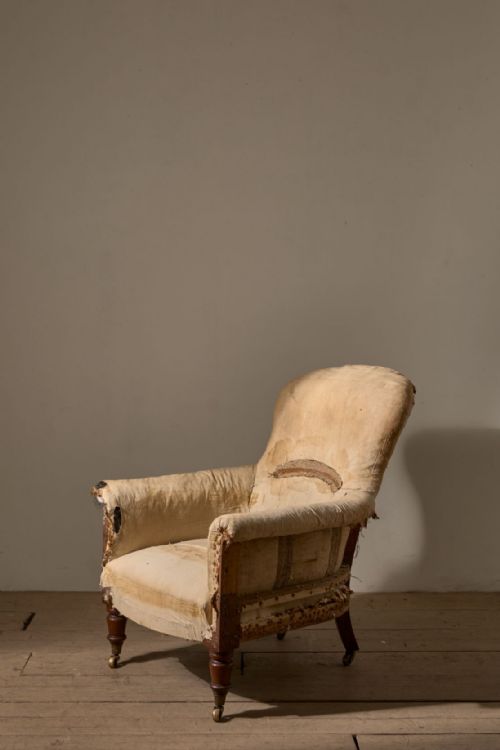
When searching for a calico reading chair, you encounter sturdy armchairs originating from the nineteenth century, including the Victorian and Regency periods, alongside early twentieth-century examples. These pieces primarily take the form of deep-seated armchairs, library chairs, and wing chairs suited for domestic studies and country houses.
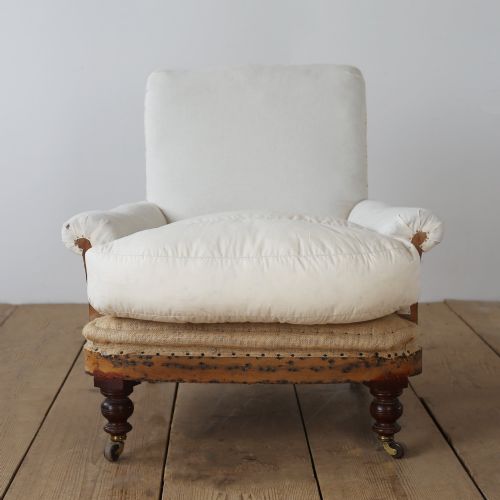
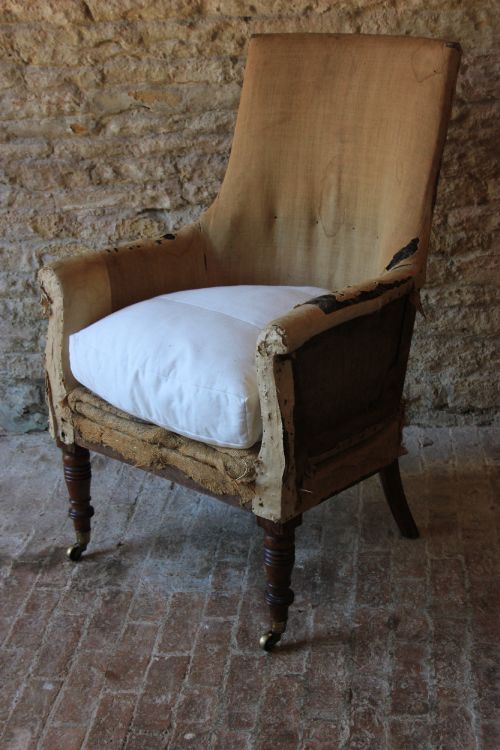
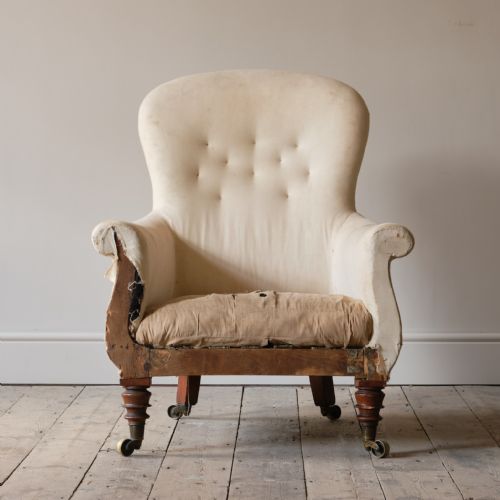
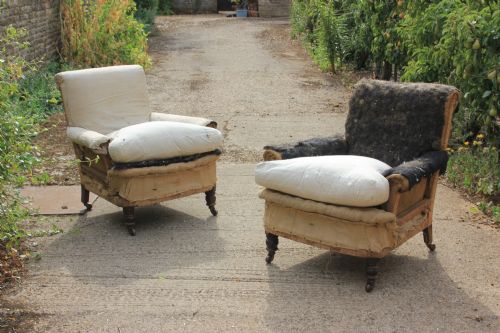
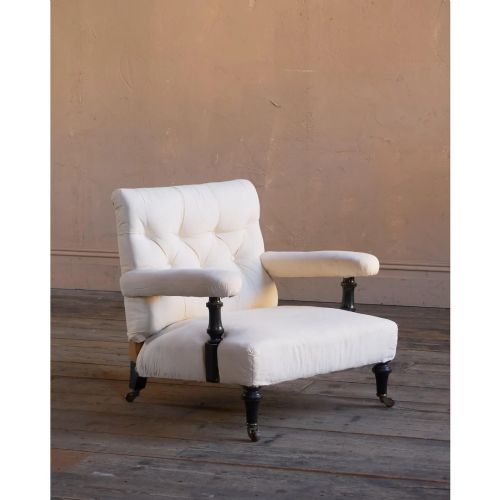
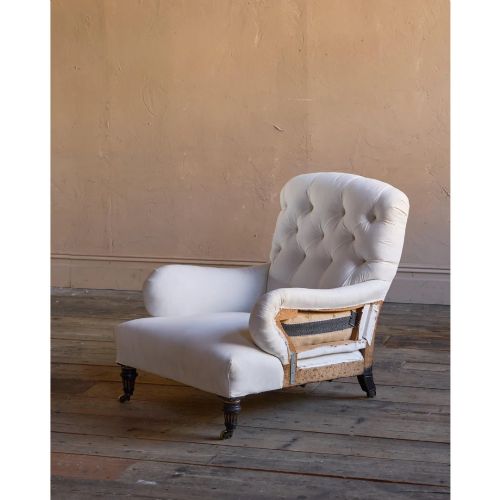
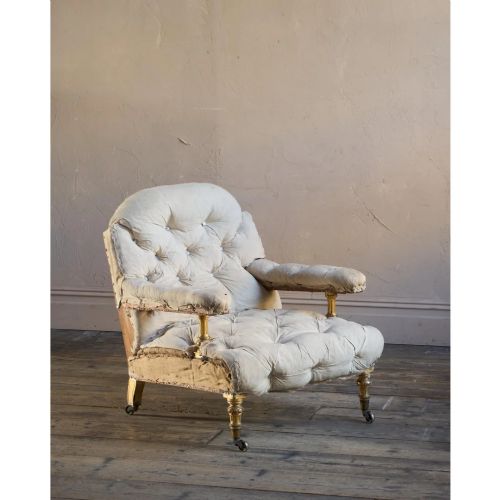
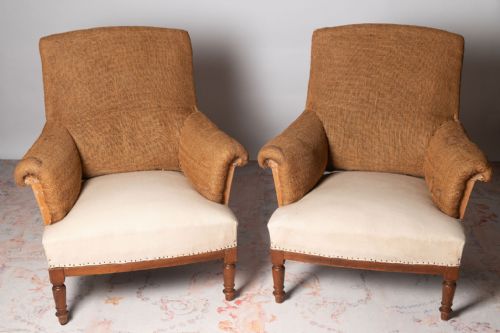
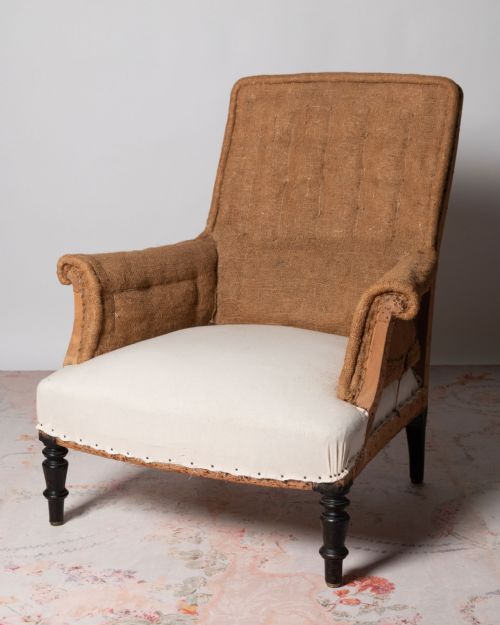
The pieces on this page are defined by their underlying frame and base fabric covering rather than a finished outer textile. Many arrive prepared in calico or hessian, leaving the final decorative textile choice open for the room.
English country house styles and makers dominate the selection, often featuring low profiles, sprung seats, and scroll backs designed for comfort. You also find French Napoleon III models and open armchairs bearing stylistic traits from notable makers.
What varies in quality
The distinction between average and exceptional pieces lies in the integrity of the underlying timber frame and the precision of the joinery. Chairs retaining their original manufacturer stamps or well-documented workshop attributions command greater attention from collectors.
Proportion and scale dictate the seating experience, with superior pieces offering balanced lumbar support, properly tensioned springs, and harmonious arm heights. The refinement of turned legs and the inclusion of original brass castors further separate standard examples from finer works.
Listings feature nineteenth-century armchairs incorporating mahogany, walnut, and beech timbers, alongside exposed brass castors and Hessian linings.
Howard and Sons·Mellier and Co·Gillows·Sopwith·Hamptons and Sons·William Birch
The Calico Reading Chair Glossary
- Calico
- A plain-woven cotton textile used as an initial layer of upholstery to cover the stuffing before the final decorative fabric is applied. It provides a clean, neutral surface that prepares an armchair for custom finishing.
- Hessian
- A coarse woven fabric, typically made from jute fibres, utilised inside upholstered seating to contain stuffing materials. It forms a durable foundation beneath the outer calico layer.
- Library chair
- A heavy, comfortable armchair designed for reading rooms, often featuring low arms and deep padding. These chairs prioritise ergonomic support for extended periods of sitting.
- Wingback chair
- An armchair with high backrests and side panels designed to shield the sitter from draughts. They appear frequently in nineteenth-century country house settings.
- Scroll back
- A chair back featuring a curved, scroll-shaped top rail typical of nineteenth-century seating designs. This profile adds decorative elegance while supporting the user's upper back.
Calico Reading Chair: Frequently Asked Questions
What is a calico reading chair?
A calico reading chair is an upholstered armchair stripped down to or built up with plain cotton calico, awaiting a final decorative fabric. These pieces focus on deep seating and comfort.
They originate mostly from the nineteenth century, reflecting periods like the Regency and Victorian eras, and often bear the robust proportions of English country house furniture.
Why are they upholstered in calico?
Upholstering a chair in calico serves as a foundational stage that secures the internal stuffing, springs, and webbing. It creates a taut, neutral skin over the frame.
This presentation allows buyers to inspect the underlying shape and structural lines clearly before committing to an outer decorative textile.
How do I date a nineteenth-century armchair?
Dating relies on observing the timber species, leg turning styles, and structural proportions characteristic of specific periods like the Regency or Victorian eras. Makers' stamps or attributed workshop designs also narrow down the timeframe.
Changes in upholstery methods, from early stuffing techniques to later spring systems, offer additional clues to the decade of manufacture.
Where were these armchairs used?
These armchairs primarily furnished the libraries, drawing rooms, and studies of large English country houses. Their deep seats and supportive backs were built for prolonged reading and leisure.
Over time, they migrated into domestic drawing rooms and private sitting spaces, valued for their ergonomic comfort.
How do I choose the right reading chair?
Consider the physical proportions of the chair, noting the depth of the seat and the height of the backrest relative to your space. Frames range from compact petite models to large country house proportions.
Examine the integrity of the wooden frame and the quality of the underlying sprung construction to ensure lasting comfort.