



Calico Fabric Chairs
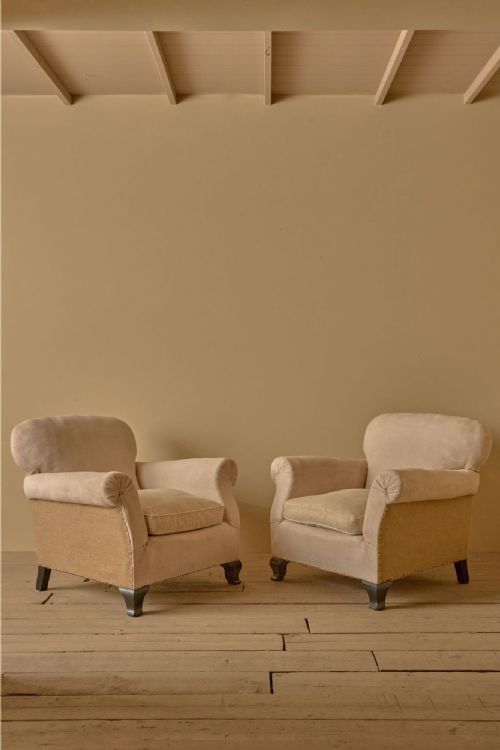
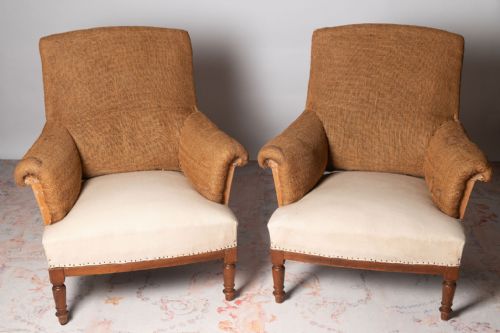
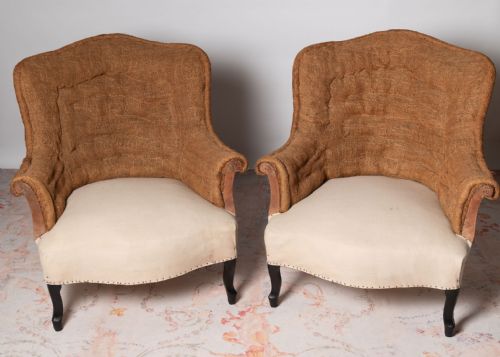
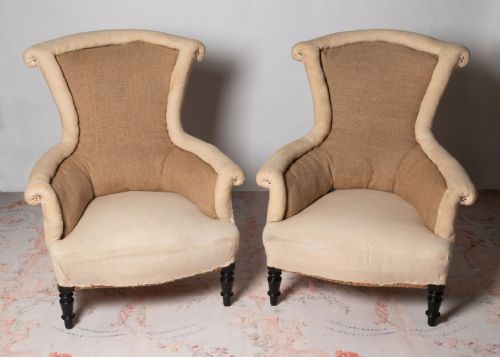
Calico fabric chairs are versatile armchairs upholstered in plain cotton, offering an understated foundation ready for final covering.
Calico Fabric Chairs
Calico fabric chairs bring together nineteenth-century and early twentieth-century armchairs upholstered in heavy cotton fabric. Buyers looking at this selection will find generous library chairs, scroll-backed designs and club styles from English and French workshops.
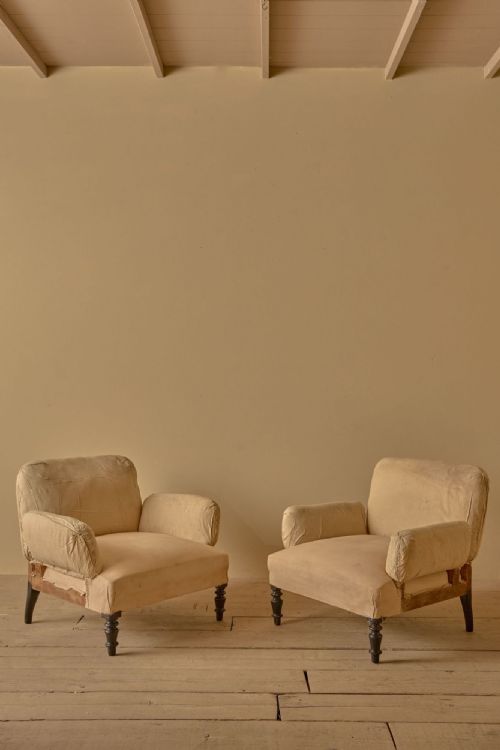
The most common examples on this page are nineteenth-century French armchairs and English country house seating. These pieces often arrive covered in plain calico or hessian, serving as comfortable seat frames waiting for top covers.
Makers such as Hamptons and Sons, Trollope and Sons, and Thomas Sopwith appear among the listed pieces. Styles span from Regency and William IV through to French Napoleon III and Art Deco periods.
Materials and construction
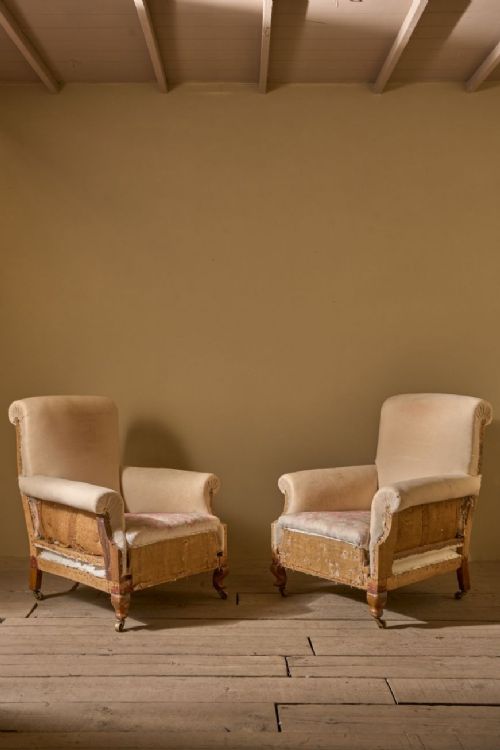
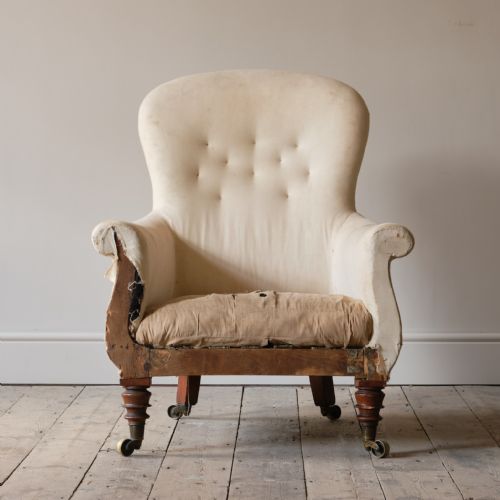
Frames are built from hardwoods including mahogany, beech, and general timber to provide sturdy internal support. Brass castors frequently finish the feet on larger library and club armchairs.
Upholstery build-ups utilise cotton calico and hessian as foundational layers over sprung and stuffed interiors. Buttoned backs and pillow arms demonstrate traditional nineteenth-century stuffing techniques.
The selection includes English country house armchairs alongside French Napoleon III and Art Deco styles.
Distinctions in quality
The distinction between standard commercial seating and top-tier workshop production lies in frame timber selection and joinery execution. Heavier proportioned frames by documented makers show superior stability and balanced proportions.
Internal spring tension and deep buttoning reflect the original maker's investment in long-term seating comfort. Finer examples retain robust mahogany or beech structures beneath their calico covers.
Trollope and Sons·Hamptons and Sons·Thomas Sopwith
The Calico Fabric Chairs Glossary
- Calico
- A plain-woven unbleached cotton textile used as a tight foundational upholstery cover before decorative fabric is applied. It provides a durable base across nineteenth-century armchair springs and stuffing.
- Hessian
- A coarse woven fabric made from jute fibres, utilised inside traditional upholstery builds to contain stuffing materials. You will often see it beneath or alongside calico on antique chair frames.
- Scroll back
- An armchair design featuring a backrest curving outward in a scroll formation. This profile appears frequently in English country house seating from the Victorian era.
- Library chair
- A deep, comfortable armchair designed for reading rooms and studies during the nineteenth century. These pieces often feature generous proportions and low armrests.
- Napoleon III
- A French design period spanning the mid to late nineteenth century, known for eclectic revivals and comfortable upholstered seating. Pieces from this era often include pillow arms and turned wooden supports.
Calico Fabric Chairs: Frequently Asked Questions
What is a calico fabric chair?
These are nineteenth-century and early twentieth-century armchairs upholstered in plain cotton calico rather than finished decorative fabric. They are traditionally built seating frames designed to receive a final decorative cover.
Buyers often choose them to select their own upholstery fabric while enjoying a period frame with authentic proportions.
Can I use them without recovering?
Plain calico provides a clean, neutral finish that some interiors utilise as a minimalist aesthetic. The fabric is durable enough for everyday seating while remaining a blank canvas.
Many owners eventually add patterned or textured top fabrics to match their specific room decor.
How do I identify a Victorian armchair?
Victorian armchairs typically display robust timber frames made from mahogany, beech, or general hardwoods. Details often include deep buttoned backs, brass castors, and generous scroll or library proportions.
Construction methods reflect mid to late nineteenth-century workshop standards with traditional spring and stuffing layers.
Where were these chairs made?
The pieces originate primarily from English country houses and French provincial or Parisian workshops. Makers range from documented firms like Trollope and Sons to regional cabinet makers.
Stylistic cues such as French Napoleon III lines or English library designs help distinguish their geographic origins.