

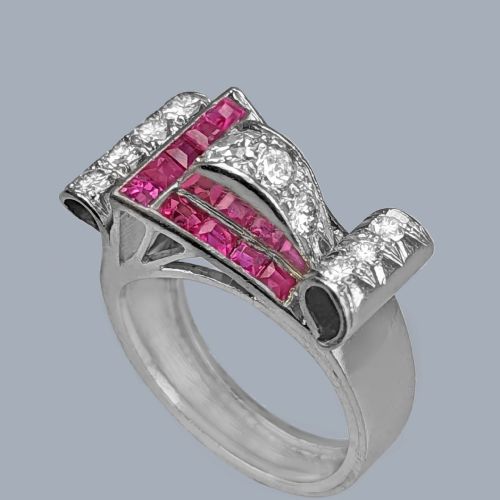
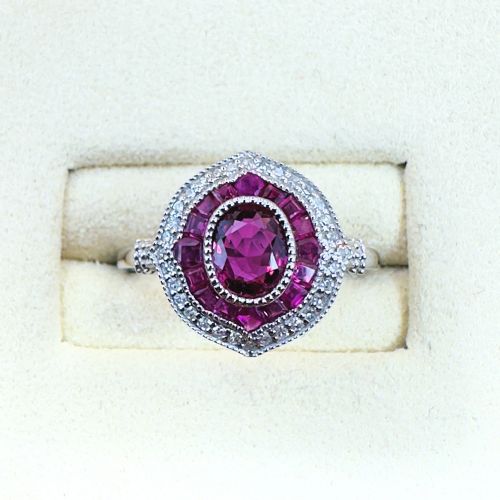


Calibre Ruby Ring
A calibre ruby ring brings together precise channel-set stones and brilliant diamonds, offering a striking geometric design that collectors prize.
Calibre Ruby Ring
A calibre ruby ring is a piece of jewellery defined by tightly fitted, custom-cut rubies arranged alongside diamonds in platinum or gold settings. Buyers searching this phrase will find an array of dress rings and cluster rings representing distinct historical periods from Edwardian times through to the mid-twentieth century.
The most common style on this page is the Art Deco cluster or target ring, featuring geometric layouts like marquis, buckle, and spiral formations. These pieces showcase the linear precision and contrasting colours characteristic of the 1920s, 1930s, and adjacent decades.
How they were made
Craftsmen utilised durable platinum and various forms of gold, including 18ct yellow and white gold, to mount the gemstones securely. The ruby and diamond elements are combined with techniques such as old cut, rose cut, and calibre cutting to build intricate texture.
Settings frequently rely on close metalwork to hold calibrated stones in unbroken lines, creating smooth transitions between the red rubies and sparkling diamonds.
Calibre Ruby Ring Retail Price Guide 2026
Typical asking prices for calibre ruby ring among the pieces listed under this phrase on Sellingantiques today, from the lower quarter to the upper quarter. They describe what is for sale here now, not the wider market.
Materials seen in this collection include ruby, diamond, platinum, 18ct gold, 18ct white gold, and sapphire.
What varies in quality
The standard of a calibre ruby ring rests upon the precision of the stone cutting and how tightly the calibre gems fit within their channels. Superior examples display exact alignment without gaps in the metal framework.
Another measure of quality is the harmony between the primary ruby elements and the surrounding old cut or rose cut diamonds, where balanced proportions elevate the visual impact of the ring.
The Calibre Ruby Ring Glossary
- Calibre cut
- A style of gemstone cutting where stones are shaped specifically to fit tightly together in a geometric channel or pattern. This technique creates continuous lines of colour without visible gaps of metal.
- Target ring
- A circular cluster ring featuring a central gemstone surrounded by concentric rings of contrasting stones. The concentric layout mimics the appearance of a shooting target.
- Old cut diamond
- A precursor to the modern brilliant cut diamond, hand-faceted with a smaller table and larger culet. These stones project a softer, warmer glow under candlelight.
- Marquis cluster
- A boat-shaped arrangement of stones coming to points at either end. This elongated silhouette sits gracefully across the finger.
Calibre Ruby Ring: Frequently Asked Questions
What is a calibre ruby ring?
A calibre ruby ring is a vintage or antique piece featuring specially cut rubies fitted closely together. These rings often date from the Art Deco or Retro periods and incorporate diamond accents.
They are worn primarily as dress or cocktail rings, prized for their sharp geometric lines and vibrant red tones.
How do I care for a vintage ruby ring?
Clean your ring gently using warm soapy water and a soft brush to remove everyday oils and dust. Avoid harsh chemical cleaners or ultrasonic baths that might damage antique settings.
Store the piece separately in a fabric-lined box to prevent the diamonds from scratching softer metals or other jewellery.
Can I wear a calibre ruby ring daily?
While rubies possess good natural hardness, antique settings with tightly channel-set stones require mindful wear. It is wise to remove the ring during heavy physical tasks.
Regular checks by a jeweller ensure the metal prongs and channels remain secure around every stone.
How do I identify an Art Deco ruby ring?
Art Deco rings typically display strong geometric patterns, symmetrical layouts, and high-contrast combinations of ruby and platinum. Look for architectural motifs and precise calibre-cut stones.
Maker marks, material stamps, and specific diamond cutting styles like old cuts or rose cuts also help confirm the era.