

Caddy Canister Box
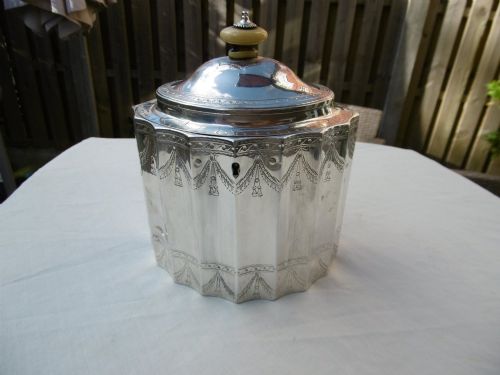
These caddy canister box pieces include antique timber chests and silver vessels built to hold dry tea leaves safely.
Caddy Canister Box
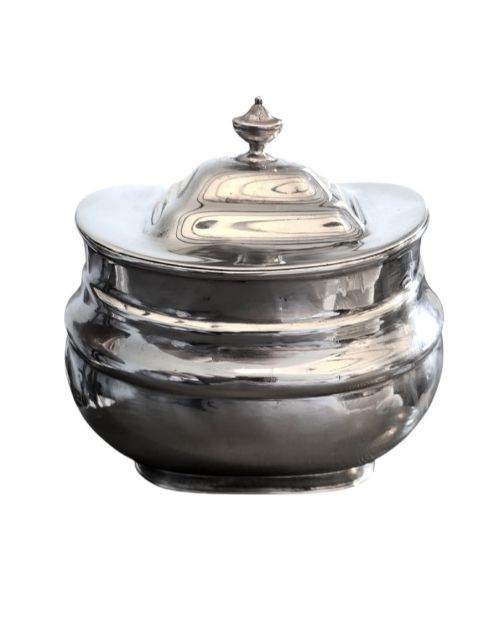
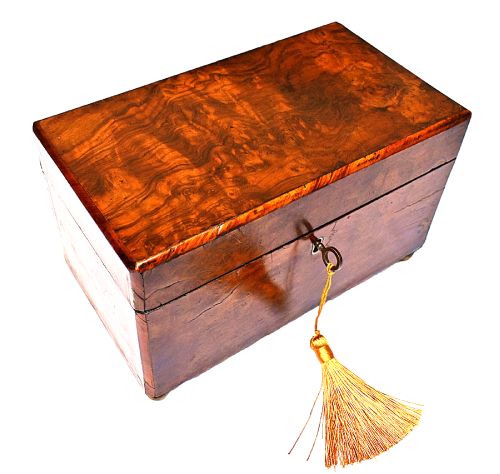
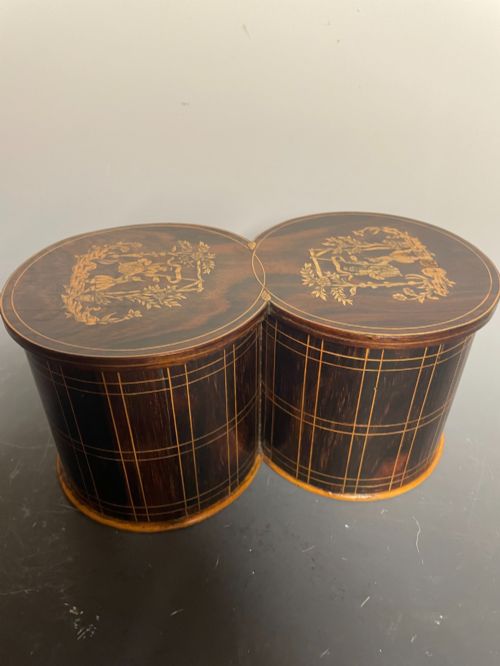
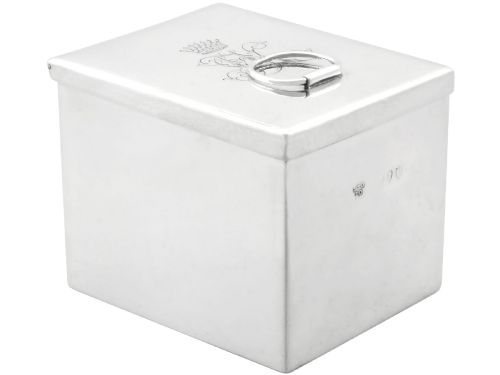
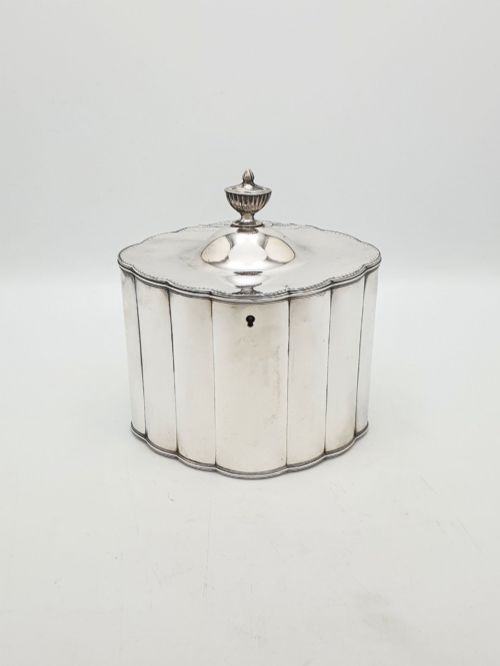
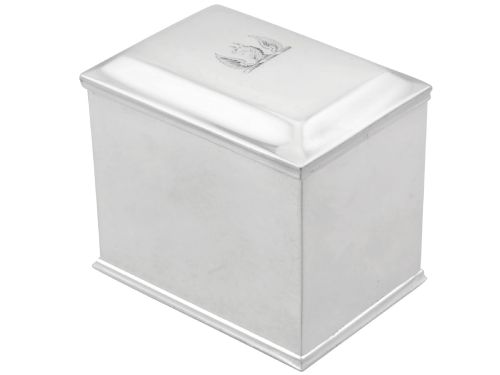
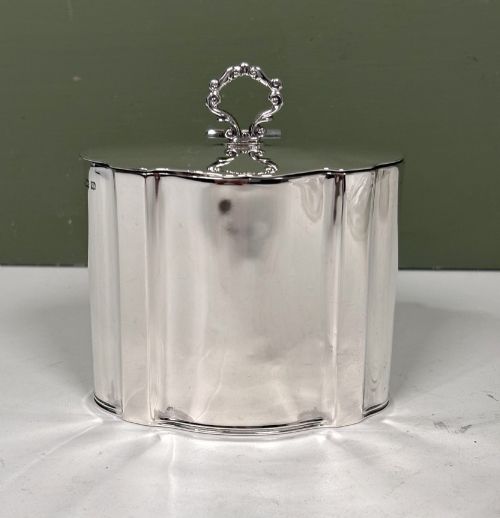
When buyers search for a caddy canister box, they encounter domestic vessels designed originally to store and preserve dry tea leaves when tea was a costly commodity. The selection spans timber tea caddies, tobacco jars, and solid silver canisters dating from the eighteenth century through the Edwardian period.
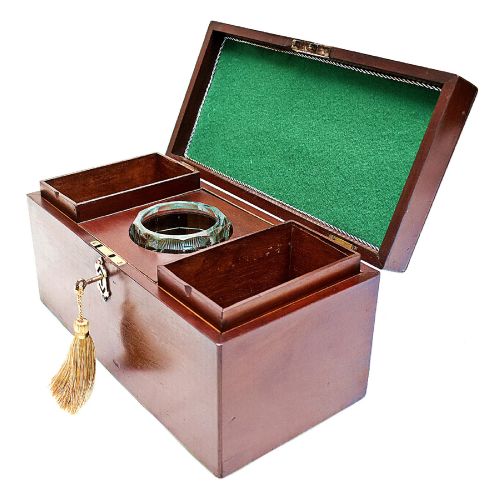
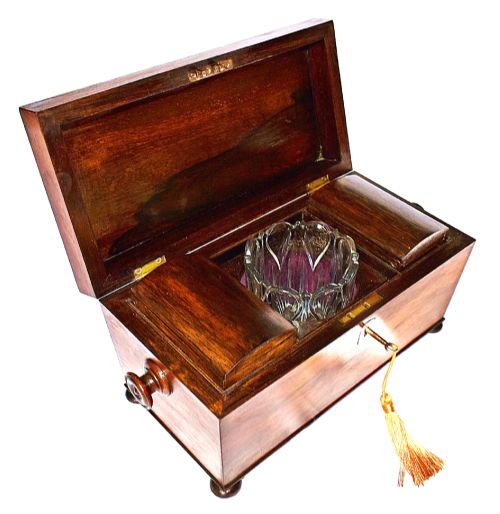
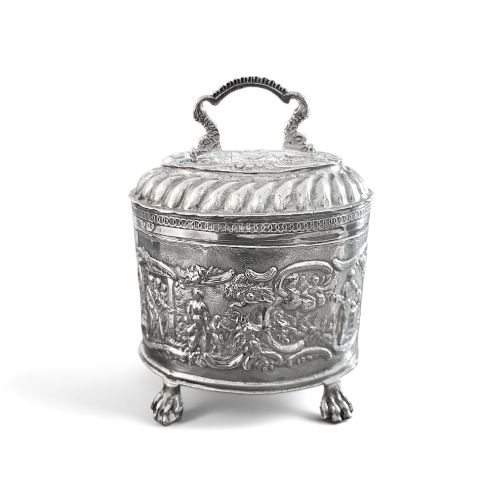
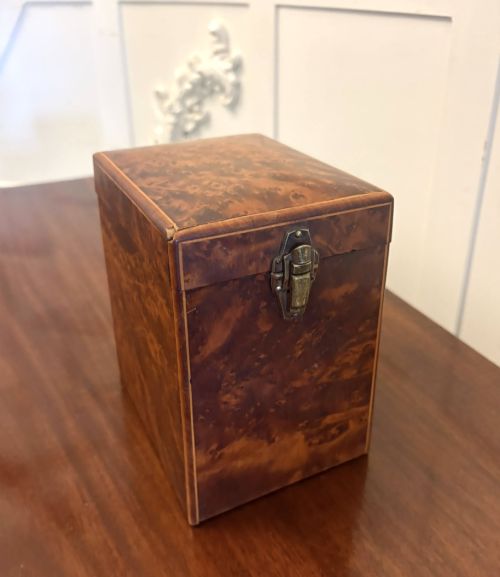
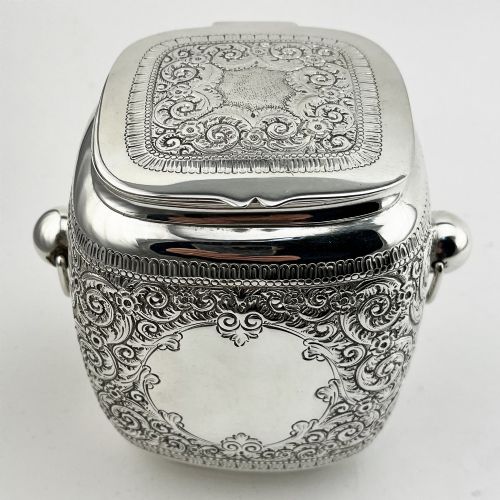
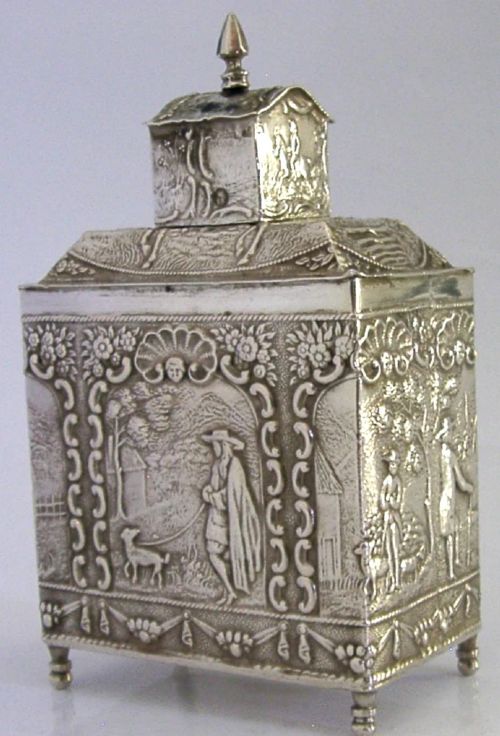
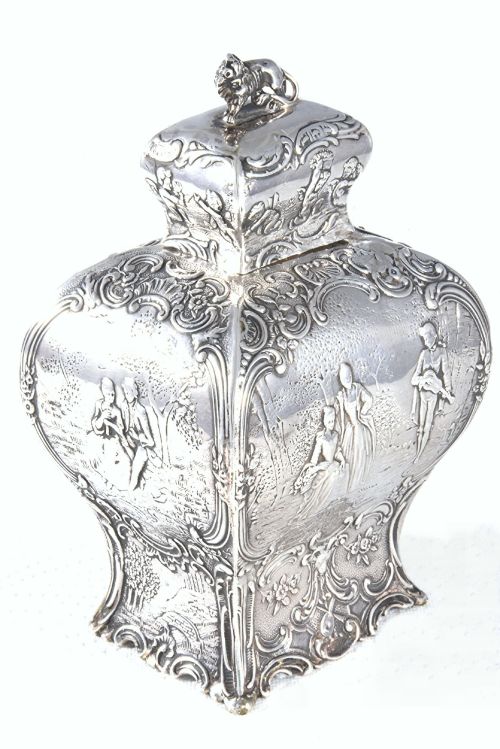
The wooden examples take forms such as rectangular boxes, sarcophagus shapes, and cube caddies veneered in burr walnut, mahogany, rosewood, and satinwood, often retaining interior glass mixing bowls. Silver versions display repousse decoration, knife box profiles, and bombe contours produced by silversmiths in Britain and continental Europe.
Materials and construction
Cabinetmakers utilised dense decorative hardwoods including mahogany, rosewood, amboyna, and burr walnut, applying precise veneers over firmer carcass woods. Tunbridge ware examples incorporated intricate mosaic woodwork assembled from thousands of tiny dyed wood fragments.
Silversmiths shaped sterling silver and plated metal through hammering, casting, and repousse work, creating detailed surface ornamentation featuring lion mask handles and fluted panels. Glass elements were mouth-blown and shaped to fit fitted compartments inside wooden boxes.
Caddy Canister Box Retail Price Guide 2026
Typical asking prices for caddy canister box among the pieces listed under this phrase on Sellingantiques today, from the lower quarter to the upper quarter. They describe what is for sale here now, not the wider market.
Distinctions in quality and execution
The grade of a piece rests on the precision of its cabinetwork or silversmithing, the choice of timber figure, and the preservation of original internal fittings. Superior wooden caddies exhibit tight veneer matching, intact escutcheons with working keys, and undamaged interior foil or glass mixing bowls.
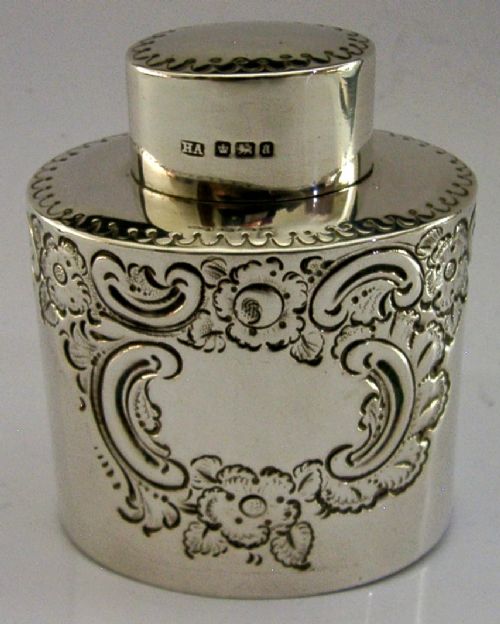
Silver vessels reveal quality through the crispness of repousse detail, substantial metal gauge, and clear hallmarks indicating maker and assay office. Pieces attributed to recorded makers or specific regional traditions command higher regard among collectors.
Martin Hall & Co·Robert Hennell·Zimmermann·Thomas Hayes·Mappin & Webb·William Hutton & Sons Ltd·Henry Hollamby
The Caddy Canister Box Glossary
- Caddy canister box
- A domestic container originally utilised to store dry tea leaves or tobacco securely. These objects range from timber chests to silver vessels.
- Repousse
- A metalworking technique where the artisan hammers the design from the reverse side to form raised relief patterns on the exterior. This method appears frequently on silver containers.
- Sarcophagus shape
- A distinctive box profile featuring a sloped lid resembling a miniature stone coffin, popular during the Regency and William IV periods. This form provides generous internal capacity.
- Tunbridge Ware
- A type of decorative woodwork originating from Kent, featuring mosaic patterns built from minuscule coloured wood blocks. Henry Hollamby worked within this tradition.
- Bombe
- A curved or bulging contour applied to the body of silver and wooden containers. This swelling silhouette creates dynamic reflections and a substantial visual presence.
Caddy Canister Box: Frequently Asked Questions
What were tea caddies originally used for?
These containers served to store precious tea leaves under lock and key when tea was an expensive commodity in British households.
Servants or masters kept the leaves secure to prevent theft and preserve the delicate aromas of the contents.
Why do some wooden caddies have glass bowls?
The central glass vessel allowed the owner to mix different varieties of loose tea leaves before brewing.
Users poured leaves from separate internal compartments into the bowl to create a custom blend for the table.
How can I date a silver tea canister?
Silver examples carry hallmarks stamped directly onto the metal that reveal the assay office, city, and year of manufacture.
Matching these punch marks against historical records provides an exact date of production.
Are wooden caddies made of solid hardwood?
Most wooden specimens consist of a stable secondary timber carcass covered with thin decorative veneers of expensive woods.
Cabinetmakers chose materials like burr walnut, rosewood, and mahogany for their striking grain patterns.