


Cabriole Leg Walnut Bureau
A cabriole leg walnut bureau brings together curved supports and figured timber for a practical writing place.
Cabriole Leg Walnut Bureau
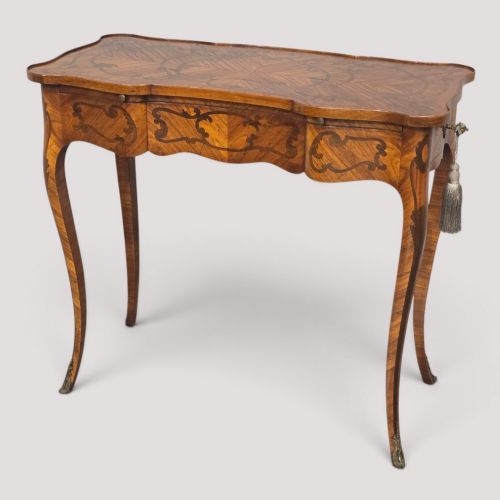
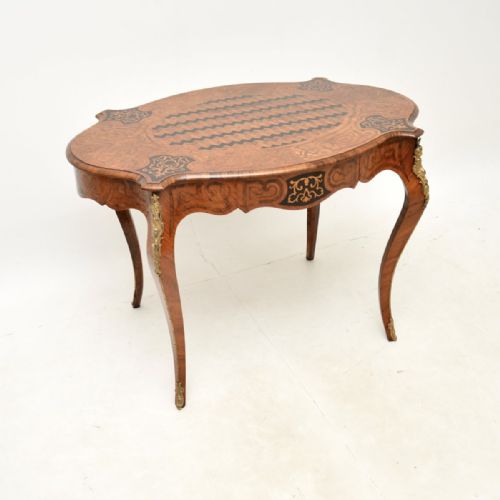
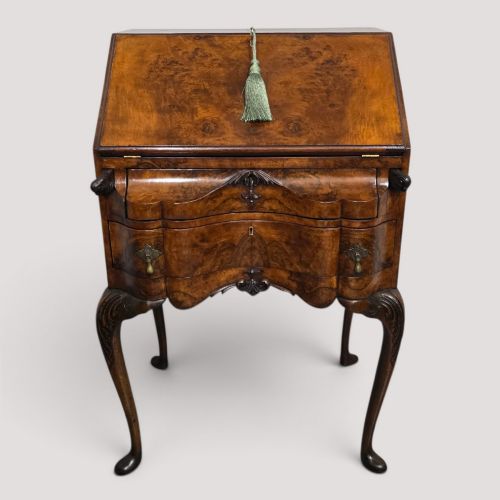
A cabriole leg walnut bureau combines a sloping writing flap or flat top with slender, double-curved supports derived from classical motifs. These pieces range from Victorian and Edwardian examples to revival styles referencing Queen Anne and Louis XV periods.
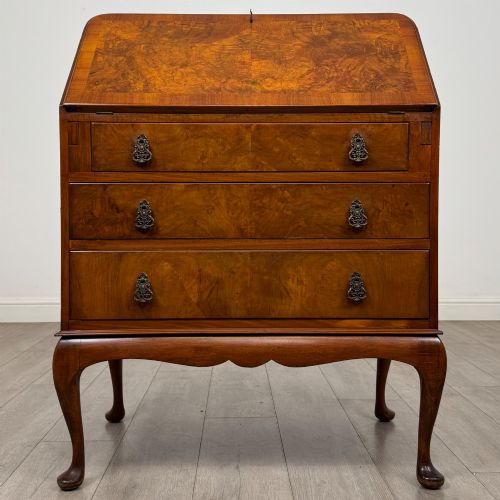
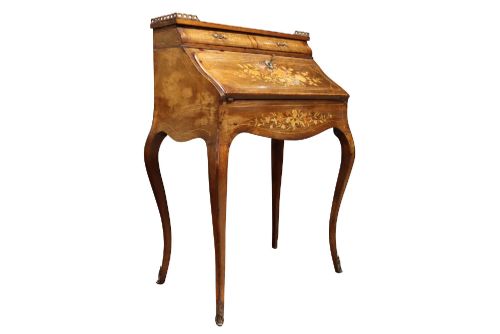
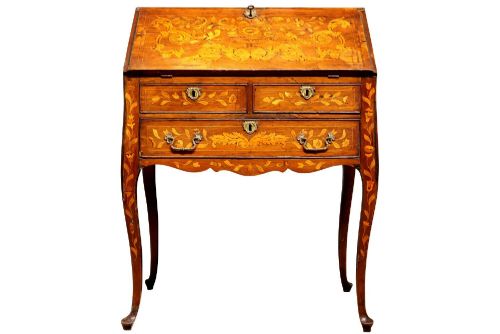
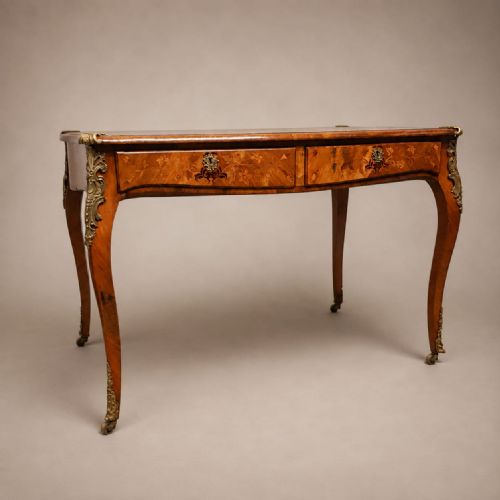
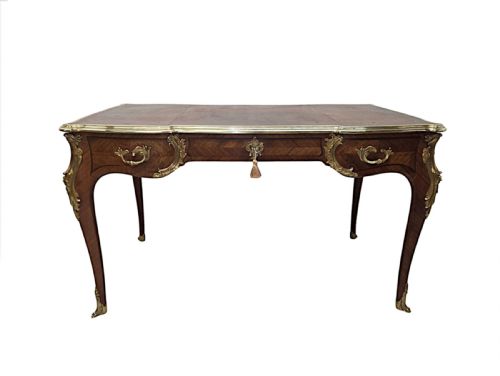
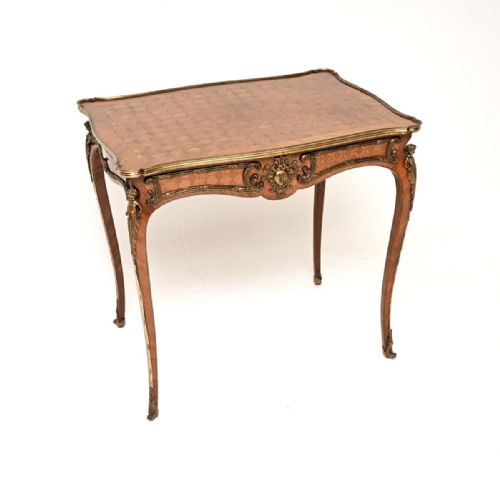
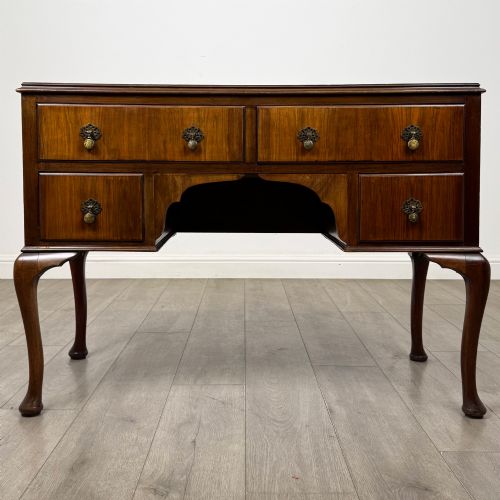
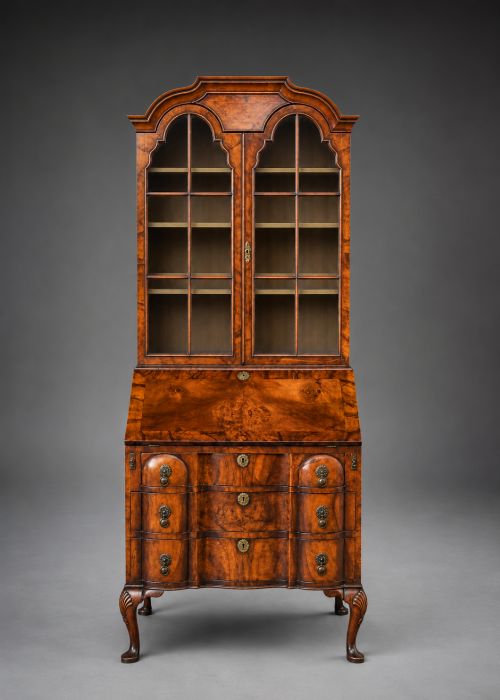
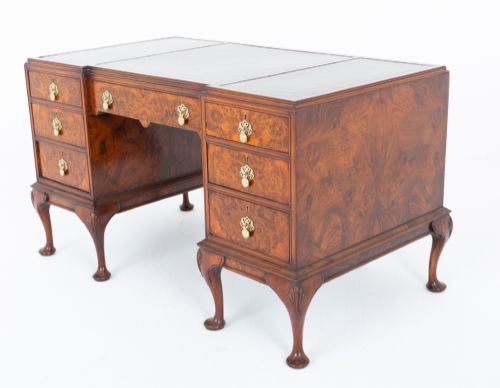
Buyers encounter variations spanning compact writing desks, bureau bookcases, and freestanding bureau plat forms created across the nineteenth and twentieth centuries. Burr walnut and figured veneers dominate the surfaces, often enriched with marquetry or floral inlay.
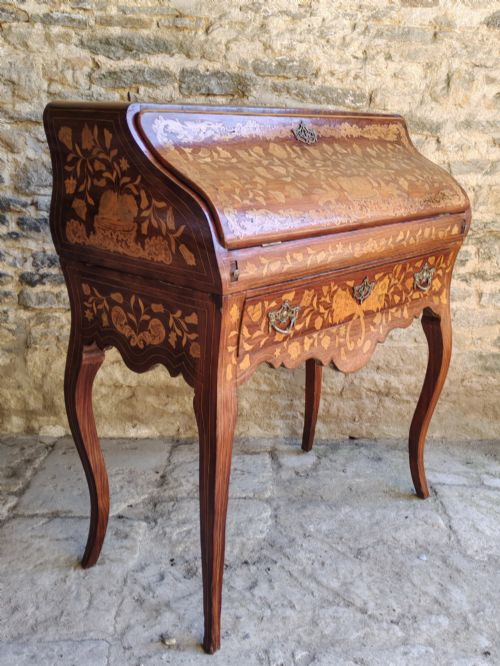
The regional origins on offer stretch from British workshops to French ateliers and Dutch cabinetmakers, each bringing distinct decorative treatments to the same foundational form.
Materials and construction methods
Cabinetmakers utilised walnut and burr walnut veneers applied over secondary timber carcases to achieve rich surface grain patterns. Fruitwood, kingwood, and satinwood served as contrasting stringing and marquetry elements.
Metalwork played a structural and decorative role, with brass handles, keyhole escutcheons, and ormolu mounts fitted to drawers and framing. Leather writing surfaces, frequently tooled in green, were inset into the primary writing areas.
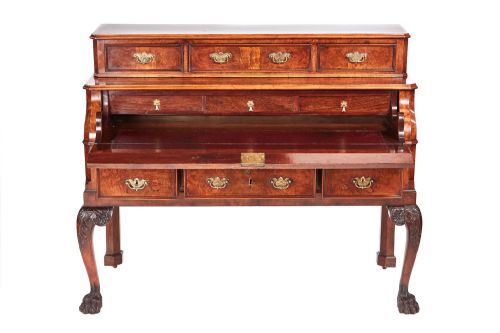
One exceptional desk arrives with carved paw feet, giving the traditional cabriole silhouette an unexpected animalistic stance.
Distinguishing quality across examples
The refinement of the timber selection dictates much of the visual hierarchy, with symmetrical burr walnut figuring commanding attention above plain grain. The execution of marquetry details, from floral Dutch panels to French floral motifs, shows the hand of the maker.
Structural integrity rests in the shaping of the cabriole legs and the precise matching of veneers across opening flaps and drawer fronts. Ormolu mounts and brass fittings that fit flush without gaps separate standard production from finer cabinetwork.
Wylie & Lochhead Glasgow·maples of London
The Cabriole Leg Walnut Bureau Glossary
- Cabriole leg
- A furniture support that curves outward at the knee and tapers inward at the ankle, finishing in a pad, scroll or carved foot. This form was widely adopted in Queen Anne and Rococo revival pieces.
- Bureau plat
- A freestanding writing table with a flat top, usually fitted with drawers beneath the surface. These desks lack the sloping fall-front lid of a traditional bureau.
- Burr walnut
- Timber sliced from growth knots or burls on walnut trees, producing swirling, highly decorative grain patterns. Cabinetmakers used these veneers on primary display surfaces.
- Marquetry
- Inlaid patterns formed by fitting together thin pieces of wood veneer, metal or ivory to create pictorial designs. Floral and geometric arrangements appear frequently on continental examples.
- Ormolu
- Gilded bronze used for decorative mounts, feet, and edge enrichment on furniture. It provides metallic contrast against dark walnut and satinwood surfaces.
Cabriole Leg Walnut Bureau: Frequently Asked Questions
How do I use a bureau daily?
A bureau provides a dedicated writing surface, often behind a fold-down flap that conceals small compartments and pigeonholes for stationery. Many designs include lower drawers for document storage while maintaining a compact footprint in a room.
To protect the writing surface, particularly those inset with leather, avoid placing uncovered hot mugs or sharp metal objects directly on the timber. Regular dusting with a dry cloth keeps the walnut finish maintained.
How do I date a walnut bureau?
Dating relies on combining the construction style, timber preparation, and hardware fittings. Pieces from the eighteenth century show hand-cut dovetails and solid timber framing, whereas nineteenth and twentieth-century examples often employ machine-sawn elements and distinct veneer thicknesses.
Revival pieces from the Edwardian era or the 1920s and 1930s frequently imitate earlier Queen Anne or Louis XV forms but reveal construction traits typical of their actual production period.
Where does burr walnut come from?
Burr walnut is harvested from irregular growths on walnut trees where the grain has grown in a twisted, knotty manner. Slicing these burls produces complex, highly figured veneer sheets.
Because these formations are scarce, cabinetmakers reserved burr walnut for the most visible exterior surfaces, such as drawer fronts and fall-front flaps, bordered by straight-grained walnut.