
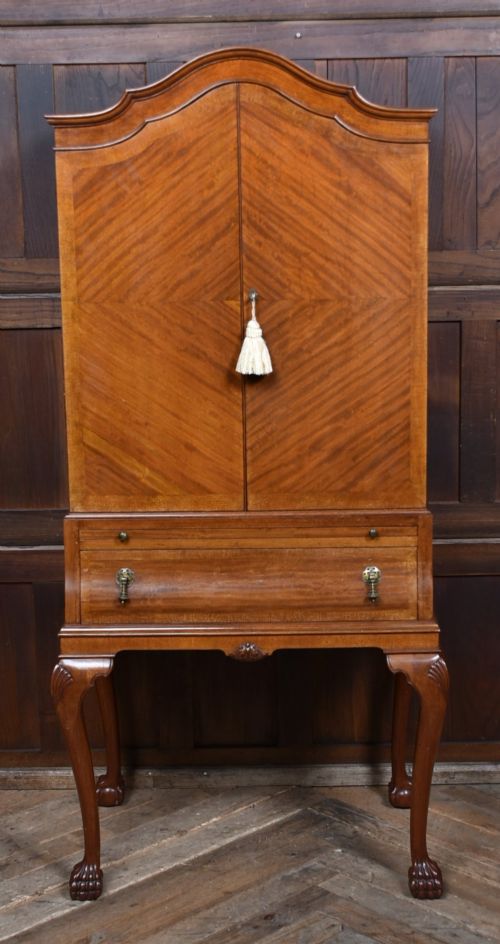
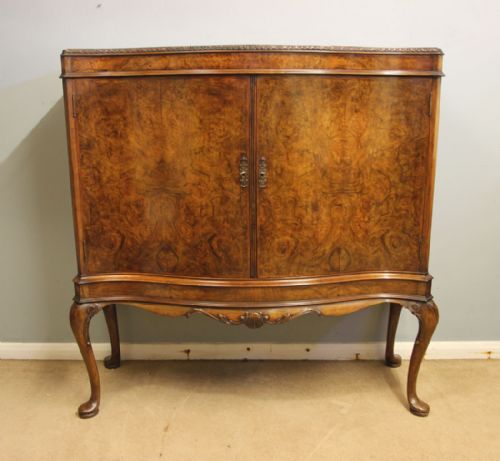


Cabriole Leg Cocktail Cabinet
These cabriole leg cocktail cabinet pieces offer period charm and fitted storage for hosting, drawing attention with their curved supports and veneered doors.
Identifying your cabriole leg cocktail cabinet
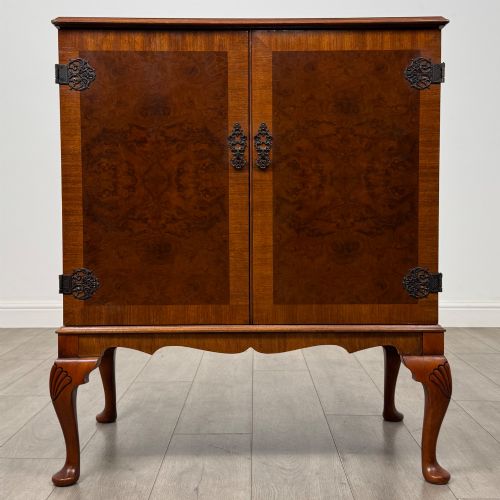
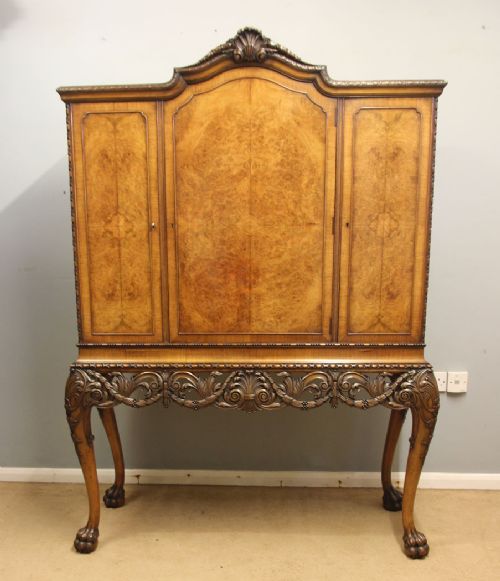
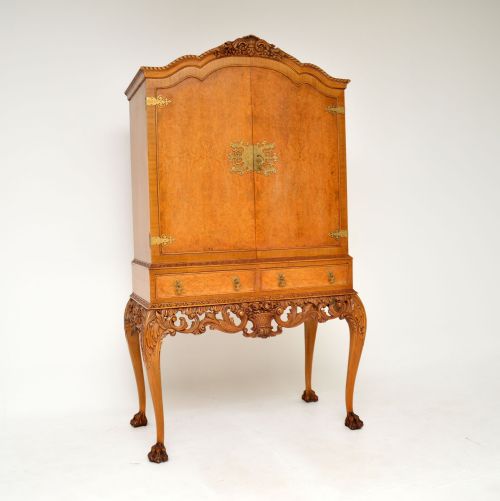
A cabriole leg cocktail cabinet combines a raised drinks storage compartment with distinctive S-curved legs derived from Queen Anne style design. You will encounter these pieces in forms spanning Edwardian, 19th Century, 1920, and 1930 periods.
Most examples rely on the Queen Anne style or Queen Anne Revival aesthetic, anchoring the body upon carved or plain cabriole supports. These pieces served a social function in period homes, concealing glassware and bottles behind folding or drop-down doors.

Materials and construction methods
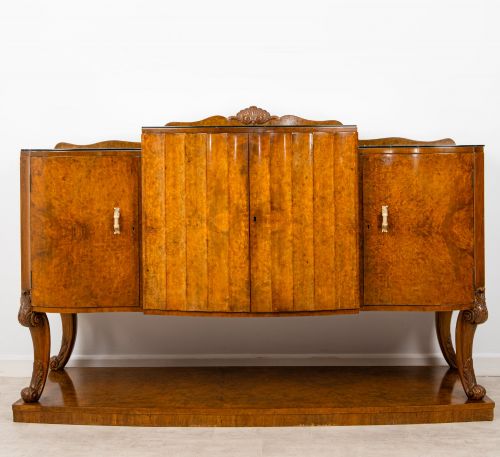
Cabinetmakers utilised hardwoods like mahogany and figured burr walnut veneers to surface the main body, applying brass hardware for hinges and locks. Red lacquer finishes appear on specific 19th Century examples executed in Chinoiserie styles.
The characteristic legs are shaped into the double-curved cabriole form, sometimes featuring carved detail at the knee before tapering to pad or claw feet.
Retail Price Guide 2026
Typical UK retail prices for cabriole leg cocktail cabinet, calculated from the Sellingantiques database of over a million retail prices indexed since 2003. This retail price guide relies exclusively on Sellingantiques data; no external sources or auction records are used, so the figures do not describe the wider market.
Listings span four distinct periods: 19th Century, Edwardian, 1920, and 1930, utilising brass, mahogany, and burr walnut.
Distinguishing quality across pieces
Quality rests in the choice and matching of timber veneers, particularly the grain symmetry visible on burr walnut surfaces. Finer examples display meticulous joinery and deliberate selection of figured wood across the primary doors.
The execution of the carved cabriole legs and the integration of internal fittings further separate standard production from superior pieces. Hardware weight and the precision of the brass elements also indicate the original tier of manufacture.
The Cabriole Leg Cocktail Cabinet Glossary
- Cabriole leg
- A furniture leg that bends outward at the knee and inward at the ankle, mimicking an animal's limb. This form originated in antiquity and returned to popularity during revival periods.
- Burr walnut
- A wood veneer taken from the warted growths on walnut trees, prized for its swirling grain patterns. Cabinetmakers use it to create decorative surfaces on prominent doors.
- Chinoiserie
- European artistic styles reflecting Chinese motifs, often rendered in red lacquer. This style appears on select period drinks cabinets.
- Queen Anne Revival
- A late 19th and early 20th century design movement replicating early 18th century forms. It accounts for many curved leg cabinets.
Frequently Asked Questions
How do I date these cabinets?
Dating relies on material combinations, construction traits, and stylistic markers recorded across Edwardian, 19th Century, and 1930s periods.
Art Deco and Queen Anne Revival influences help narrow the decade of manufacture alongside timber choices like burr walnut.
Where were they used?
These cabinets occupied principal reception rooms and drawing rooms for entertaining guests. They provided concealed storage for spirits and mixing utensils.
Their decorative exteriors allowed them to blend with formal household furniture while serving a practical domestic function.
What styles are available?
The selection encompasses Queen Anne Revival, Art Deco, and Chinoiserie aesthetics. Each style employs distinct decorative treatments on the exterior.
Mahogany and burr walnut dominate the wood finishes, contrasted by occasional red lacquer applications.