



C19th Armchair
A c19th armchair brings solid timber, deep upholstery, and robust form to a room.
C19th Armchair
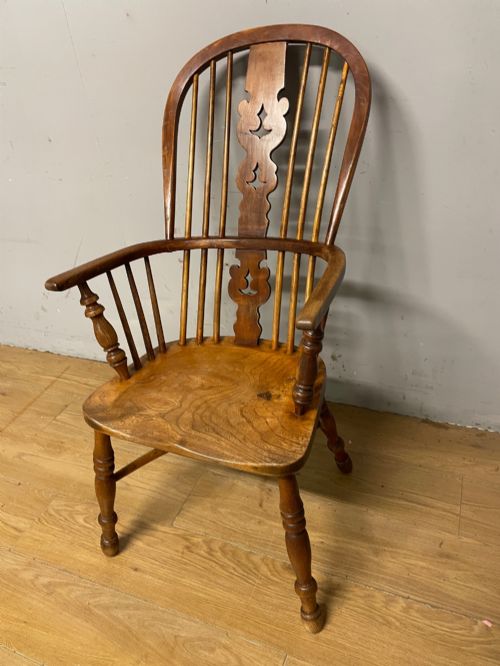
A c19th armchair encompasses library seating, office chairs, dining carvers, and low salon seats spanning the 1800s, 1870, 1890, and the Victorian and Regency periods. The forms range from simple Windsor chairs in burr yew and elm to heavy library armchairs in mahogany and oak.
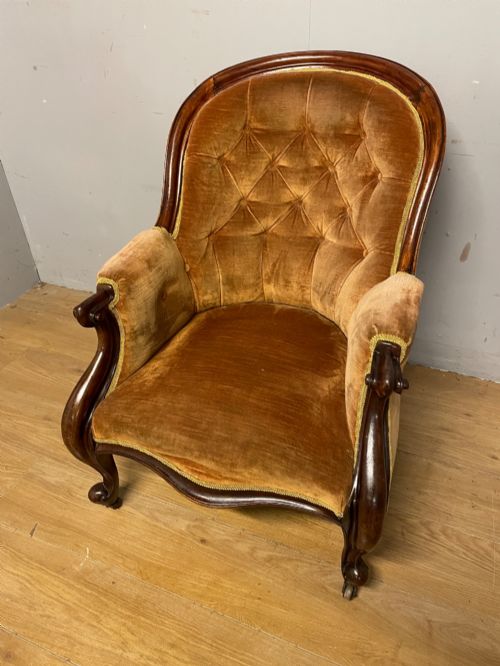
Buyers encounter numerous revival styles, including Chippendale revival, Gothic revival, and George III revival, alongside French chalet, Anglo-Moorish, and directoire fauteuils. Solid mahogany frames, walnut frames, and leather or velvet upholstery dominate the selections.
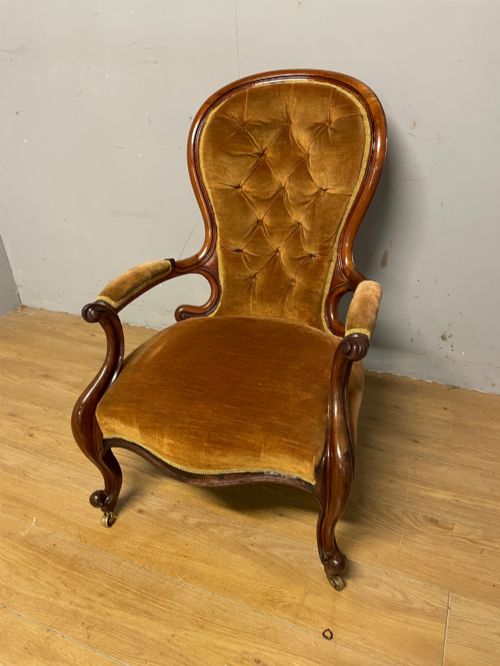
Library armchairs and reading chairs often display generous proportions, heavy carved details, or reclining mechanisms. Lighter open armchairs offer spoon backs, tub shapes, or corner designs with inlaid panels.
Distinctions in quality
The standard of timber selection and depth of hand-carving determine the upper tiers of these chairs. Finely figured mahogany, rich burr yew, and crisp relief work on the arms and splats separate standard utility seating from superior salon and library pieces.
Integrity of frame construction, original castors, and period-appropriate upholstery methods dictate the distinction between ordinary examples and exceptional pieces. Maker attribution or stamped signatures elevate specific library and upholstered models.
C19th Armchair Retail Price Guide 2026
Typical asking prices for c19th armchair among the pieces listed under this phrase on Sellingantiques today, from the lower quarter to the upper quarter. They describe what is for sale here now, not the wider market.
Metamorphic oak library chairs transform swiftly from a comfortable seat into a set of sturdy steps for reaching high bookshelves.
Liberty and Co·Howard and Sons·Henry Thomas Peters·Richard Hicks Bridgens·Robert Daws
The C19th Armchair Glossary
- Bergere
- An enclosed armchair with upholstered back and sides, often featuring cane panels or tight upholstery. These frames originate in eighteenth-century French design and recur across the nineteenth century.
- Gainsborough chair
- A wide, open-arm easy chair with a padded back and seat, typically standing on square or cabriole legs. These forms suit libraries and studies.
- Curule
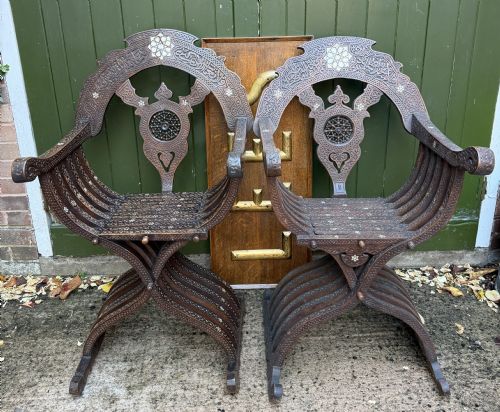
- An X-shaped furniture form inspired by ancient Roman magistrate seats. This structural geometry appears on library armchairs.
- Mashrabiya
- An architectural pierced wood lattice screen used for windows, adapted here into decorative furniture panels. These intricate geometric elements appear on inlaid corner chairs.
- Petit point
- A counted needlework stitch executed on fine canvas to create detailed pictorial or floral upholstery. This technique covers specific salon chair backs.
C19th Armchair: Frequently Asked Questions
How do I identify a library armchair?
Library armchairs feature generous proportions, solid timber frames in mahogany or oak, and upholstered leather or fabric arm pads designed for extended reading.
Many examples include brass castors for mobility across study floors and robust framing to support heavy daily use.
Can I use these chairs at a modern desk?
Office armchairs and desk chairs from this era provide supportive wooden or upholstered backs suited to working heights.
Buyers often select swivel or solid oak desk chairs with leather or oil cloth swab cushions for home studies.
How do I care for leather upholstery?
Leather upholstery requires regular dusting and occasional conditioning to maintain suppleness and prevent cracking across the nineteenth-century hide.
Keep these chairs away from direct heat sources and strong sunlight to preserve the original surface colour.