

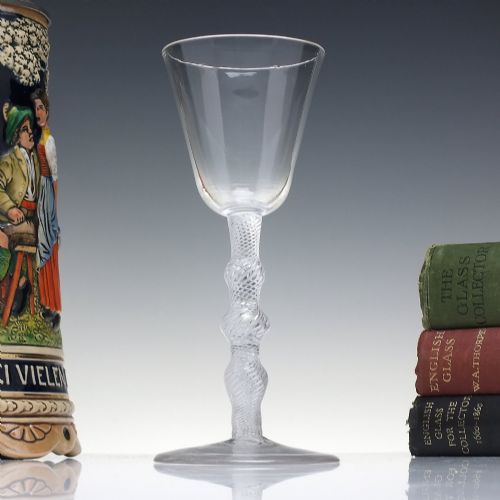
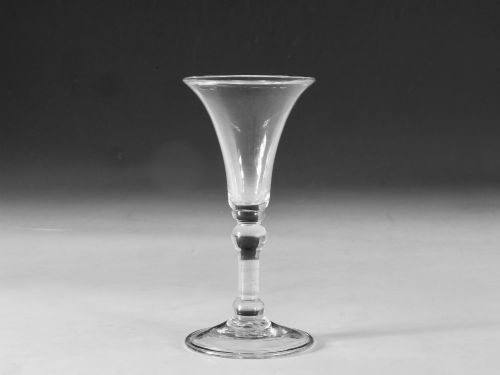
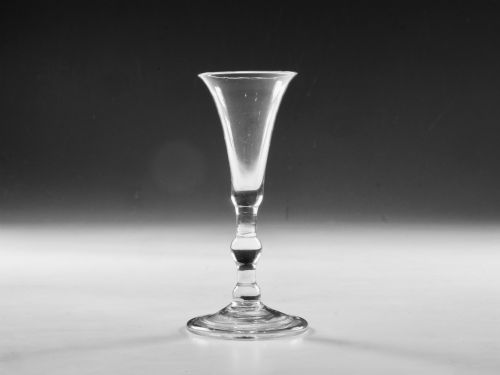
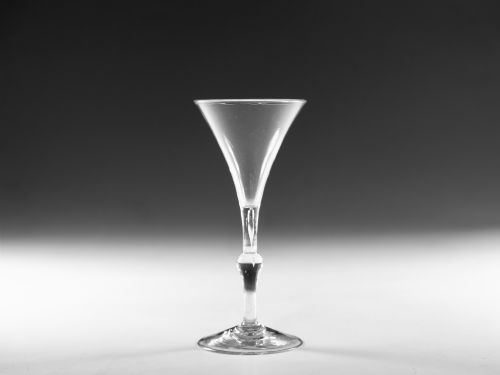
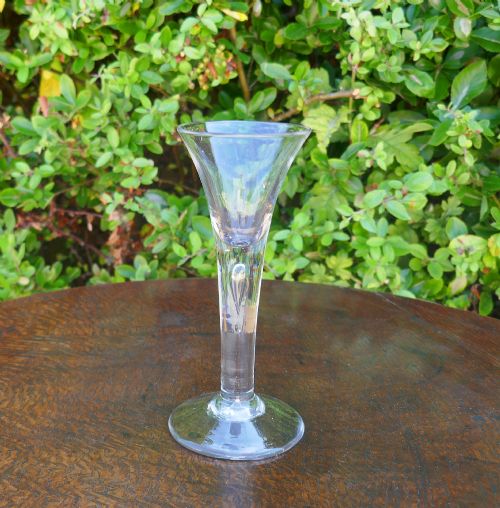
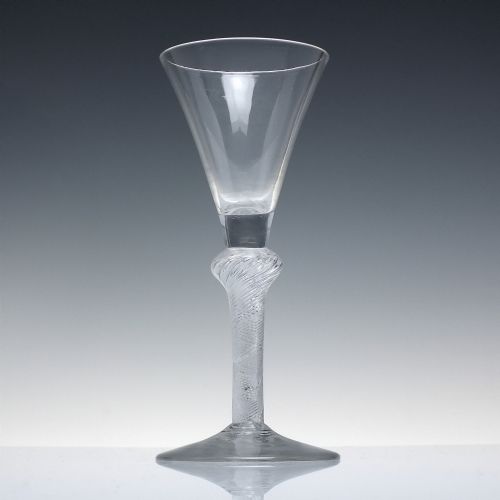


C1750 English Glass Goblet
A c1750 english glass goblet represents the drinking vessels of the Georgian period, prized for the weight and clarity of lead glass.
C1750 English Glass Goblet
A c1750 english glass goblet is a drinking vessel dating to the eighteenth century, encompassing wine glasses, ale glasses, champagne flutes, cordial glasses, and stemware from the Georgian period.
Buyers browsing this selection will most frequently encounter wine glasses and goblets featuring plain stems, air twists, mercury twists, and light baluster forms.
The objects span varied bowl shapes, including trumpet bowls and nut moulded designs, often finished with engraved decoration or containing an attractive air bubble in the stem.
How a c1750 english glass goblet was made
These vessels are shaped from clear glass, lead glass, lead crystal, clear lead glass, and flint glass, reflecting the specific raw materials used by eighteenth-century glasshouses.
The manufacturing process involves forming stems with air twists or mercury twists, alongside plain stem construction and light baluster profiles, paired with engraved or nut moulded bowl techniques.
C1750 English Glass Goblet Retail Price Guide 2026
Typical asking prices for c1750 english glass goblet among the pieces listed under this phrase on Sellingantiques today, from the lower quarter to the upper quarter. They describe what is for sale here now, not the wider market.
One listed goblet hides an unexpected air bubble right inside its stem, capturing a fleeting moment of eighteenth-century glassmaking.
What varies in quality
Quality rests upon the clarity of the clear lead glass and the precision evident in forming air twists, mercury twists, or light baluster stems.
The sophistication of engraved decoration and the sharpness of nut moulded bowl patterns elevate certain examples above simpler plain stem designs.
The C1750 English Glass Goblet Glossary
- Air Twist
- A stem formation containing elongated internal air bubbles drawn into threads. This technique creates a delicate spiral pattern inside the glass.
- Lead Glass
- A heavy glass composition containing lead oxide. It offers superior brilliance and clarity compared to standard soda glass.
- Plain Stem
- A straightforward straight cylindrical stem lacking twists, balusters, or faceting. It represents a classic eighteenth-century form.
- Mercury Twist
- A stem enclosing a silvery thread resembling quicksilver, actually formed from an elongated thread of tiny air bubbles. Collectors prize this optical effect.
- Light Baluster
- A slender variant of the heavy baluster stem style featuring knops and swelling profiles. It dates predominantly to the mid-eighteenth century.
C1750 English Glass Goblet: Frequently Asked Questions
What is a c1750 english glass goblet?
A c1750 english glass goblet is an eighteenth-century drinking vessel made from lead glass during the Georgian period.
These pieces include wine glasses, ale glasses, and champagne flutes featuring stems shaped as plain forms, air twists, or mercury twists.
How do you identify an air twist stem?
An air twist stem contains fine, internal spiral threads of trapped air running through the transparent glass.
This optical effect was achieved by drawing and twisting the glass while hot during the manufacturing process.
What materials were used for these glasses?
These drinking vessels utilise clear glass, lead glass, lead crystal, clear lead glass, and flint glass.
The addition of lead gave eighteenth-century English glass greater weight, brilliance, and resonance than continental equivalents.
How were different drinking glasses used?
Specific vessel forms served distinct beverages at the table, ranging from capacious wine goblets to narrower cordial glasses and champagne flutes.
Ale glasses were tailored for malt liquors, while wine glasses and stemware accommodated the dining habits of the Georgian era.