
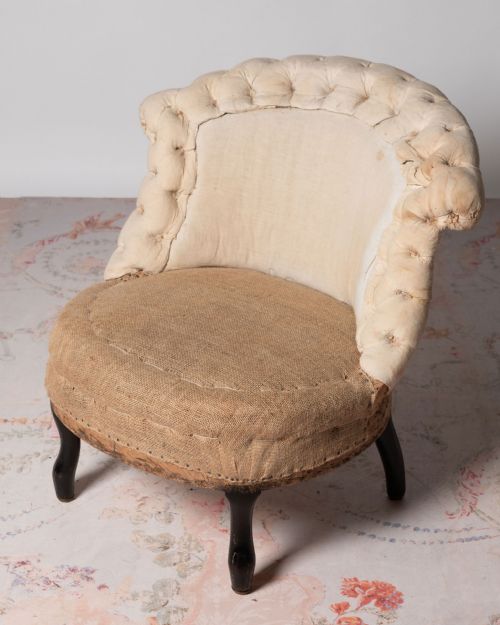


Buttoned Upholstery Chair
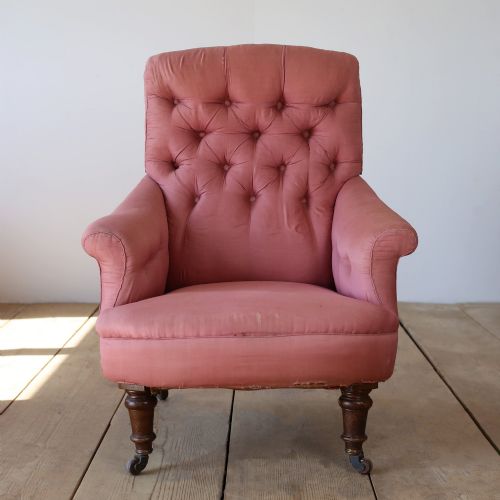
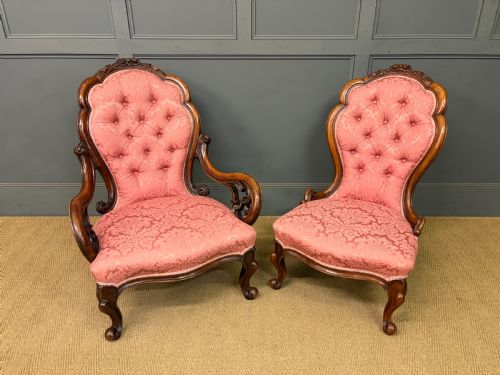
A buttoned upholstery chair brings tactile depth and formal structure to a room through deep tufting and sprung frames.
Buttoned Upholstery Chair
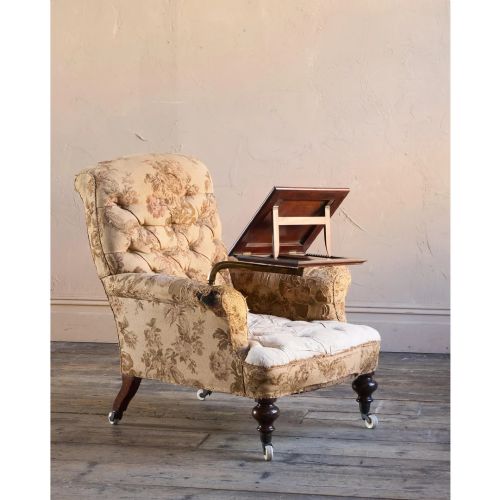
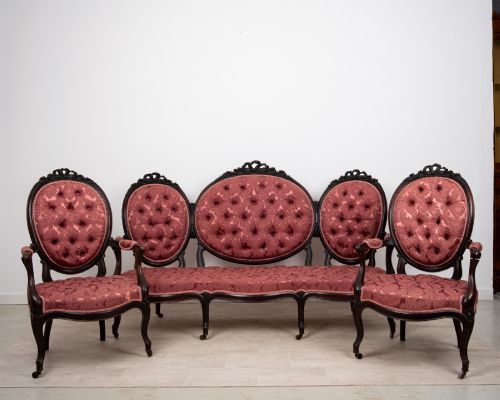
A buttoned upholstery chair brings distinct nineteenth century character to a room through deep tufting and supportive sprung frames. When you search for a buttoned upholstery chair, you encounter a wide variety of seating, from compact nursing chairs and low slipper chairs to grand library armchairs and salon suites.
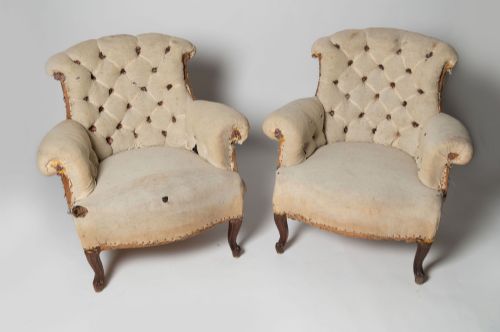
The pieces on this page span the Victorian and Edwardian eras, alongside French Napoleon III designs and Aesthetic Movement examples. You find specialised forms like desk chairs in oak and leather, alongside child's chairs and boudoir seating.
Most examples rely on traditional nineteenth century craftsmanship, utilising exposed timber frames paired with luxurious velvet, ticking, or printed textile coverings. Whether you select a low-slung nursing chair or an expansive gentleman's armchair, these seats combine architectural presence with tactile comfort.
How they were made
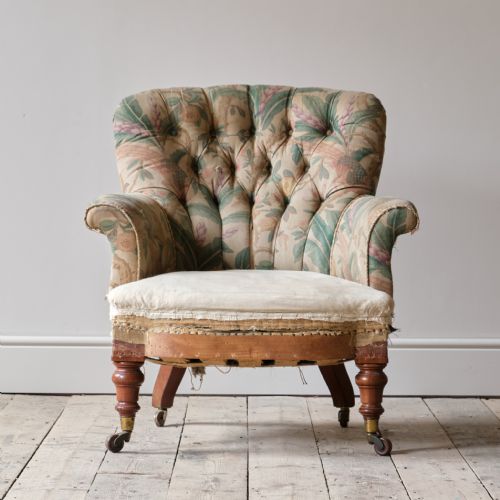
Maker workshops built the structural foundations of these chairs using hardwoods such as mahogany, walnut, oak, and occasionally iron frames. Artisans shaped these timbers into barley twist supports, carved walnut framing, or inlaid mahogany components, often exposing the polished wood around the upholstered body.
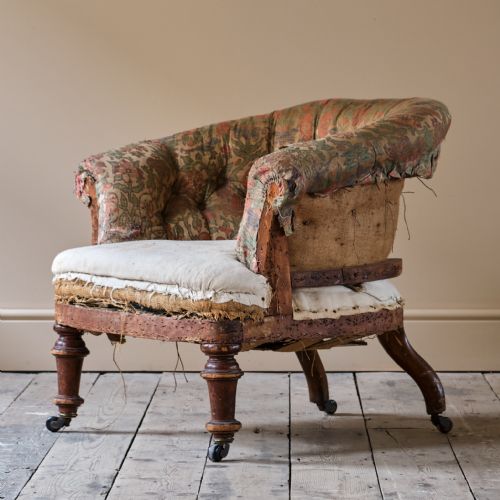
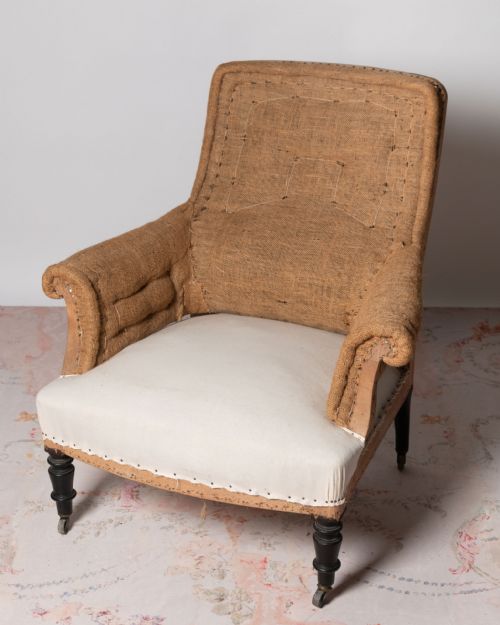
Upholsterers built the characteristic deep tufting by pulling twine through thick stuffing layers to secure buttons in geometric patterns, creating firm tension across the velvet, fabric, hessian, or ticking coverings. Brass tacks often finished the seams where textile met wood, securing the edges tightly to the frame.
Several chairs arrive ready for a new chapter in ticking or designer fabrics, having spent generations quietly supporting readers and infants.
What varies in quality
The standard of a buttoned upholstery chair rests upon the architectural integrity of its timber frame and the precision of its maker. Pieces produced by notable workshops exhibit refined carving, substantial proportions, and careful joinery that survive decades of daily use without structural wobble.
The finesse of the tufting and the selection of covering materials further distinguish the tiers of craftsmanship. Fine examples maintain symmetrical button tension across velvet, silk, or designer textiles, while simpler iterations utilise utilitarian ticking or require complete reupholstery.
Howard and Sons·Hamptons and Sons·Cornelius V Smith·Maple and Co·Gillows
The Buttoned Upholstery Chair Glossary
- Buttoned upholstery
- A method of securing interior padding by pulling twine tightly through the textile to create recessed tufts in uniform patterns. This technique provides firm structural tension while adding decorative geometric depth to the surface.
- Nursing chair
- A low-seated armchair historically designed for feeding infants or general bedroom use. These chairs typically feature a compact footprint and supportive high backs.
- Slipper chair
- An upholstered seat with a low frame and short legs designed originally for dressing rooms. They provide comfortable, relaxed seating close to floor level.
- Ticking
- A tightly woven, durable cotton or linen fabric traditionally used as a base layer or outer covering for stuffed furniture. Its striped pattern originates from utility and durability.
- Hessian
- A coarse woven fabric made from jute or hemp fibres used historically as internal scrim and webbing beneath outer upholstery textiles. It provides breathable structural support for padding.
Buttoned Upholstery Chair: Frequently Asked Questions
What is a buttoned upholstery chair?
A buttoned upholstery chair is a nineteenth century seat featuring deep tufted buttons pulled tight through padded textiles to create a textured, sprung surface.
These pieces range from intimate boudoir and nursing chairs to heavy library and gentleman's armchairs built in walnut, mahogany, and oak.
How do I identify a Victorian chair?
Victorian chairs typically display robust proportions, exposed walnut or mahogany frames, and dense button back upholstery dating from the mid to late nineteenth century.
Look for specific stylistic clues like barley twist legs, carved wooden detailing, and traditional fabric or velvet coverings.
Where were slipper chairs used?
Slipper chairs were traditionally kept in bedrooms or dressing rooms for comfortable seating while putting on shoes or garments.
Their low profiles and compact frames make them adaptable accent seating for modern living spaces and bedrooms.
Are these chairs comfortable for daily use?
These armchairs and library chairs were engineered for sustained seating, utilising internal springs, horsehair stuffing, and sturdy wooden frames.
Many surviving examples offer deep, supportive seating proportions well suited to contemporary relaxation.