
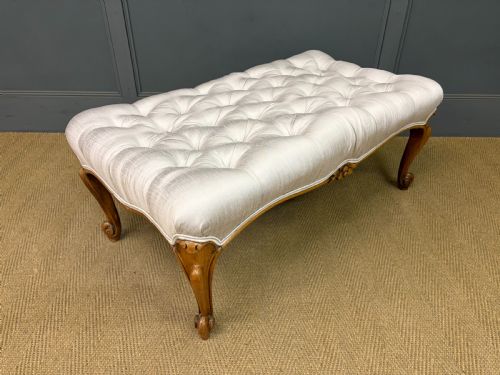
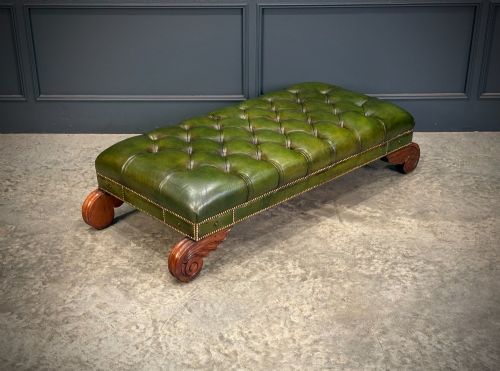
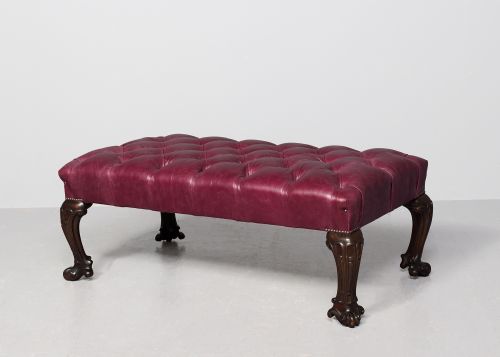
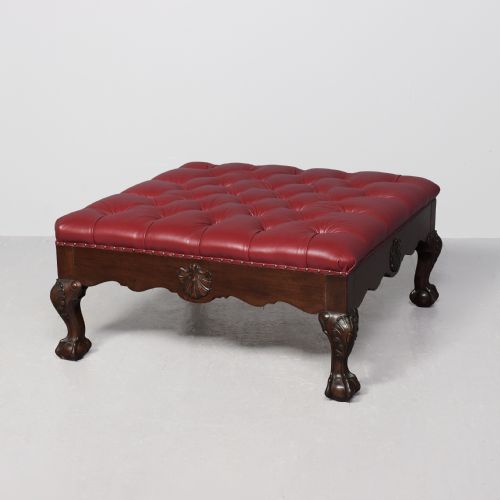


Buttoned Upholstered Ottoman
A buttoned upholstered ottoman offers deep seating comfort and period character, bringing traditional craftsmanship and versatile low seating into a room.
Buttoned Upholstered Ottoman
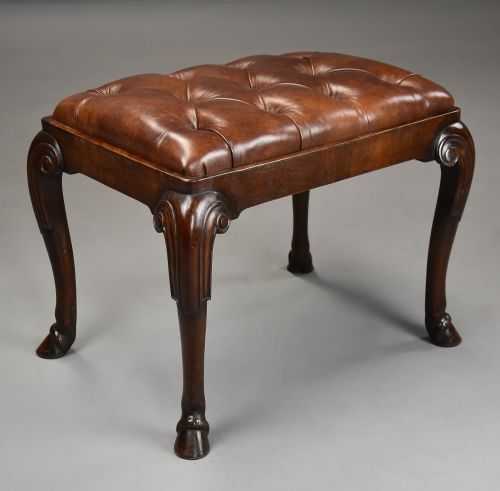
A buttoned upholstered ottoman serves as a low seat or footrest, frequently appearing in nineteenth-century and Victorian iterations alongside earlier Regency designs. These pieces range from compact footstools to grand scale long benches and library window seats.
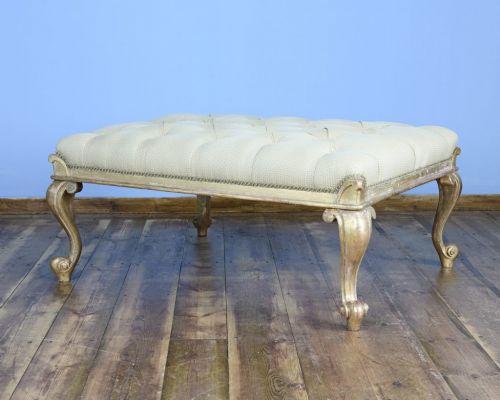
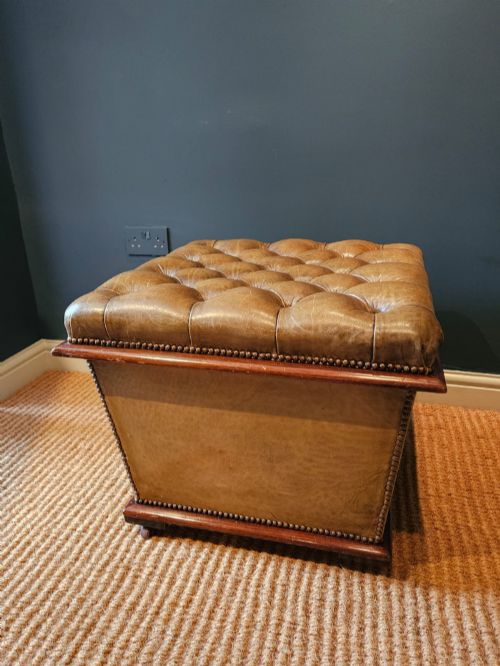
The form relies on substantial wooden frames upholstered in leather, hide, or fabric, often detailed with characteristic deep buttoning across the top surface. Buyers most commonly encounter Victorian walnut or mahogany examples equipped with castors.
Makers utilised various revival styles including Chippendale, Queen Anne, and Georgian aesthetics to shape the wooden bases of these low furnishings. The primary function spans from auxiliary seating in reception rooms to functional foot rests before armchairs.
Materials and construction methods
Frames are constructed from dense hardwoods such as mahogany, walnut, rosewood, and giltwood, providing a sturdy architectural base for the heavy upholstery. Joinery techniques reflect the cabinetmaking standards of the nineteenth century and earlier revival periods.
Upholstery involves deep buttoning secured through fabric or leather layers, frequently accented with brass-studded detailing around the borders. Leather and hide cover many of the surviving examples, alongside silk and patterned fabric alternatives.
Materials recorded across the inventory include brass, giltwood, fabric, and leather.
Assessing quality and craftsmanship
Superior examples display crisp carving on wooden legs, such as cabriole or fluted forms, and utilise high grade timbers like figured mahogany and rosewood. The weight and scale of the frame often indicate the ambition of the original commission.
The precision of the deep buttoning and the selection of quality hide or fabric demonstrate the standard of the upholstery work. Retaining original castors and structural integrity adds to the integrity of a piece.
James Shoolbred·A.M.E. Fournier
The Buttoned Upholstered Ottoman Glossary
- Buttoning
- A technique where upholstery is pulled deep into the padding with stitches or tufts, creating a patterned diamond effect across the surface.
- Cabriole leg
- A furniture leg that curves outward at the knee and tapers inward at the ankle, commonly seen on Victorian and Queen Anne style walnut frames.
- Hide
- A heavy animal skin used for upholstery, providing a durable and polished surface on traditional footstools and library benches.
- Parcel gilt
- A decorative method where parts of a wooden or gesso frame are partially gilded with gold leaf while other areas show the base material.
- Castor
- A small wheel attached to the base of furniture legs to allow easier movement across floor surfaces.
Buttoned Upholstered Ottoman: Frequently Asked Questions
How do I use an ottoman in a living room?
Place a long stool or ottoman before a sofa to serve as a generous footrest or casual seat.
Alternatively, position a low rectangular piece in the centre of a room or beneath a window to create additional surface space and seating.
How can I tell a Victorian ottoman from a Regency one?
Victorian examples frequently feature heavy walnut frames, cabriole legs, and deep buttoned upholstery on castors.
Regency pieces often display lighter mahogany frames with fluted legs and disciplined classical proportions.
Are leather and hide the only upholstery options?
While leather and hide appear frequently on library and window stools, fabric options also exist in the record.
Surviving pieces include examples upholstered in silk and various patterned textiles from the nineteenth century.
What is the difference between an ottoman and a footstool?
The terms often overlap in nineteenth-century furniture, though ottomans and long benches typically offer greater length than standard footstools.
Both forms utilise upholstered tops, but larger benches function effectively as window seats or low resting places.