




Buttoned Salon Seats
Buttoned salon seats bring tactile warmth and period form to a room, offering low seats and deep tufting built for comfort.
Buttoned Salon Seats
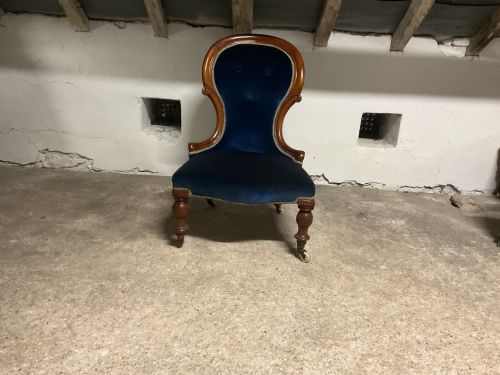
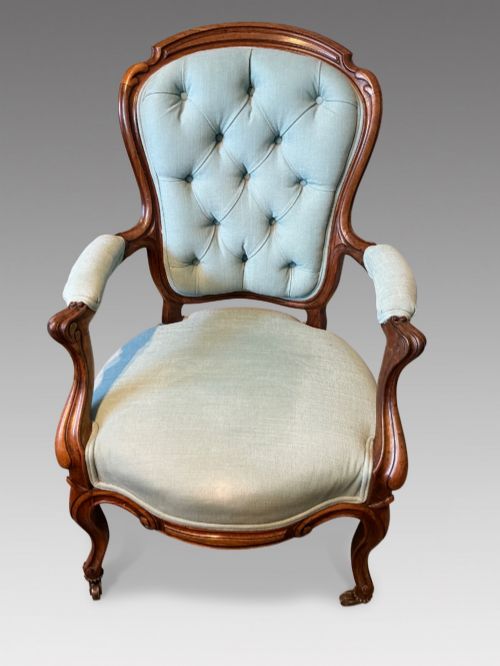
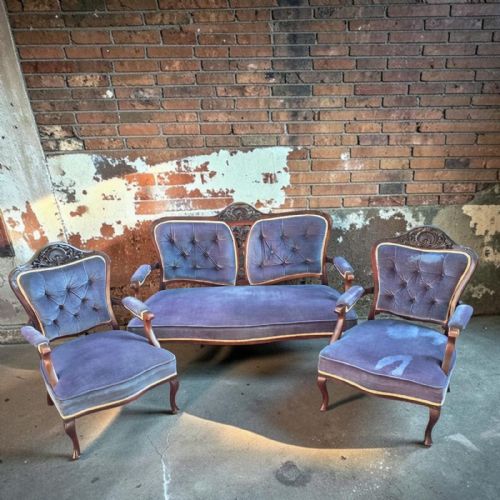
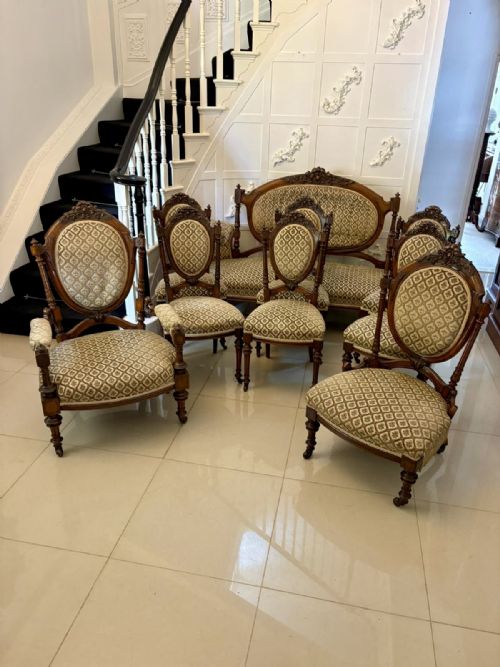
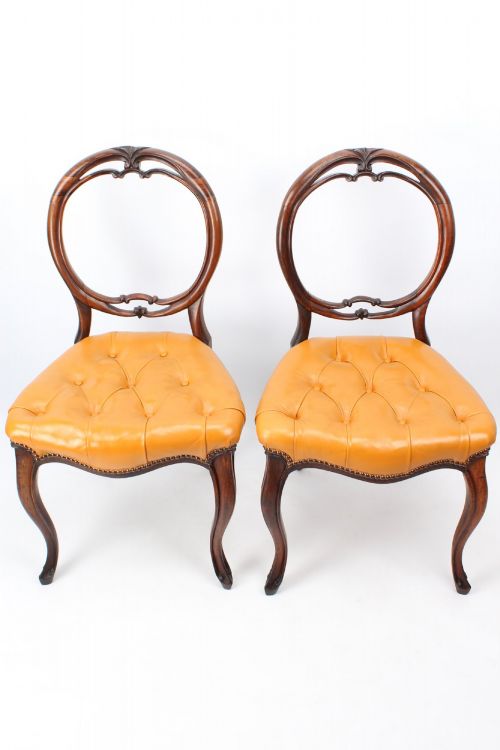
When you search for buttoned salon seats, you are looking at upholstered parlour and drawing room furniture designed primarily during the Victorian era and the nineteenth century. These pieces appear as single nursing chairs, open armchairs, balloon back chairs, double end settees, and multi-piece salon suites.
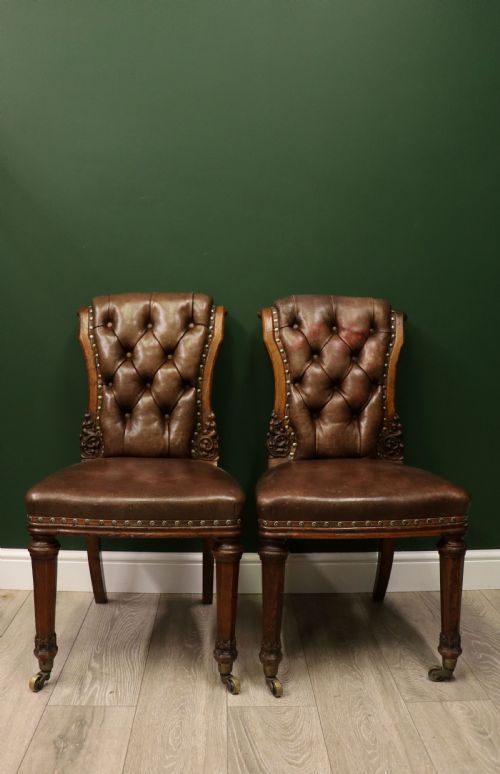
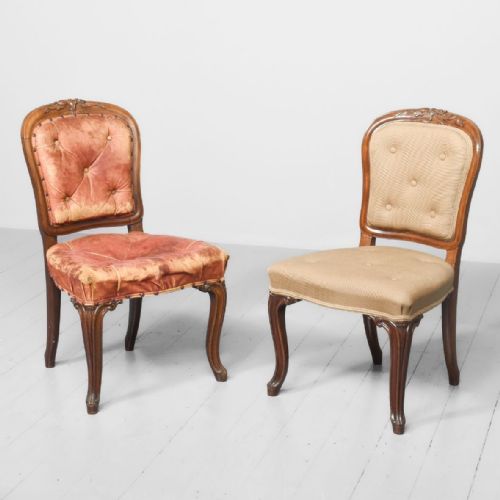
The version you are most likely to meet on this page is a Victorian walnut or mahogany framed seat featuring deep buttoned upholstery in velvet or fabric. These range from compact low nursing seats and side chairs to substantial settees and matched pairs intended for formal reception rooms.
Origin and period styles span mid to late Victorian decades, alongside Edwardian revivals and French influenced nineteenth century pieces. The forms prioritize curved wooden frames, spoon backs, and serpentine fronts designed to complement period interior layouts.
Materials and construction methods
The structural framework relies predominantly on solid timber, with walnut and mahogany appearing most frequently, supplemented by rosewood, oak, and occasional iron frames. Skilled cabinet makers carved these hardwoods into serpentine rails, balloon shapes, and floral motifs before applying polished finishes.
Upholstery defines the category, utilising traditional stuffing and spring techniques secured with deep tufting or buttoning. Velvet and various heavy textiles are stretched across iron or webbed foundations, held in place by rows of closely spaced buttons that create the characteristic padded contours.
Buttoned Salon Seats Retail Price Guide 2026
Typical asking prices for buttoned salon seats among the pieces listed under this phrase on Sellingantiques today, from the lower quarter to the upper quarter. They describe what is for sale here now, not the wider market.
Nineteenth century sets frequently pair gents and ladies chairs alongside larger settees.
Quality factors in salon seating
The distinction between ordinary and superior pieces rests on the crispness of the timber carving and the architectural balance of the frame. Higher tier examples demonstrate deeply sculptural walnut or rosewood work with harmonious proportions, whereas basic versions rely on simpler turned or machine cut elements.
Upholstery execution further divides the range, separating tightly tensioned buttoning and well shaped springs from looser, flatter padding. Comprehensive framing integrity and substantial hardwood gauge separate exhibition grade suites from standard domestic seating.
Blyth & Sons
The Buttoned Salon Seats Glossary
- Button back
- A method of upholstery where buttons are pulled deep into the padding in a diamond or square grid, creating distinct tufted indentations. This technique secures internal stuffing while adding rich surface texture.
- Nursing chair
- A low-seated Victorian chair originally designed to allow a woman to tend to an infant or sit comfortably near a hearth. They typically feature padded backs and minimal arm obstruction.
- Balloon back
- A chair back shaped in a continuous oval or loop resembling a floating balloon, popular in mid nineteenth century seating. This form often incorporates carved mahogany or walnut woodwork.
- Settee
- A medium-sized upholstered bench with a back and arms, built to seat multiple people in a parlour or salon. Victorian variants often include double end designs or curved serpentine fronts.
- Rococo Revival
- A nineteenth century decorative style drawing on eighteenth century French curves, asymmetrical scrolls, and naturalistic floral carvings. It heavily influenced Victorian salon furniture frames.
Buttoned Salon Seats: Frequently Asked Questions
How do I identify a Victorian piece?
Victorian seating is typically identified by dense hardwoods like walnut and mahogany, combined with hand carved details reflecting stylistic revivals such as Rococo or Louis XVI. The presence of traditional button back upholstery and specific wood tones point directly to this era.
Examining the construction under the seat often reveals period joinery methods and timber ageing consistent with the mid to late nineteenth century.
Where were these seats used?
Salon seats were placed in the primary reception rooms of nineteenth century homes where guests were entertained. They served as conversational seating, fireside chairs, or decorative accents along parlour walls.
Smaller pieces like nursing chairs were also utilised in private bedchambers and dressing rooms for daily personal use.
How do I care for antique upholstery?
Caring for buttoned velvet and fabric upholstery involves gentle brushing and regular light vacuuming with a soft attachment to prevent dust accumulation in the tufted folds. Direct sunlight should be avoided to prevent fading of the textile pile.
Wood frames benefit from occasional dusting with a dry cloth, keeping moisture away from both the polished timber and the internal stuffing.