



Buttoned Ottoman
A buttoned ottoman brings deep-buttoned comfort and structured elegance to a room, serving as a versatile seat or footrest.
Buttoned Ottoman
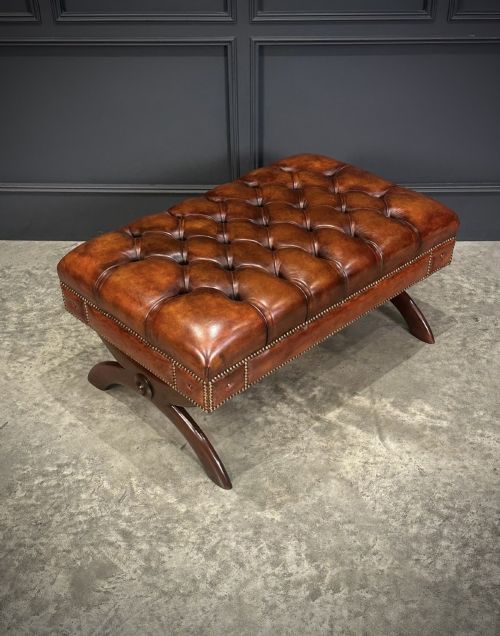
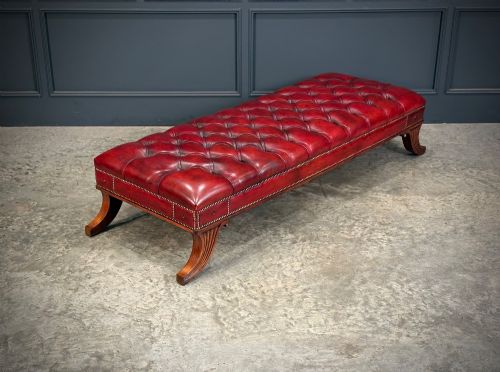
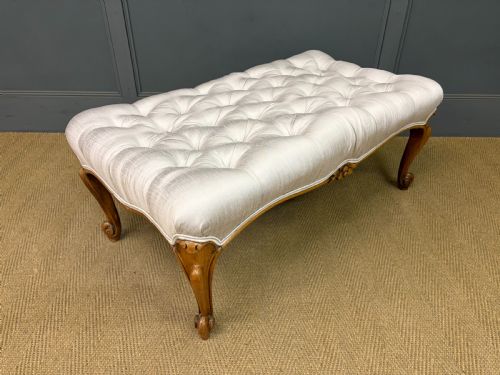
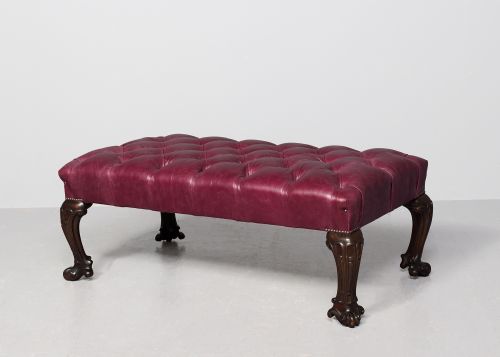
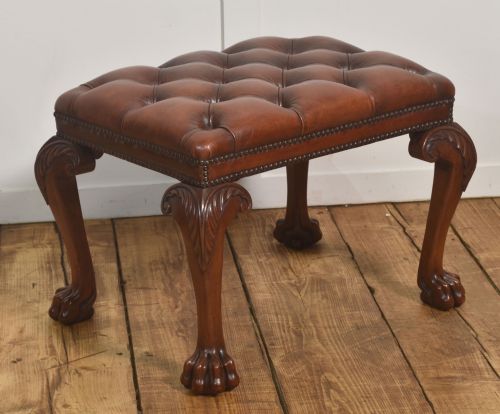
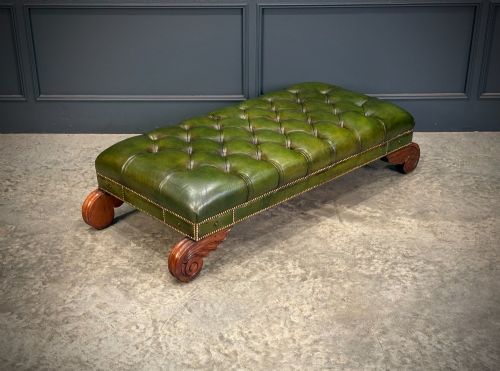
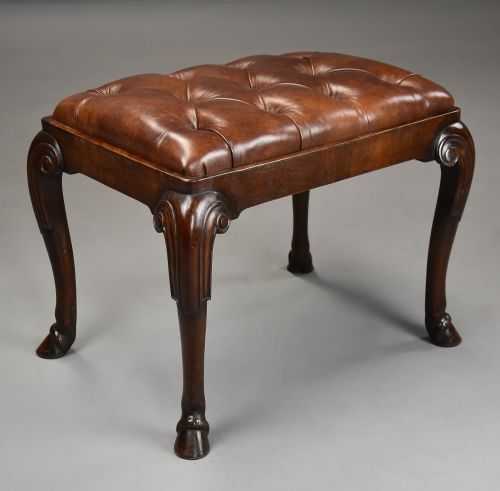
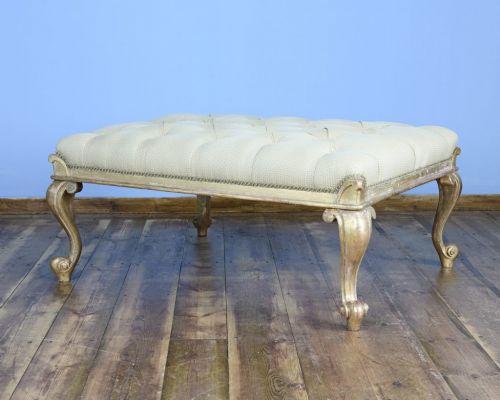
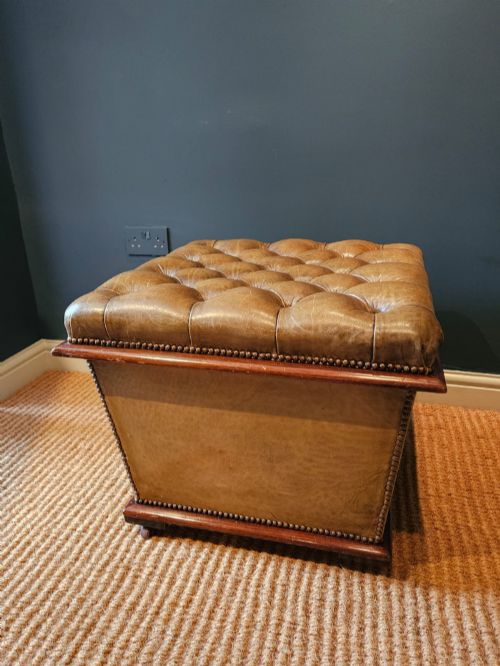
A buttoned ottoman is a low upholstered seat designed for resting the feet or sitting, frequently found in forms such as footstools, long benches, and window seats. You will most commonly encounter Victorian and nineteenth-century examples upholstered in leather or fabric.
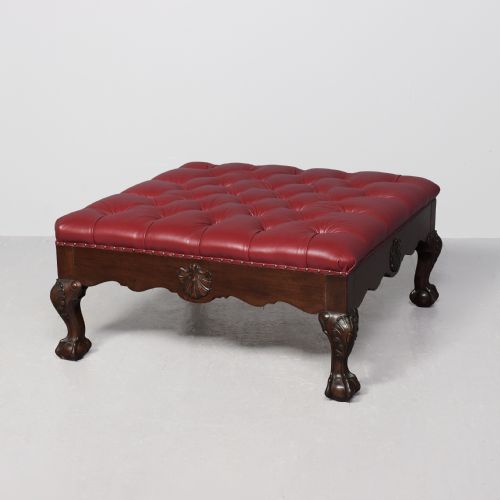
The selections span various traditional designs, including Regency, Chesterfield, and Chippendale styles, alongside simpler nineteenth-century country house forms. These pieces function well as centre stools in large rooms or as supplementary seating by windows.
Makers and designers appearing in the records include James Shoolbred and A.M.E. Fournier, pointing to nineteenth-century cabinet-making traditions. The physical scale ranges from compact footstools to grand scale benches and large ottomans.
How they were made
Frames are constructed from hardwoods such as mahogany, walnut, rosewood, and light oak, providing a sturdy architectural skeleton for the upholstery. Carpenters shaped these timbers with cabriole legs, fluted supports, and parcel gilt detailing.
Upholstery relies on hide, leather, and fabric secured with brass-studded detailing and deep buttoning techniques to create tension and pattern across the surface. Castors are frequently fitted to the base of nineteenth-century frames for mobility.
Buttoned Ottoman Retail Price Guide 2026
Typical asking prices for buttoned ottoman among the pieces listed under this phrase on Sellingantiques today, from the lower quarter to the upper quarter. They describe what is for sale here now, not the wider market.
The listings span the nineteenth and early twentieth centuries, featuring woods such as mahogany, walnut, rosewood, and light oak.
What varies in quality
The distinction between ordinary production and finer work lies in the handling of the timber frame and the precision of the upholstery. Grand scale pieces and those attributed to known makers exhibit more elaborate carving and substantial framing.
Materials dictate the visual weight, with hand-dyed leathers and richly grained rosewood or mahogany representing a higher standard of craftsmanship than simpler painted or secondary woods.
James Shoolbred·A.M.E. Fournier
The Buttoned Ottoman Glossary
- Buttoned ottoman
- A low upholstered seat featuring a deep-buttoned surface pattern created by pulling ties through the padding. This technique secures the internal stuffing and creates a characteristic diamond tufting.
- Cabriole leg
- A furniture leg featuring a double curve, typically bowing outward at the knee and tapering inward toward the foot. This form draws inspiration from classical antiquity and appears frequently on walnut and mahogany stools.
- Centre stool
- A large freestanding stool designed to sit in the middle of a room rather than against a wall. These pieces often feature generous proportions and deep buttoning.
- Parcel gilt
- A decorative technique where selected portions of a wooden frame receive a thin application of gold leaf. This highlights specific carved details against the dark ground of woods like mahogany.
- X-frame stool
- A seat supported by intersecting diagonal stretchers forming an X shape. This ancient structural form gained popularity in various revival styles during the nineteenth century.
Buttoned Ottoman: Frequently Asked Questions
Where should I place a buttoned ottoman?
These pieces sit comfortably at the foot of a bed, in front of a sofa, or beneath a library window as extra seating. Their low profile ensures they do not block lines of sight across a room.
Larger centre stools work well in open spaces where people can approach them from multiple directions, functioning as both a table surface with a tray and a place to sit.
How do I care for leather upholstery?
Leather upholstery benefits from regular dusting with a soft, dry cloth and occasional treatment with appropriate leather conditioners to prevent drying. Keeping the hide away from direct heat sources maintains its suppleness.
Hand-dyed and antique leathers develop a natural patina over time that reflects their age and history of use.
What is the difference between an ottoman and a footstool?
While the terms often overlap, footstools tend to be smaller and designed primarily for resting the feet. Ottomans frequently offer a larger surface area and heavier framing suitable for seating.
Many nineteenth-century examples function in both capacities, depending on their placement and scale within a room.
How can I identify a Victorian piece?
Victorian pieces often employ dense timbers like walnut and mahogany, combined with deep buttoning and turned or cabriole legs. The presence of brass castors underneath is also typical of this era.
Stylistic nods to earlier periods, such as Chippendale or Queen Anne revivals, frequently appear merged with Victorian manufacturing methods.