

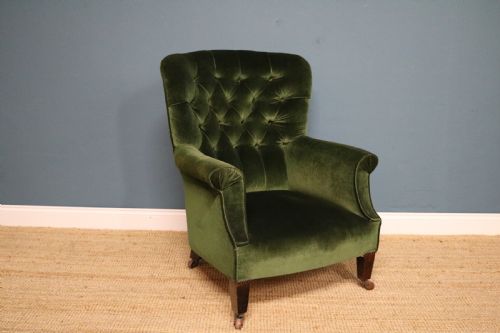
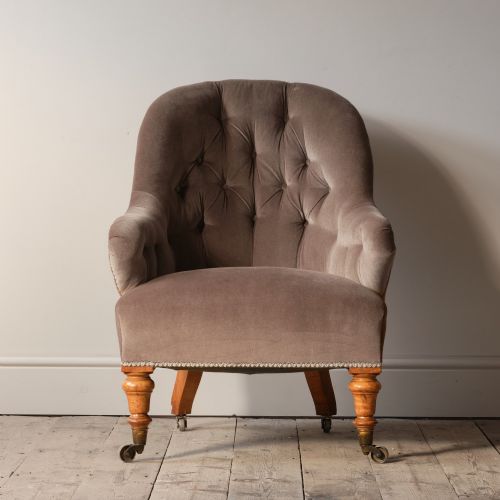
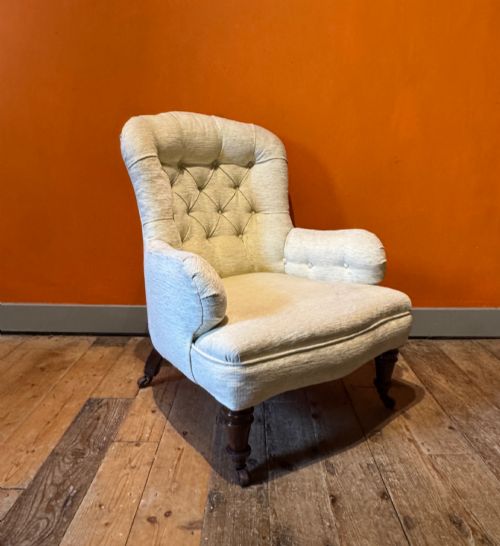
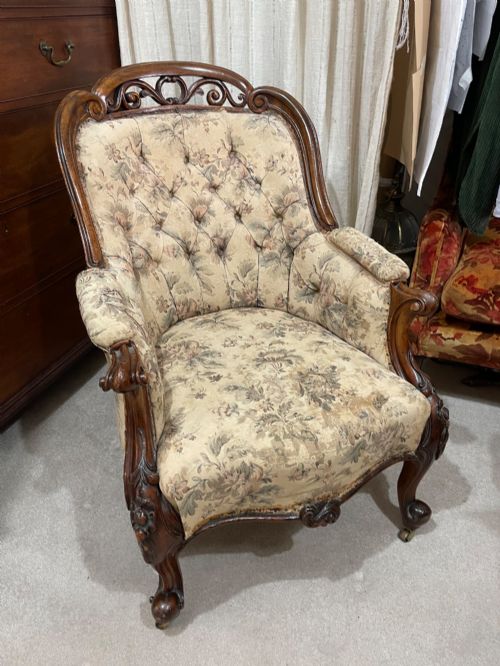
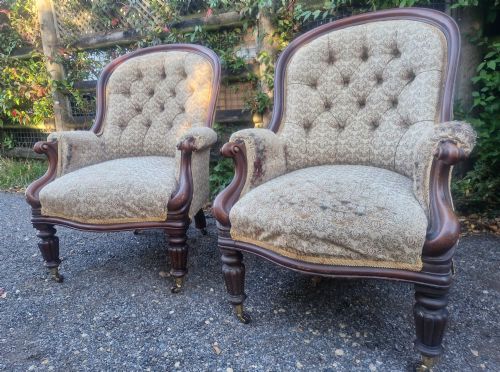
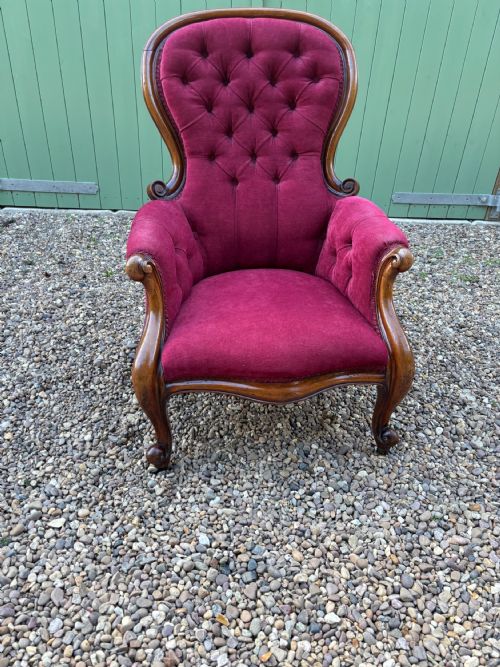
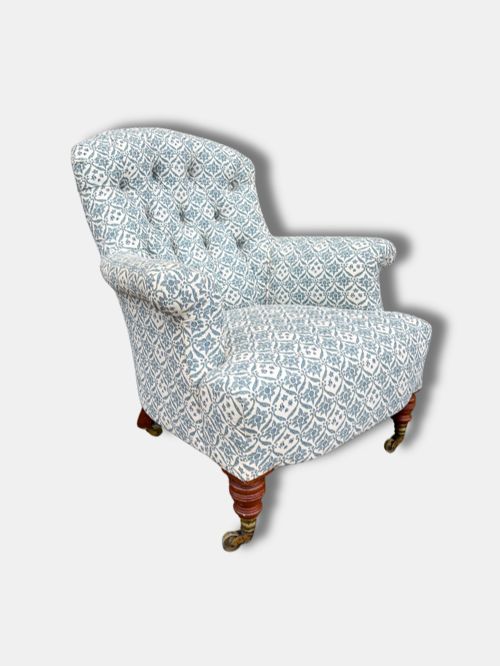
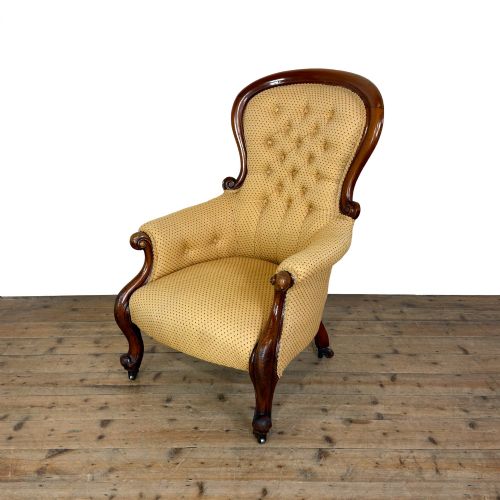
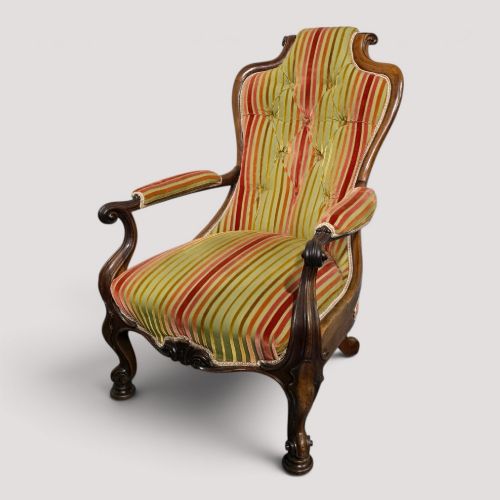
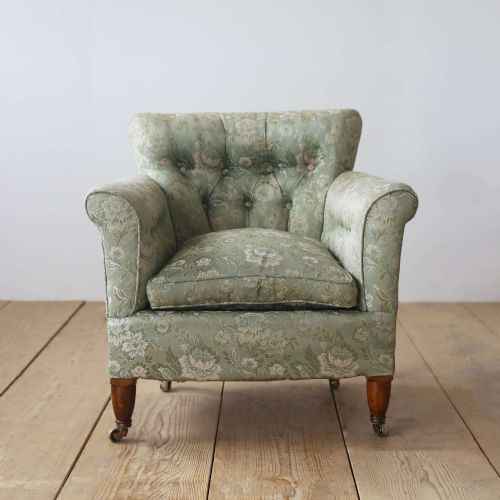
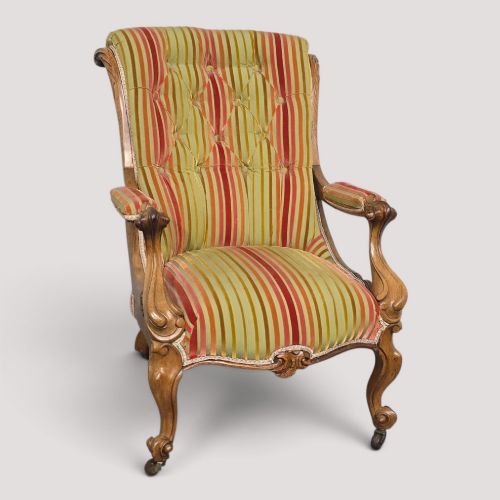
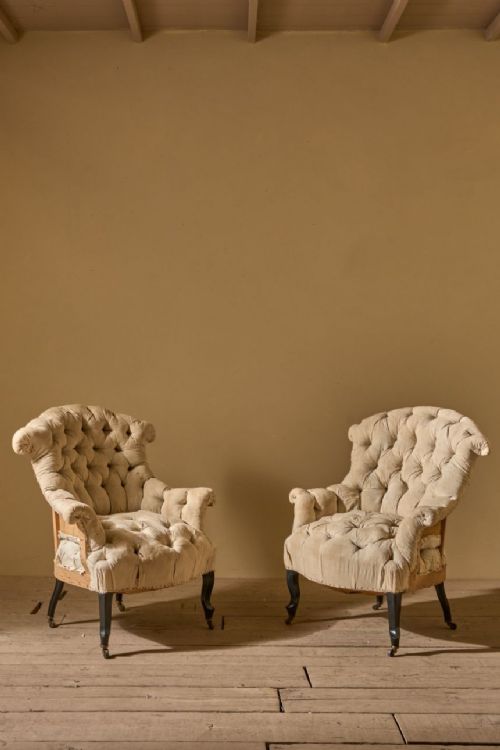
Buttoned Back Lounge Chair
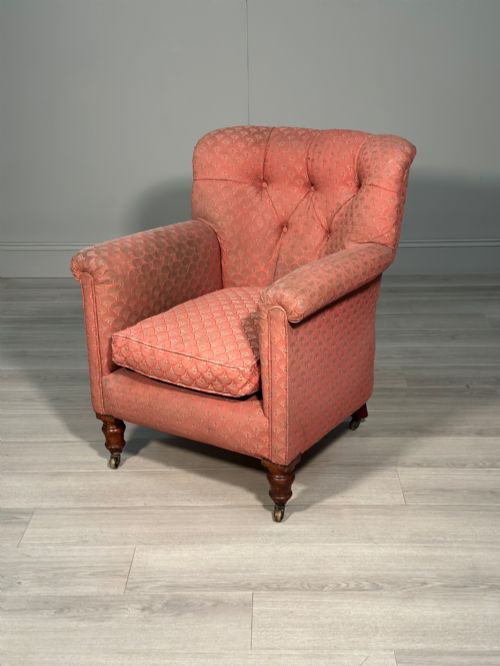
A buttoned back lounge chair offers deep springing and tailored upholstery, combining comfort with period presence for the drawing room.
Buttoned Back Lounge Chair
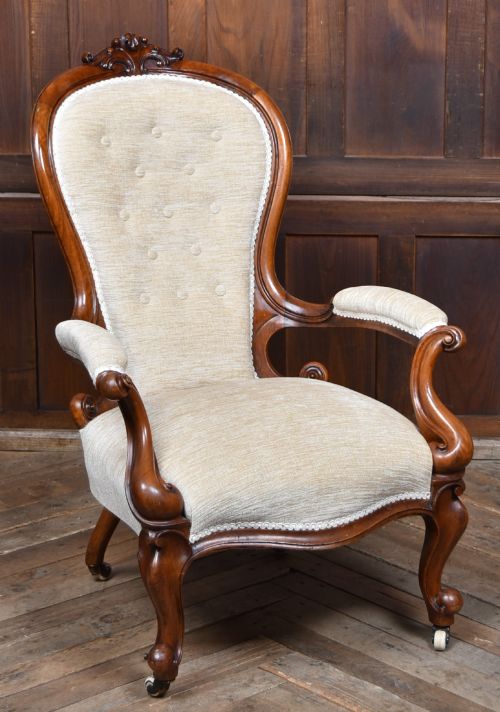
The buttoned back lounge chair encompasses low-slung seating forms designed for relaxation, appearing frequently in Victorian and nineteenth-century inventories. Buyers encounter various iterations here, ranging from library armchairs and gentleman's chairs to slipper chairs and chaise longues.
Makers of the period utilised substantial timber frames, often mahogany, walnut, or rosewood, paired with deep button-tufted upholstery. These forms draw upon stylistic influences including French Napoleon III, Regency Revival, and Victorian Rococo Revival.
English country house and French workshop traditions dominate the selection, providing low profiles, sprung seats, and scrolled armrests. Such seating suits drawing rooms and studies where formal posture gives way to relaxed repose.
Distinctions in quality and execution
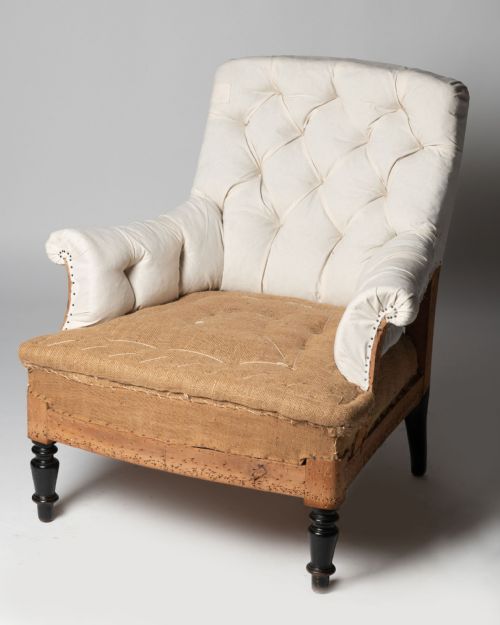
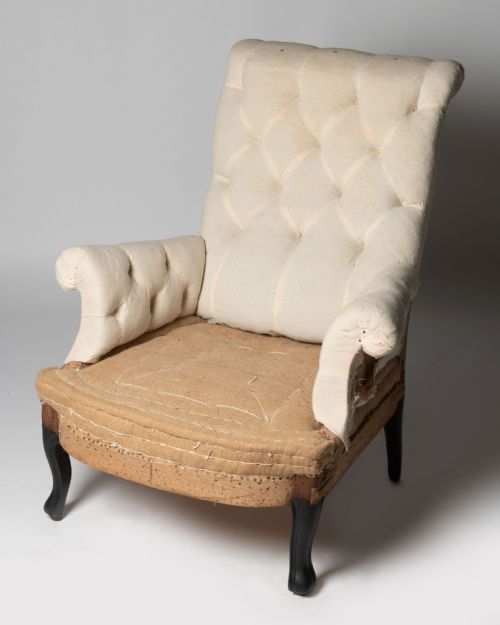
Superior examples reveal themselves through the integrity of the frame joinery and the resilience of the internal springing. Hand-tied coil springs and robust hardwood timbers separate artisan-built seating from simpler commercial production.
The precision of the button tufting and the quality of the textile, whether supple leather or deep-pile velvet, dictate the refinement of the piece. Proportion and carving detail on the exposed wood further distinguish standard workshop output from exceptional cabinet work.
Buttoned Back Lounge Chair Retail Price Guide 2026
Typical asking prices for buttoned back lounge chair among the pieces listed under this phrase on Sellingantiques today, from the lower quarter to the upper quarter. They describe what is for sale here now, not the wider market.
Listings feature nineteenth-century seating framed in mahogany, walnut, and oak, upholstered in velvet, leather, and brocade.
Howard & Sons·Gillows·Holland & Sons·Hindley & Sons
The Buttoned Back Lounge Chair Glossary
- Button-tufting
- A method of upholstery where buttons are pulled deep into the padding at regular intervals to create a diamond pattern. This technique secures the internal stuffing while adding decorative texture.
- Sprung base
- A seat construction utilising metal coil springs tied together to distribute weight evenly. It provides the resilient bounce characteristic of nineteenth-century seating.
- Slipper chair
- A low-seated bedroom or boudoir chair traditionally designed for ease when dressing. These pieces typically feature short legs and an upholstered frame without arms.
- Chaise longue
- An elongated upholstered seat intended for reclining, combining the backrest of a chair with the footrest of a daybed. Many period examples incorporate scroll ends and turned timber legs.
- Gentleman's armchair
- A generously proportioned upholstered seat from the Victorian era, often featuring an open wooden frame and a padded back designed for masculine comfort.
Buttoned Back Lounge Chair: Frequently Asked Questions
How do I care for velvet upholstery?
Velvet requires gentle brushing with the grain to maintain the nap and prevent flattening of the pile over time.
Professional cleaning is advised for spills to protect the delicate textile fibres beneath the buttoning.
Where should I place a lounge chair?
These chairs suit reading corners, studies, or drawing rooms where their low profiles allow adequate clearance around surrounding furniture.
Keep them away from direct sunlight to prevent fading on sensitive fabrics like velvet or leather.
How do I distinguish Victorian from Regency styles?
Victorian pieces often display heavier proportions, curved rosewood or mahogany frames, and deep button-tufted upholstery.
Regency examples tend to feature restrained classical lines, giltwood highlights, and lighter structural bracing.
Are these chairs suitable for daily seating?
Original coil springing and sturdy hardwood frames make these seats robust enough for regular daily use in a modern home.
Periodic inspection of the internal webbing ensures the upholstery maintains proper support over decades of service.