




Burr Wood Writing Table
A burr wood writing table brings rich, swirling grain and functional elegance into a room, most often appearing here in Victorian burr walnut.
Burr Wood Writing Table
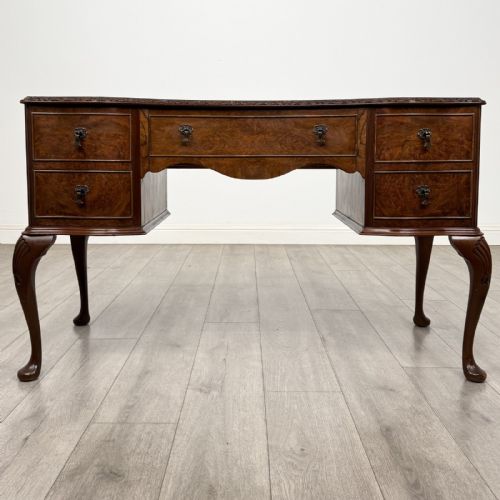
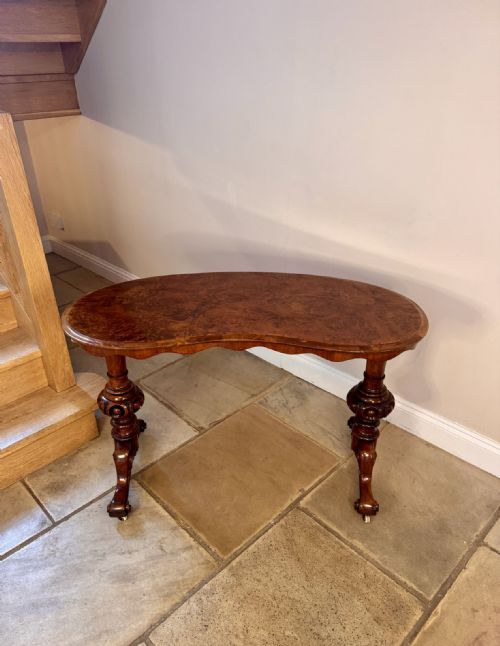
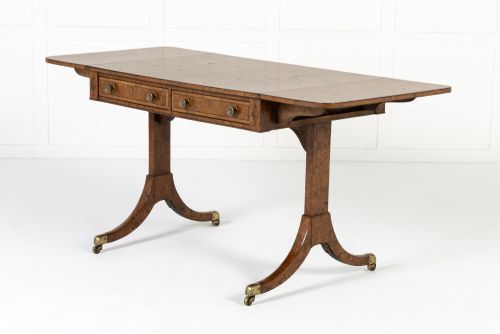
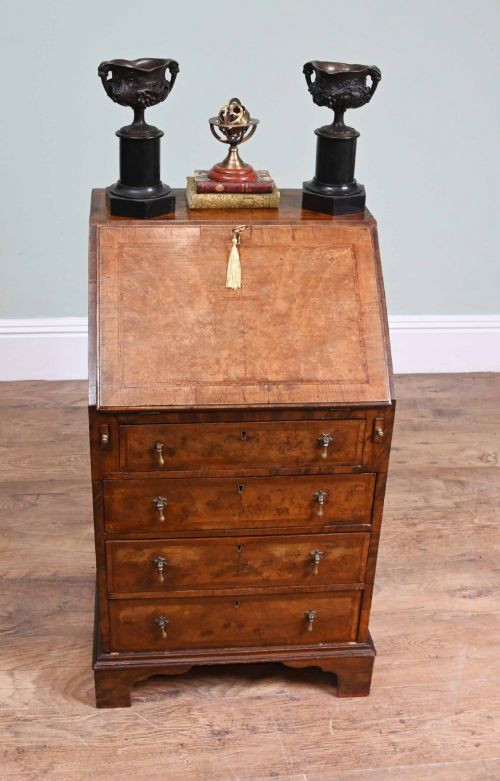
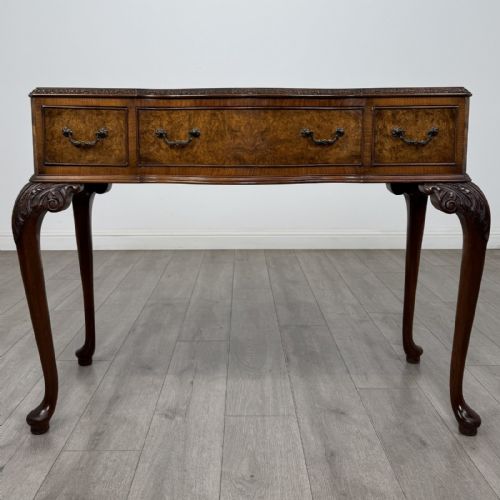
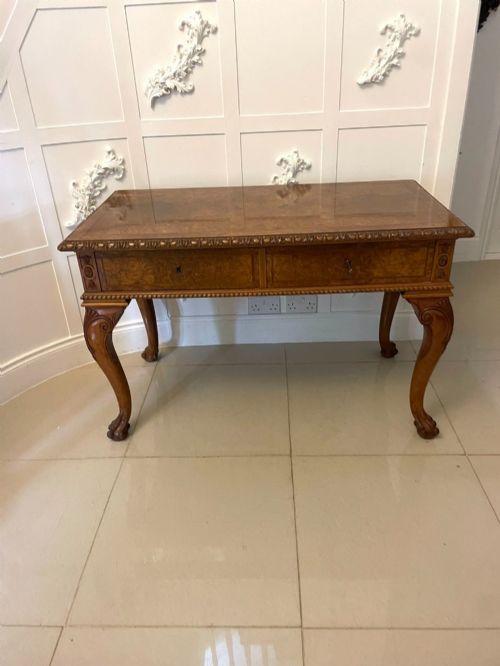
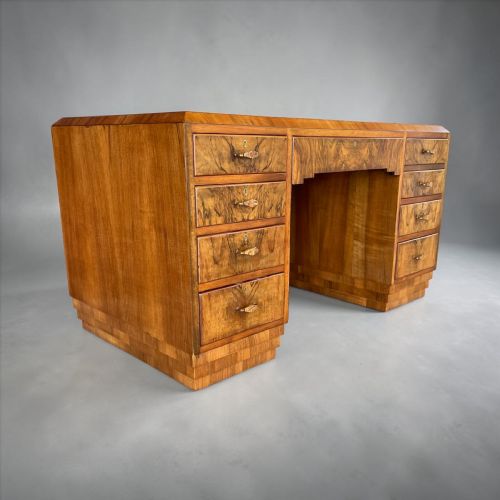
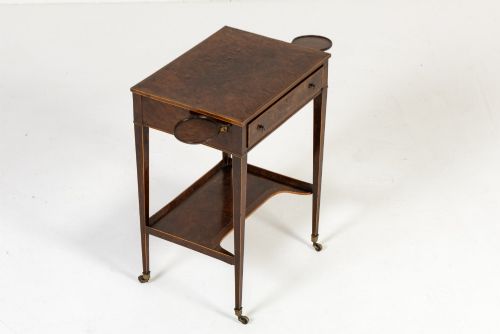
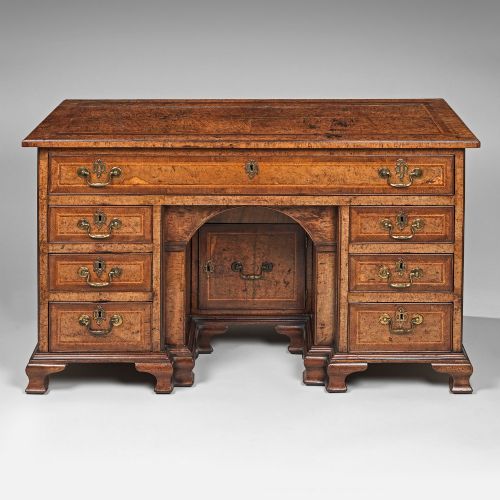
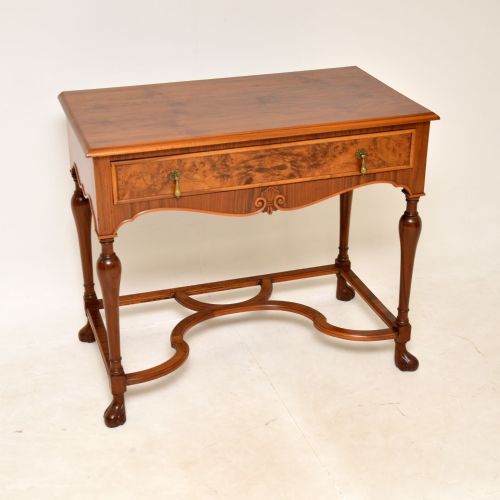
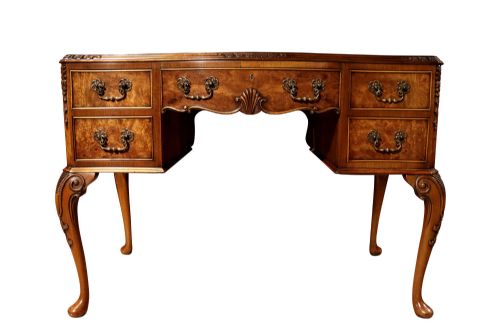
A burr wood writing table is a dedicated workspace defined by the highly figured, knotted growth patterns of timber such as walnut, oak, yew, ash, and elm. These pieces range from compact ladies desks and davenports to twin pedestal desks and larger freestanding library tables intended for the centre of a room.
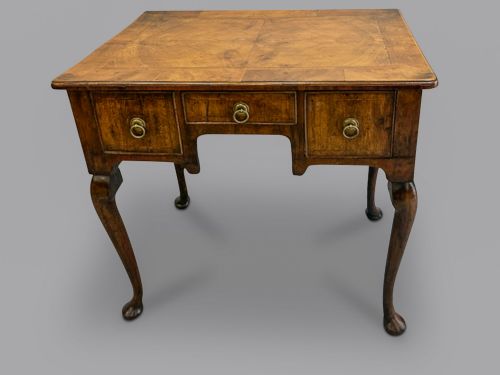
The versions most frequently met on this page date from the nineteenth century, particularly the Victorian era, though earlier Georgian and eighteenth-century examples appear alongside later revivals from the early twentieth century. Alongside standard writing tables, related forms such as lowboys, console tables, games tables, and kneehole desks share the same distinctive timber character.
How they were made
Cabinetmakers sliced delicate veneers from burr timber growths to display complex swirling grain patterns across the primary surfaces, often framing them with boxwood inlay, kingwood crossbanding, or contrasting bandings. These decorative veneers were applied to solid secondary woods like oak or plain walnut using traditional animal glues.
Many writing surfaces incorporated fitted inserts of tooled leather, while structural elements frequently featured turned or carved legs, stretcher frames, and brass hardware such as gallery rails or drop handles.
Burr Wood Writing Table Retail Price Guide 2026
Typical asking prices for burr wood writing table among the pieces listed under this phrase on Sellingantiques today, from the lower quarter to the upper quarter. They describe what is for sale here now, not the wider market.
Some nineteenth-century writing tables hide internal pop-up compartments designed to keep secret correspondence safely out of sight.
What varies in quality
The visual impact of the timber drives much of the distinction across the range, with denser, more evenly distributed burr figuring commanding greater appreciation than sparse or plain grain. The ambition of the form itself matters greatly, separating standard side tables from complex Davenport desks with pop-up compartments or freestanding breakfront library tables.
Execution of detail also sets examples apart, visible in the precision of boxwood inlay, the crispness of turned supports, and the integration of secondary timbers such as oak or ebony.
W J Mansell·Whytock & Reid·Maurice Adams·Gillow
The Burr Wood Writing Table Glossary
- Burr wood
- Timber harvested from tree growths or burls where the grain has grown in a deformed, swirling pattern. This produces highly decorative surfaces prized for cabinet work.
- Kneehole desk
- A compact desk featuring a central recessed space for the legs, flanked by pedestals of small drawers. They frequently date to the eighteenth and nineteenth centuries.
- Davenport
- A small compact desk popular in the nineteenth century, featuring a sloping writing surface above a set of drawers accessed from the side.
- Crossbanding
- A narrow strip of veneer applied to the border of a larger surface so that the grain runs at right angles to the centre. It provides a neat visual frame.
- Lowboy
- A small seventeenth or eighteenth century table with drawers, typically standing on slender legs and used variously as a dressing table or writing surface.
Burr Wood Writing Table: Frequently Asked Questions
What is a burr wood writing table?
It is a desk or table surfaced with highly figured wood veneers derived from tree burls or growths, featuring distinctive swirling patterns.
These pieces were made in various forms from the eighteenth century onwards, serving as functional writing spaces and decorative furniture.
Where should I place a freestanding table?
Freestanding library or centre tables are finished on all sides, allowing them to sit prominently in the middle of a room rather than against a wall.
They work particularly well where the patterned burr grain can be viewed from multiple angles.
What woods are used besides walnut?
While burr walnut is the most common material seen in these listings, cabinetmakers also utilised burr oak, ash, elm, yew, birch, and Thuya.
Each timber produces a distinct grain pattern and tone, ranging from pale golden hues to deep rich browns.