
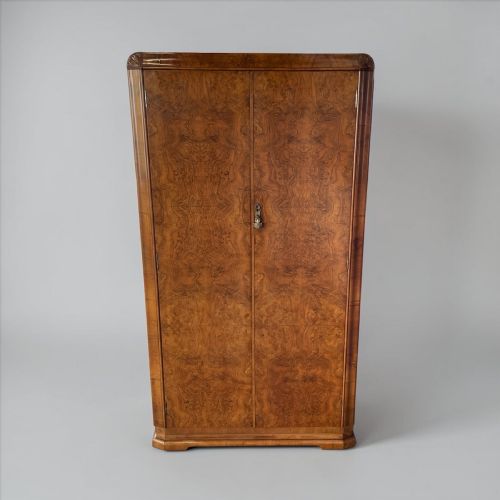
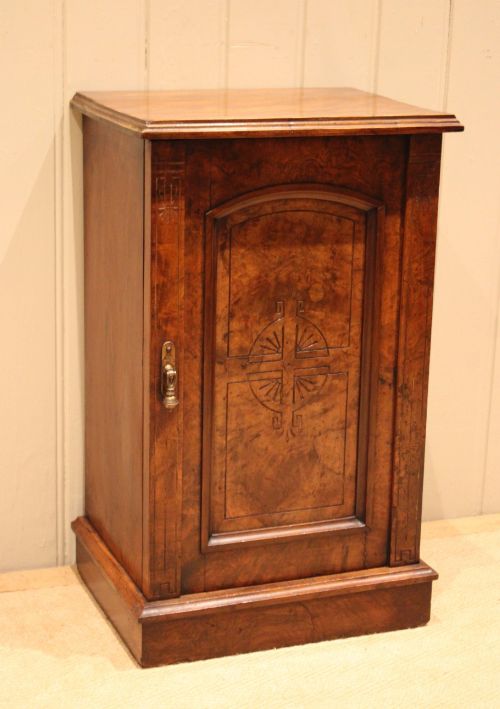
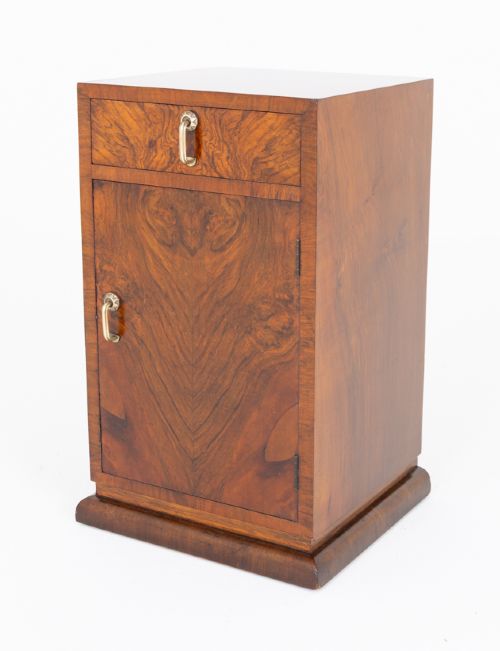
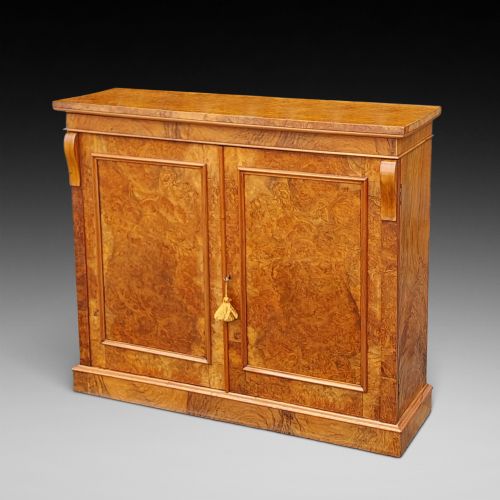
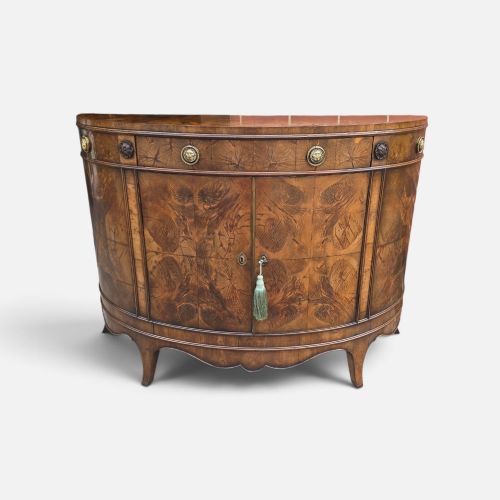


Burr Wood Storage Cupboard
A burr wood storage cupboard brings rich, swirling grain and deep patination to any room while hiding everyday clutter.
Burr Wood Storage Cupboard
When you search for a burr wood storage cupboard, you are looking at practical storage pieces wrapped in highly figured timber. The selections here span the eighteenth century through to the art deco period, offering everything from compact bedside cabinets to large wardrobes.
The most common forms you will meet on this page are bedside cabinets, cocktail cabinets, and tallboys rendered in burr walnut. Alongside these, occasional pieces in burr yew and burr elm appear, dating from the Victorian era and the early twentieth century.
These items serve domestic storage needs while acting as focal points through their decorative timber surfaces. The cabinetry ranges from Georgian corner cupboards to sleek 1930s designs, each providing enclosed space for clothes, books, or household goods.
How they were made
Cabinet makers applied thin slices of burr walnut, burr yew, or burr elm veneer over stable secondary timbers to create these patterned surfaces. This technique allowed workshops to display the swirling grain knots without risking the splitting that solid burr wood often undergoes.
Brass fittings, glass panels, and marquetry inlays frequently complement the timber bodies. Joinery methods varied by period, shifting from eighteenth-century dovetailing to the streamlined structures of the art deco era.
Storage forms span bedside cabinets, cocktail cabinets, tallboys, and compactum wardrobes.
What varies in quality
The richness and symmetry of the grain patterning dictate much of the visual merit across these items. Closely matched veneer layouts show greater care in the workshop than disjointed grain arrangements.
The calibre of the underlying construction, from the thickness of the walnut veneer to the original brass hardware and working locks, separates standard production from superior cabinet making.
The Burr Wood Storage Cupboard Glossary
- Burr wood
- A growth on a tree where the grain has grown in a deformed, swirling manner, producing highly decorative patterns when sliced.
- Veneer
- A thin layer of superior wood adhered to a base timber to provide an ornate exterior surface.
- Compactum
- A multi-compartment wardrobe designed to hold various types of clothing in dedicated sections.
- Marquetry
- The art of applying pieces of veneer to a structure to form decorative patterns and pictures.
- Tallboy
- A tall chest of drawers or cupboard standing on a base or legs, popular in eighteenth and twentieth-century interiors.
Burr Wood Storage Cupboard: Frequently Asked Questions
How do I clean burr walnut?
Dust the surface regularly with a soft, dry cloth to prevent dirt accumulation in the grain crevices. Avoid using modern silicone sprays or harsh chemical polishes.
Apply a traditional beeswax sparingly once or twice a year to nourish the timber. Buff gently with a clean cloth to maintain a soft lustre without building up heavy wax layers.
Are these cupboards suitable for modern clothes?
Many period wardrobes and tallboys offer deep shelving and hanging space suited to contemporary garments. Compactum models provide specialised compartments for different clothing types.
Measure your intended items before purchase, as older depths can occasionally be shallower than modern wardrobes. Freestanding cabinets work well for folded knitwear and accessories.
Where should I place a burr wood cabinet?
Position your cabinet away from direct sunlight and strong heat sources to protect the delicate veneer. Excessive temperature fluctuations can cause the wood to dry out or crack.
Place the piece on an even floor to prevent distortion of the frame and doors. Well-ventilated rooms help preserve the condition of antique timber over time.
How can I date a burr wood cupboard?
Examine the construction methods, handles, and timber types to determine the period of manufacture. Georgian pieces often display different joinery and proportions compared to Victorian or 1930s art deco items.
Look at the secondary woods used inside the drawers and cabinet backs, as these change across centuries. Stylistic cues such as geometric art deco lines or classical Victorian moulding help narrow the date.