

Burr Walnut Veneer
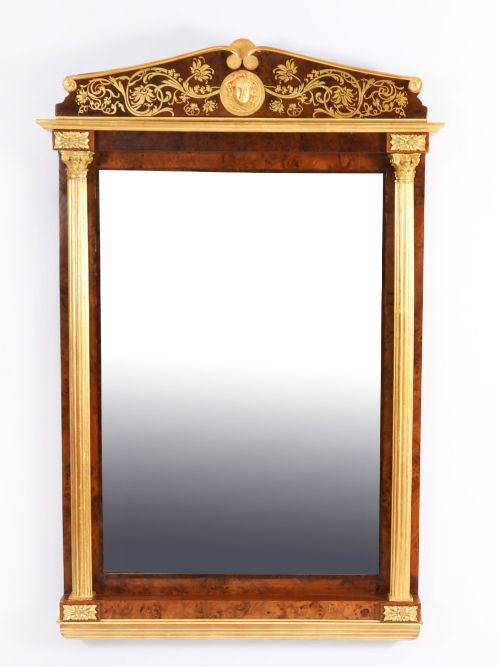
Burr walnut veneer furniture brings rich, swirling grain patterns to chests, tables, and cabinets across multiple centuries.
Burr Walnut Veneer
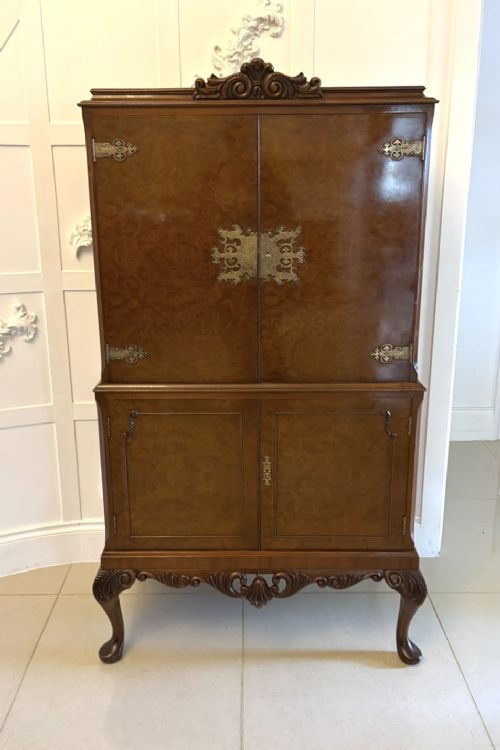
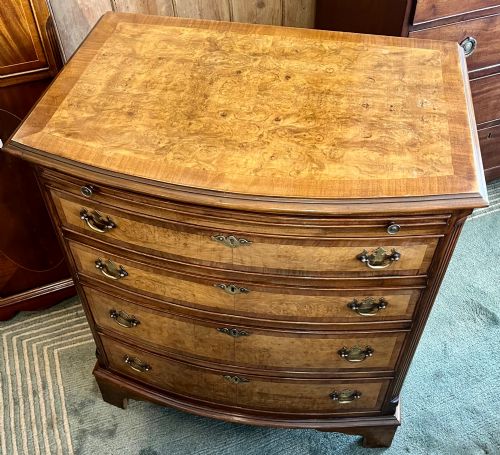
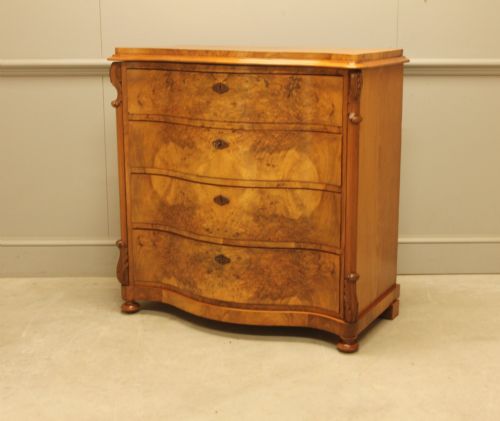
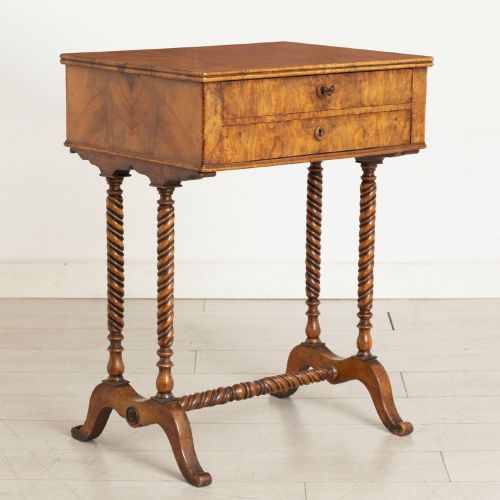
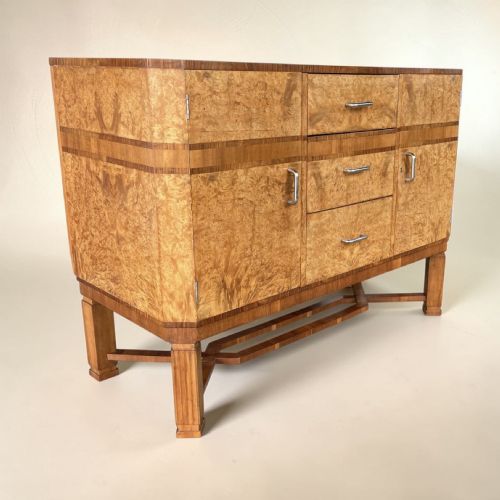
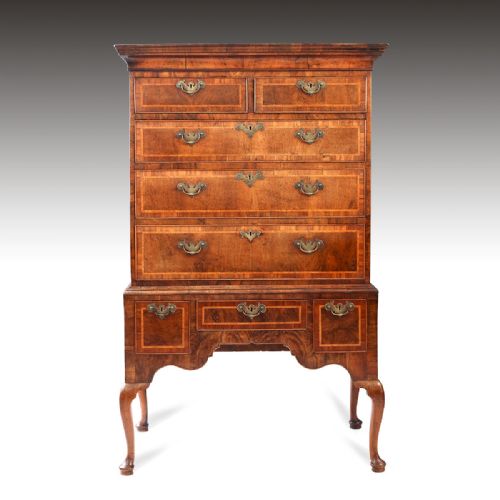
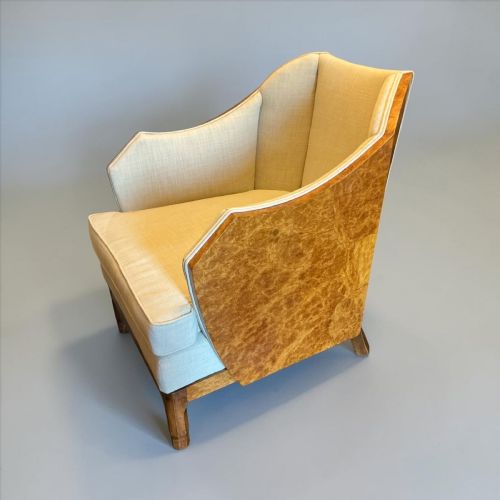
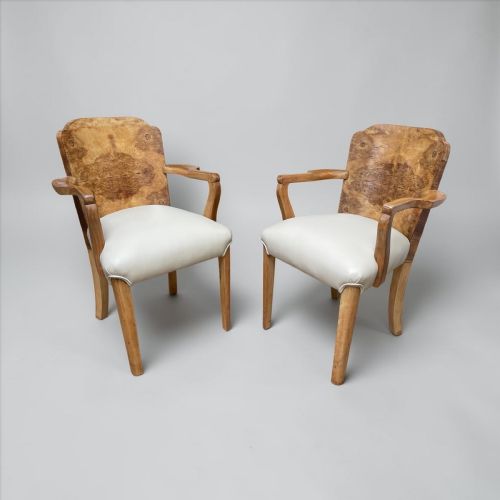
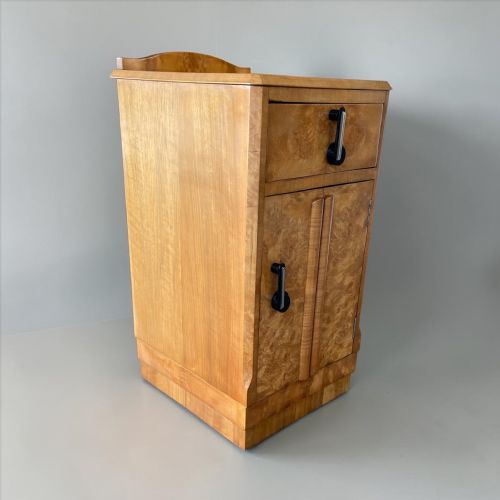
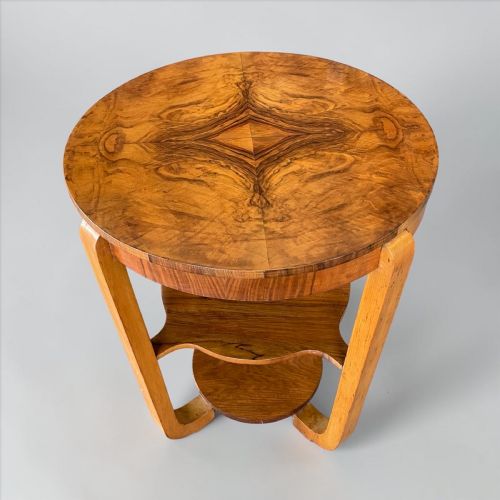
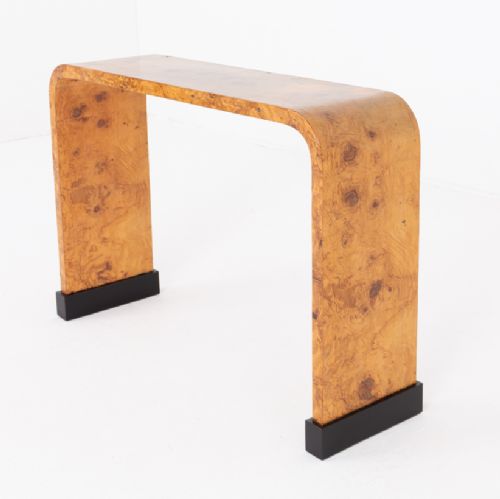
Burr walnut veneer furniture spans from the late seventeenth century through the Victorian era to the geometric designs of the Art Deco period. Buyers encounter forms ranging from compact chests of drawers and kneehole desks to cocktail cabinets, occasional tables, and dining furniture.
The material appears across various regional traditions, including English pieces from the Queen Anne and William & Mary periods, nineteenth-century Swedish and French items, and twentieth-century Art Deco creations.
Materials and construction
Craftsmen sliced thin sheets of highly figured burr walnut and applied them to stable secondary woods such as oak using early adhesives, arranging the grain to create symmetrical patterns.
Joinery often incorporates solid walnut framing, brass hardware, and secondary timbers like elm or satinwood, finished with hand-applied polish to accentuate the complex figure of the wood.
Burr Walnut Veneer Retail Price Guide 2026
Typical asking prices for burr walnut veneer among the pieces listed under this phrase on Sellingantiques today, from the lower quarter to the upper quarter. They describe what is for sale here now, not the wider market.
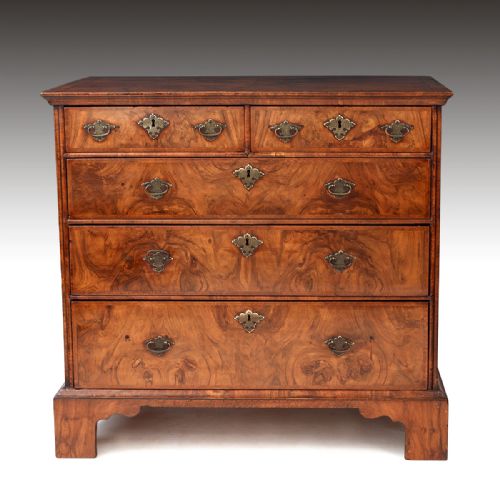
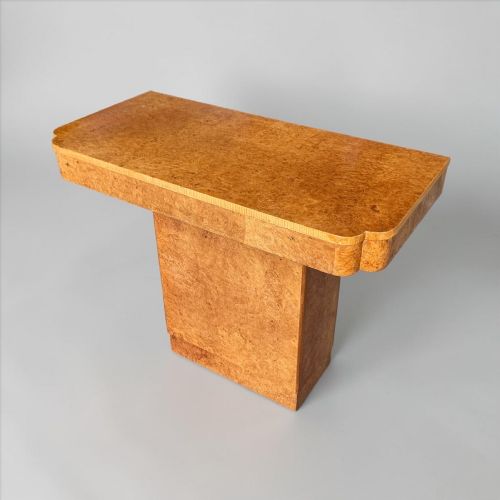
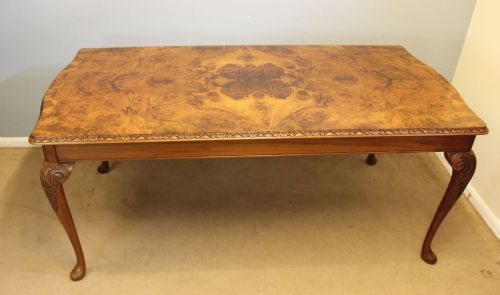
Listings feature burr walnut veneer applied to diverse forms, spanning seventeenth-century chests on stand, Victorian display cabinets, and 1930s cocktail furniture.
Assessing quality
Quality rests on the density and symmetry of the burr pattern in the veneer, the precision of the matching across panels, and the integrity of the underlying construction.
Makers achieved superior results through careful selection of timber growth nodes, meticulous application of quarter-veneering, and the preservation of original patination on the polished surfaces.
Maurice Adams
The Burr Walnut Veneer Glossary
- Burr walnut
- A wood harvested from the wart-like growths on walnut trees, yielding intricate, swirling grain patterns prized for decorative veneering. This figure creates the distinct mottled appearance seen on cabinet fronts and tabletops.
- Quarter-veneered
- A method where four symmetrical slices of veneer are matched edge-to-edge to create a continuous, mirrored pattern. This technique directs the eye towards the centre of a panel or drawer front.
- Kneehole desk
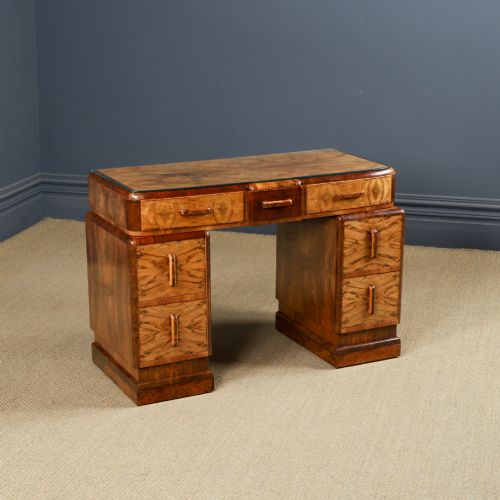
- A writing table featuring a central recess for the legs flanked by columns of small drawers. These pieces often showcase elaborate wood figures on the top and drawer faces.
Burr Walnut Veneer: Frequently Asked Questions
How do I clean burr walnut veneer?
Maintain the surface by dusting gently with a soft, dry cloth. Avoid chemical sprays and excessive moisture that might penetrate the thin timber layer.
Apply a microcrystalline wax periodically to nourish the polish and protect the grain from sunlight and atmospheric changes.
Can I place these pieces in direct sunlight?
Walnut is sensitive to ultraviolet light and loses its deep brown tone when exposed to direct sun for long periods. Position tables and cabinets away from south-facing windows to preserve the natural colour.
Rotate items occasionally if light exposure in a room is uneven across different sections of the timber.
How do I distinguish Art Deco burr walnut from earlier periods?
Art Deco pieces from the twentieth century lean towards bold, streamlined geometries, waterfall edges, and combinations with contrasting woods like macassar ebony or chrome handles. Seventeenth and eighteenth-century items utilise more traditional proportions, bracket feet, and brass drop handles.
Construction methods also shift from early hand-cut dovetails to twentieth-century mechanical precision alongside the characteristic styling of the era.
What secondary woods support the veneer?
Cabinetmakers laid expensive burr walnut veneers over more stable, utilitarian timbers such as oak, pine, or elm. These structural woods prevent warping while providing a rigid foundation for the decorative outer layer.
Inspecting interior drawer linings and unpolished carcase backs reveals these supporting timbers and helps confirm the period of manufacture.