

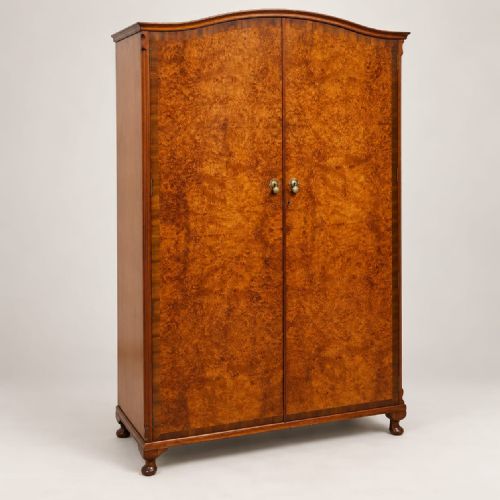

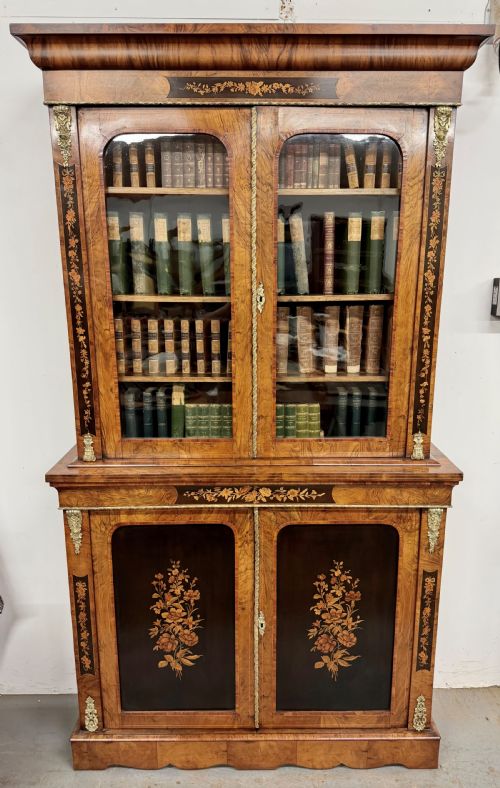
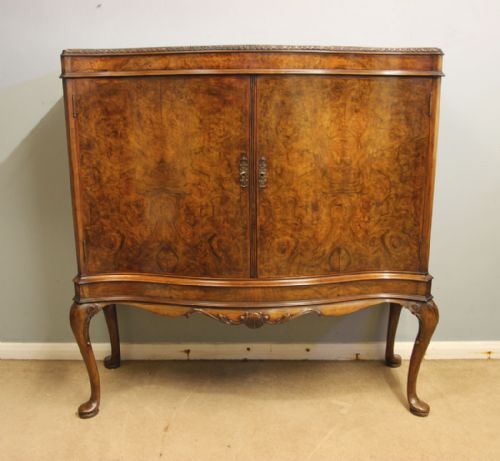

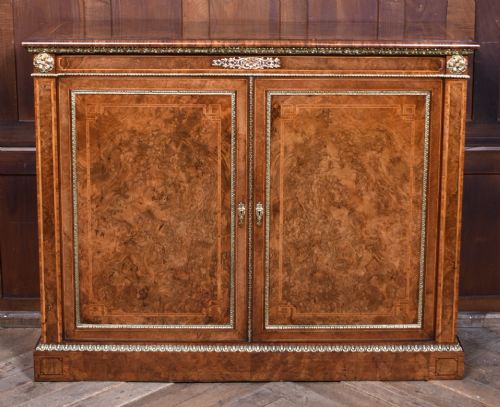

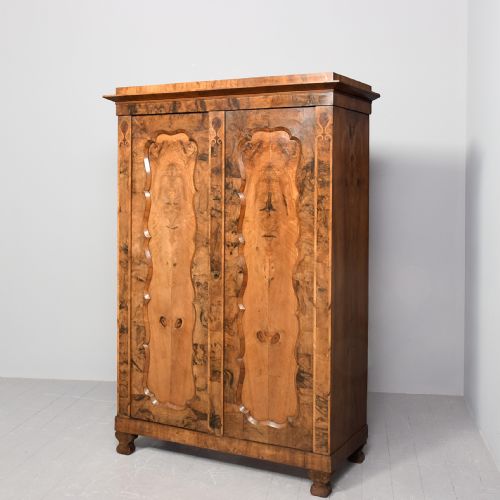


Burr Walnut Two Door Cabinet
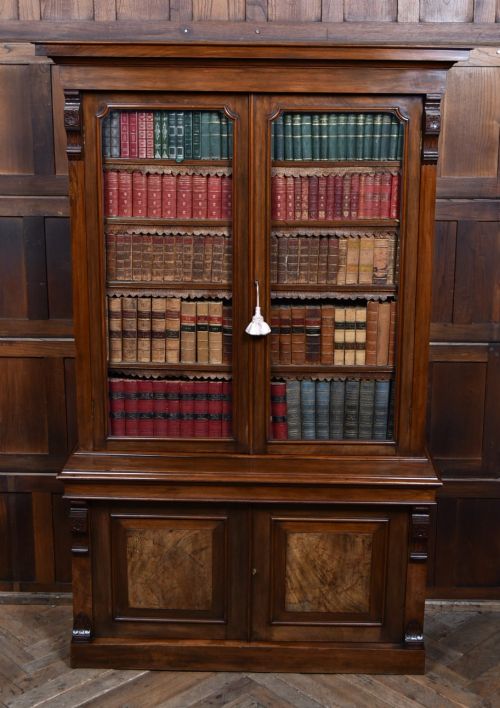
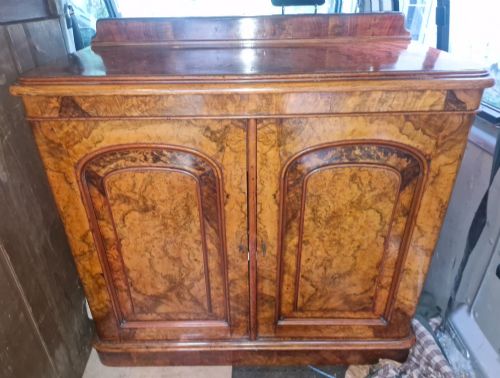
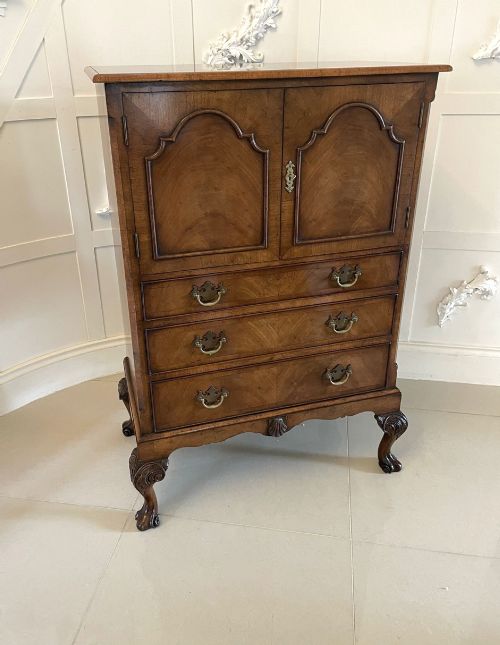
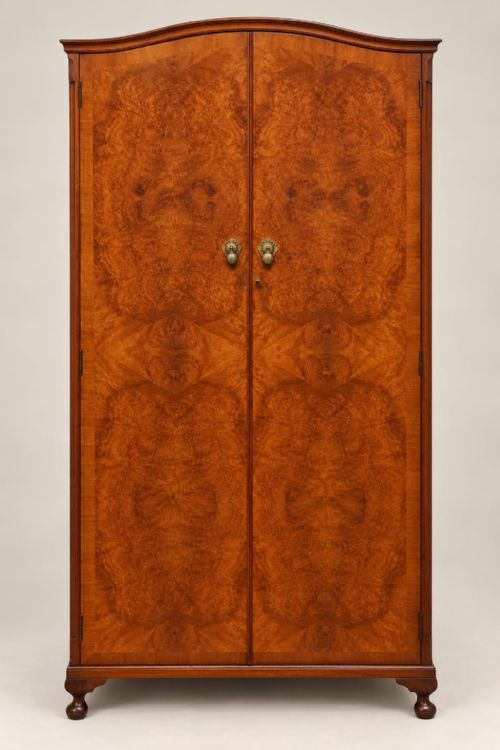
These burr walnut two door cabinet pieces bring striking timber figure and practical enclosed storage into a room.
Burr Walnut Two Door Cabinet
When you search for a burr walnut two door cabinet, you encounter a range of forms spanning centuries of cabinet making, from compact Victorian side pieces to generous wardrobes and bookcases. The selection here leans heavily towards Victorian and Art Deco examples, alongside earlier periods represented by Queen Anne styles and eighteenth-century origins.
The primary forms taking this configuration include side cabinets, compactum wardrobes, bookcases, and display cabinets, each utilising the twin door format to conceal or frame fitted interiors. These items function as focal points in a drawing room, hallway, or bedroom, combining decorative presence with functional utility.
The diversity of the objects reflects stylistic shifts from nineteenth-century revivalism and marquetry inlay to twentieth-century geometric Art Deco designs. Buyers frequently meet pieces that integrate glass, ormolu, and boxwood stringing into the architectural framework of the double doors.
Materials and construction methods
The construction of these pieces relies on the use of burr walnut and figured walnut veneers applied to sound secondary timbers, creating the characteristic swirling grain patterns across the double doors. Cabinet makers selected these veneers for their complex grain formations, which result from excrescences on the walnut tree.
Detailing often incorporates brass hardware, ormolu mounts, and delicate boxwood stringing or marquetry inlay to accent the rich brown tones of the walnut surface. Glass panels appear on bookcase and display cabinet iterations, whilst structural framing employs solid wood to ensure stability for the doors.
Burr Walnut Two Door Cabinet Retail Price Guide 2026
Typical asking prices for burr walnut two door cabinet among the pieces listed under this phrase on Sellingantiques today, from the lower quarter to the upper quarter. They describe what is for sale here now, not the wider market.
Certain cocktail cabinets hide their spirited purpose behind quiet walnut panels, ready to unfold for evening entertaining.
Distinguishing quality across the range
The standard of a piece rests upon the selection and matching of the burr walnut veneer across the twin doors, where symmetry in the grain pattern demonstrates superior craftsmanship. Pieces that display continuous, unbroken figuring show greater deliberate planning by the maker.
Subtlety in decorative additions, such as refined brass fittings, precise marquetry inlay, and integrated internal fittings, elevates an example above standard utility furniture. The integrity of the timber movement and the crispness of applied architectural details further separate ordinary cabinets from exceptional ones.
Epstein
The Burr Walnut Two Door Cabinet Glossary
- Burr walnut
- A veneer taken from the knotted growth of a walnut tree. It produces intricate, swirling patterns highly prized for decorative furniture surfaces.
- Compactum
- A fitted wardrobe or cupboard designed to maximise internal storage. It typically combines hanging space, drawers, and shelving behind twin doors.
- Ormolu
- Gilded bronze mounts applied for decorative effect. This technique was frequently utilised on nineteenth-century French and revival cabinets.
- Marquetry
- Inlaid wood veneers forming decorative patterns or pictures. Craftsmen cut contrasting timbers to fit precisely into a prepared background.
- Pier cabinet
- A low cabinet designed to fit against the wall space between windows. These often feature glass doors and internal shelving for display.
Burr Walnut Two Door Cabinet: Frequently Asked Questions
What is a compactum wardrobe?
A compactum wardrobe is a specialised storage piece designed to hold a variety of garments in a reduced footprint. These items feature internal divisions such as drawers, sliding trays, and hanging space behind two doors.
Cabinet makers of the Art Deco and Victorian periods utilised this form to provide maximum utility within domestic bedchambers.
How do I distinguish Victorian from Art Deco cabinets?
Victorian examples often display carved architectural details, marquetry inlay, or ormolu mounts reflecting revivalist styles. The proportions tend to be heavier and more ornate.
Art Deco pieces favour clean geometric lines, symmetrical burr walnut veneers, and minimal surface ornamentation. The focus shifts towards the natural grain pattern rather than applied decoration.
Where should I place a side cabinet?
Side cabinets suit living rooms, dining spaces, or hallways where enclosed surface storage is required. Their twin door format allows easy access to books, linen, or tableware while keeping contents dust-free.
Positioning them away from direct sunlight preserves the sensitive walnut veneer and prevents timber warping.
What makes burr walnut distinctive?
Burr walnut derives from a tree growth that creates chaotic, swirling grain formations full of small knots and eyes. Craftsmen slice this wood into thin veneers to display the dramatic patterns across large surfaces like cabinet doors.
No two pieces share the exact same figuring, giving each item a distinct visual identity.