




Burr Walnut Semainier
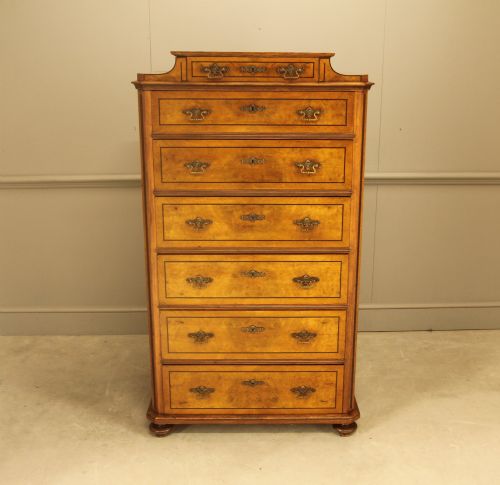
A burr walnut semainier is a tall, narrow chest of drawers designed for daily papers and linen, prized for its richly figured grain.
Burr Walnut Semainier
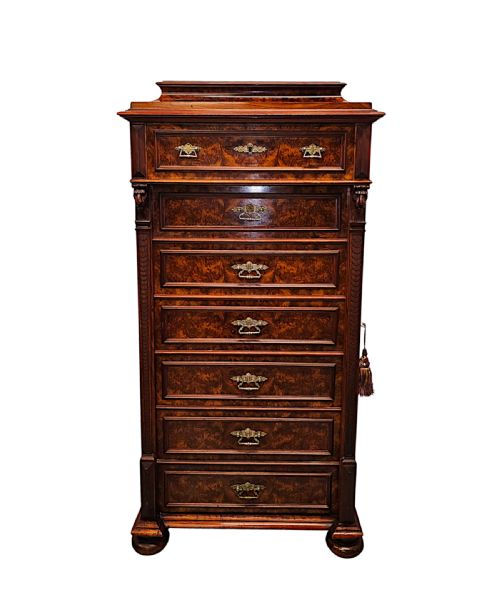
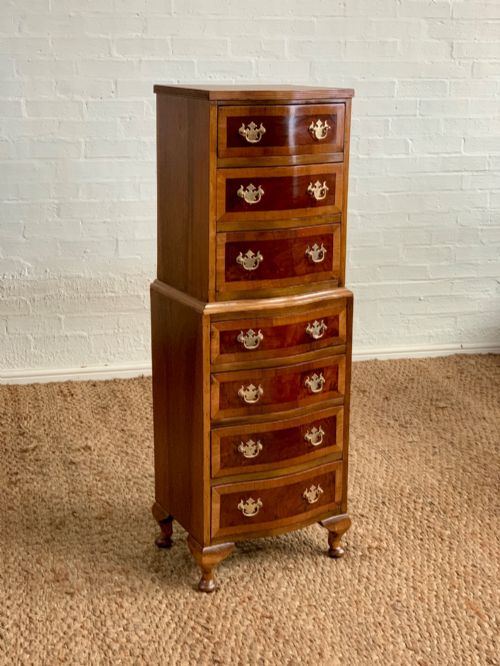
When you search for a burr walnut semainier, you are looking at tall, narrow chests of drawers designed to hold seven drawers, one for each day of the week. The versions met on this page span the 19th century, the Victorian era, and 1930, appearing in styles from French Continental and French Empire to Queen Anne style and Victorian.
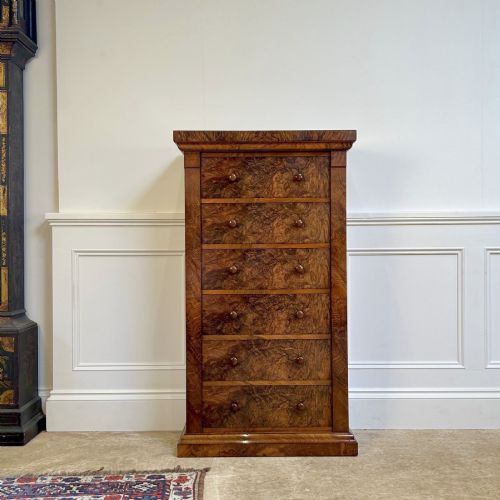
These pieces function primarily as tall chests of drawers and tallboys, incorporating related forms such as Wellington chests and secretaire tall chests. They originate from British workshops, notably Gillows, alongside French makers working in walnut, burr walnut, and walnut veneer.
How they were made
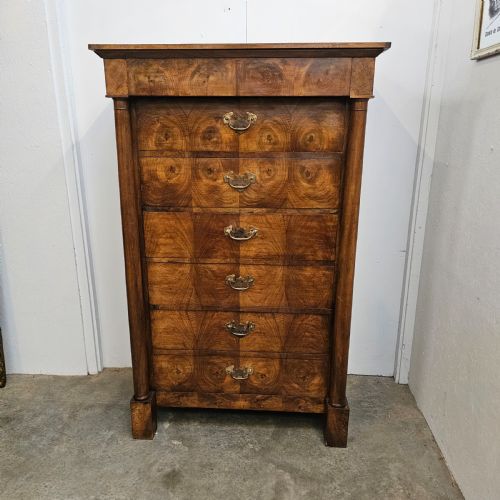
Cabinet makers constructed these tall chests using timber carcasses faced with highly figured burr walnut and walnut veneer. Surfaces often display bookmatched veneers that mirror the natural grain patterns across the drawer fronts and doors.
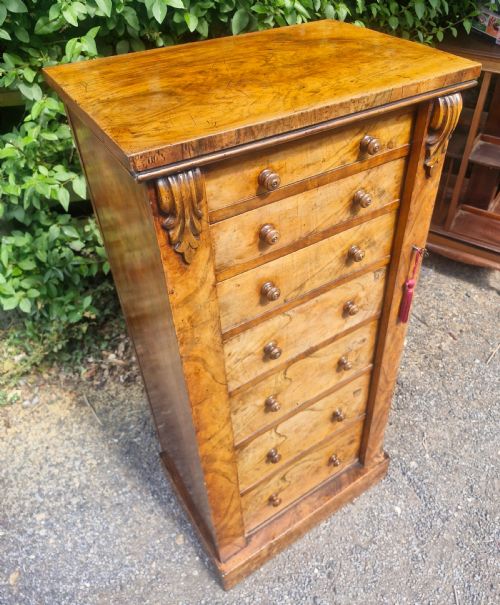
Metal mounts in ormolu and brass provide structural and decorative accents, alongside ebonised wood details and marquetry inlays. Wellington styles utilise a locking side pilaster to secure the full stack of drawers simultaneously.
Listings feature periods spanning the Victorian era, 1860, and 1930, alongside 19th-century French and Continental origins.
What varies in quality
Quality rests principally in the selection and application of the timber veneer, where dense, symmetrical burr walnut figuring elevates the visual impact. The complexity of the carcass construction, from simple drawer stacks to secretaire variants and ormolu mounts, dictates the tier of the piece.
Refinement in the joinery and the precision of bookmatched grain patterns separate standard examples from masterworks. The integration of functional hardware, such as brass fittings and locking pilasters, reflects the original workshop investment.
Gillows
The Burr Walnut Semainier Glossary
- Semainier
- A tall, narrow chest traditionally featuring seven drawers, one for each day of the week. This form originated in France for organising personal papers and linens.
- Wellington chest
- A tall, narrow chest of drawers featuring a hinged locking pilaster on one side that secures all drawers at once. It takes its name from the Duke of Wellington.
- Burr walnut
- Wood taken from a walnut tree growth or burl, yielding intricate, swirling grain patterns. It is sliced into thin veneers for decorative furniture surfaces.
- Bookmatched
- A technique where adjacent veneer leaves are opened like a book to create a symmetrical mirror image in the grain. This method highlights the natural patterns of walnut.
- Ormolu
- Gilded bronze mounts applied to furniture for decorative enrichment. It appears frequently on French Empire and Continental pieces.
Burr Walnut Semainier: Frequently Asked Questions
What is a semainier used for?
A semainier provides a tall, vertical storage footprint designed originally to hold weekly papers, linens, or personal items across its seven drawers. Its narrow proportions allow it to fit into tighter wall spaces than a standard chest of drawers.
Today, these pieces serve effectively in bedrooms or dressing rooms for folded clothing and accessories while adding significant decorative presence through figured timber grain.
How do I identify a Wellington chest?
A Wellington chest is identified by its narrow, tall proportions and a locking side pilaster that fastens down over the edge of the drawers. This single locking mechanism secures the entire stack of usually seven drawers with one turn of a key.
Originating in the 19th century, these chests often lack visible keyholes on the individual drawer fronts, relying entirely on the side locking bar.
What distinguishes French and English tall chests?
French semainiers and Continental tall chests frequently incorporate distinct hardware such as ormolu mounts, empire styling, and bookmatched walnut veneers. English examples from the period often follow Wellington designs or incorporate regional cabinet-making traditions.
Examining the internal timber construction and the style of the mounts usually clarifies the geographic origin of the piece.
Where should I place a tall chest?
Because of their vertical profile, tall chests and semainiers suit rooms with limited floor space but adequate ceiling height. They anchor empty wall spans effectively in hallways, studies, and bedrooms.
Ensure the placement protects the polished walnut and veneer surfaces from direct, harsh sunlight to prevent the grain from fading over time.