

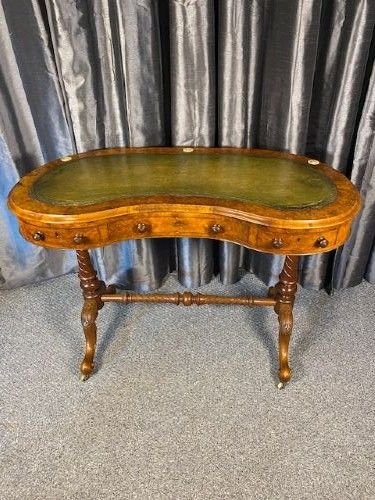
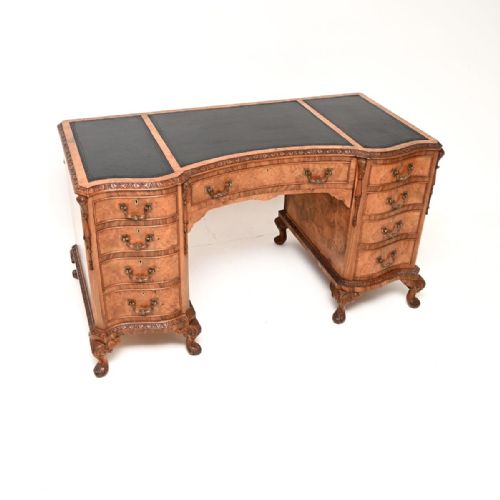


Burr Walnut Kidney Desk
A burr walnut kidney desk provides a curved writing surface wrapped in rich, figured grain that suits a central room position.
Burr Walnut Kidney Desk
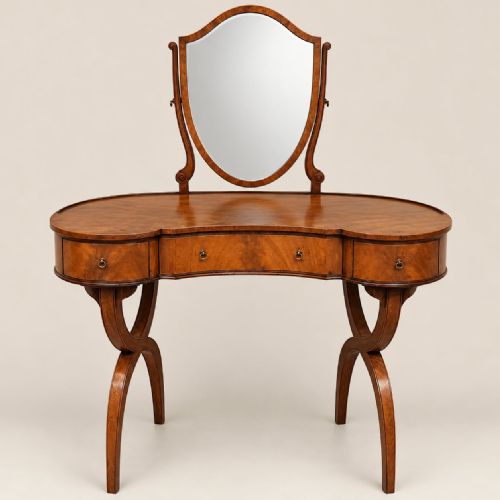
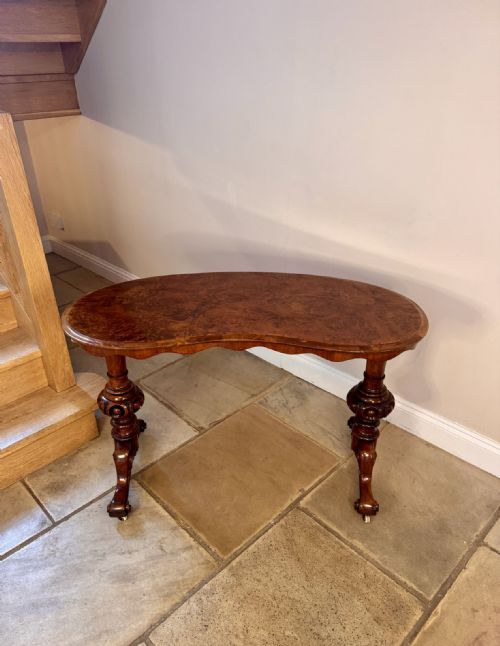
A burr walnut kidney desk takes its name from its curved outline, designed to wrap around the seated writer. These tables appear frequently in Victorian interpretations alongside later Art Deco examples.
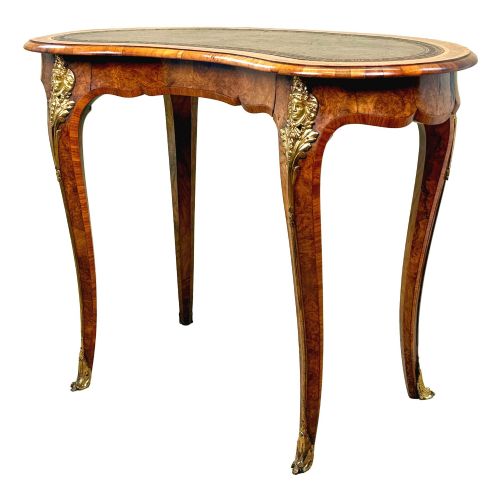
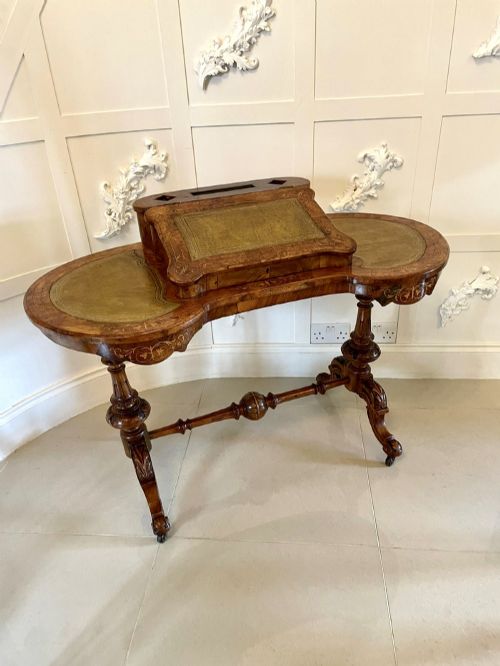
The form functions as a freestanding writing table or a pedestal desk, often finished with marquetry inlay or ormolu mounts. Makers utilised the distinct grain of burr walnut to create visually striking surfaces across the top and sides.
Most pieces date from the nineteenth century, spanning the 1850s through to 1900, with occasional twentieth century interpretations. Buyers find both simple writing tables and more elaborate pedestal designs fitted with leather inserts.
What varies in quality
The complexity of the timber preparation distinguishes standard production from finer work, particularly in how the burr walnut veneer meets the curved perimeter. Selection of deeply figured grain across the entire kidney top elevates the visual presence.
Burr Walnut Kidney Desk Retail Price Guide 2026
Typical asking prices for burr walnut kidney desk among the pieces listed under this phrase on Sellingantiques today, from the lower quarter to the upper quarter. They describe what is for sale here now, not the wider market.
Listings feature nineteenth-century pieces alongside 1920s Art Deco examples, showcasing burr walnut paired with leather, ormolu, and marquetry inlay.
Gillows·Maurice Adams
The Burr Walnut Kidney Desk Glossary
- Burr walnut
- A wood harvested from walnut tree growths that produces intricate, swirling grain patterns. This veneer defines the primary visual appeal of these desks.
- Kidney shape
- A curved desk profile resembling a kidney bean that allows the user to sit within the curve. This form enables freestanding placement in a room.
- Ormolu
- Gilded bronze mounts applied for decorative effect on furniture pieces. These metal accents frequently highlight nineteenth century French revival styles.
- Marquetry
- Decorative patterns formed by fitting small pieces of veneer into the primary wood surface. This technique creates floral or geometric designs across the desk top.
Burr Walnut Kidney Desk: Frequently Asked Questions
Where should I place a kidney desk?
Because the back of a burr walnut kidney desk is finished with the same attention as the front, it sits comfortably in the middle of a room rather than pushed against a wall. This allows the curved form and figured timber to be seen from all angles.
Position it where natural light falls across the leather writing surface from the side, ensuring the workspace remains practical for daily use while maintaining its decorative role in the interior.
How do I care for burr walnut?
Burr walnut veneer requires stable indoor humidity and protection from direct sunlight to prevent the timber from drying and the finish from fading. Regular dusting with a soft, dry cloth preserves the polished surface.
Avoid placing hot cups or damp items directly on the wood or the leather insert. Applying a quality beeswax occasionally helps nourish the walnut without building up a heavy residue.
Are these desks comfortable for daily writing?
The curved inner edge of a kidney desk is specifically proportioned to let the user sit close to the centre while having quick access to the entire desktop surface. The height aligns with standard chair seating.
While pedestal versions offer drawers for storage, simpler writing tables rely on the spacious top for paper and books. The leather inset provides a smooth, tactile surface for writing by hand.
How do I identify a Victorian piece?
Victorian burr walnut desks typically display nineteenth-century construction methods, including hand-cut dovetails within the drawer linings and traditional timber framing. The use of robust walnut carcases beneath the burr veneer is characteristic of this era.
Stylistic cues such as Louis XV revival curves or modest brass hardware further point toward the mid-to-late nineteenth century origins seen across these tables.