



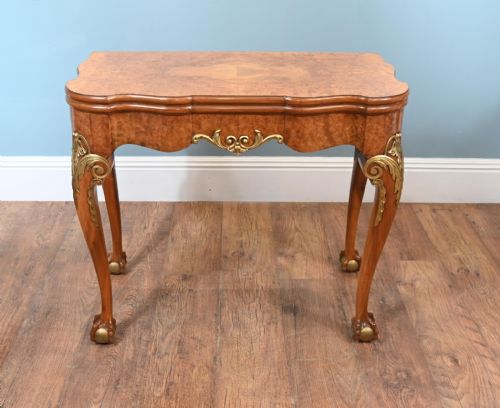

Burr Walnut Fold Over Table
A burr walnut fold over table offers a rich, figured surface that opens to reveal a baize-lined playing space, combining practical elegance with Victorian ingenuity.
Burr Walnut Fold Over Table
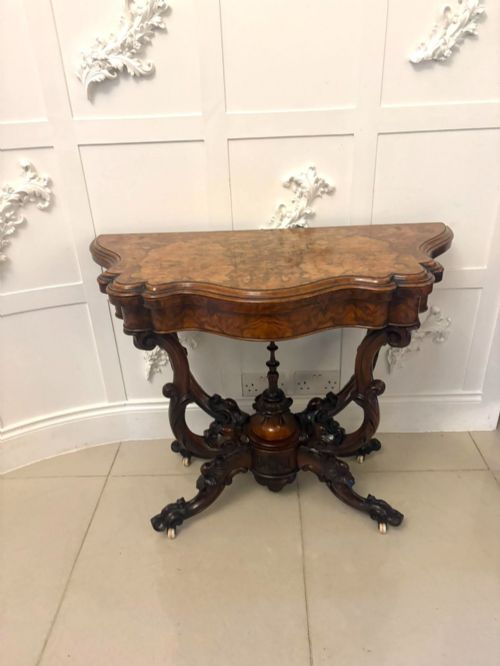
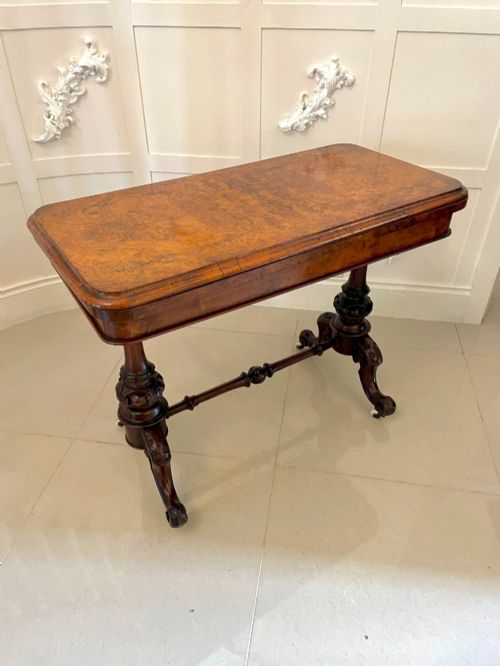
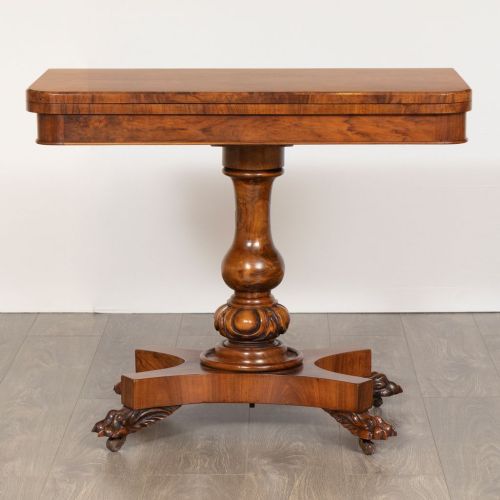
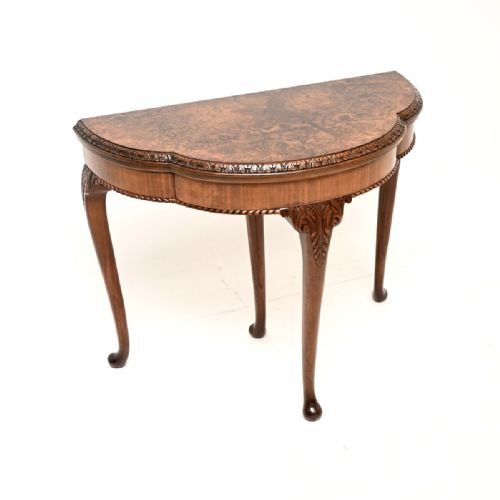
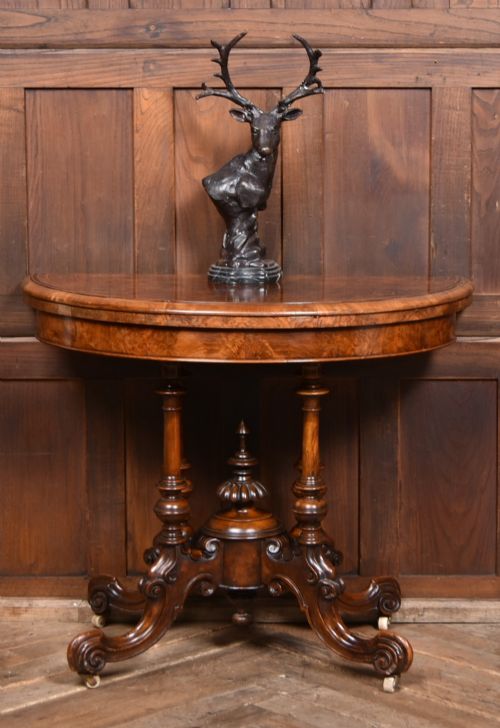
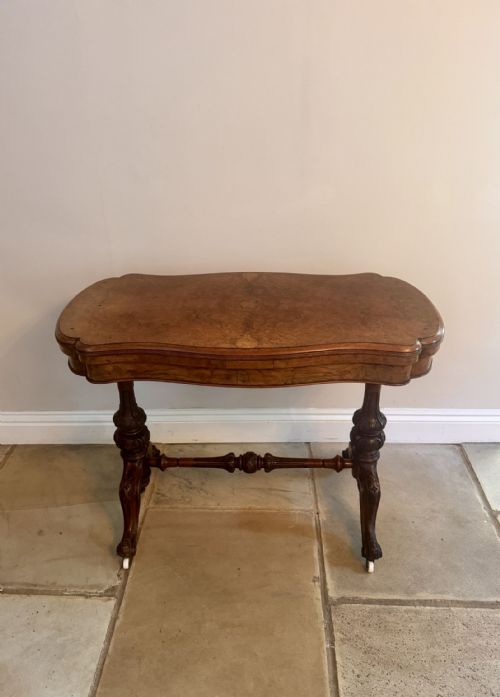
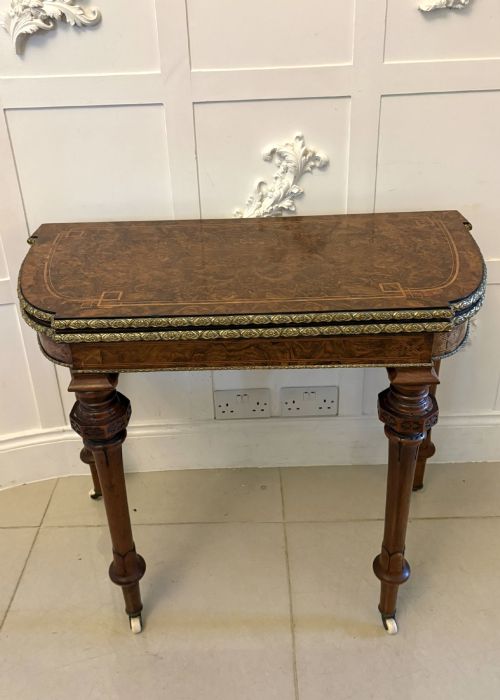
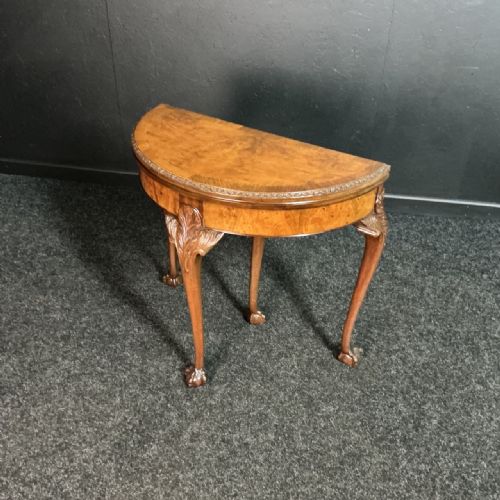
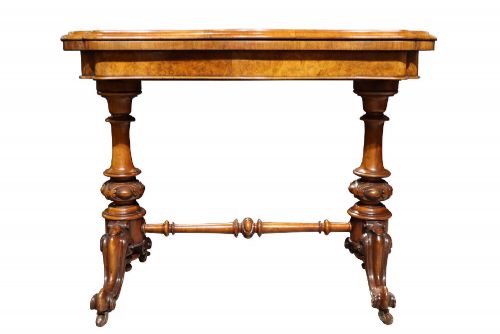
When searching for a burr walnut fold over table, you encounter pieces primarily from the Victorian era and the early twentieth century, spanning styles from Queen Anne revivals to Rococo and Louis XV influences. These tables serve a dual purpose, functioning as console or side tables against a wall before unfolding to accommodate card games, tea, or needlework.
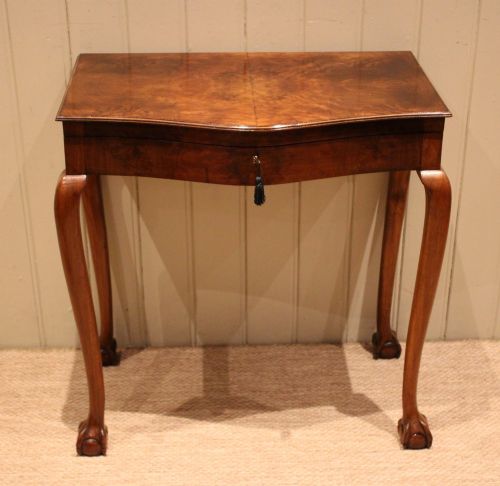
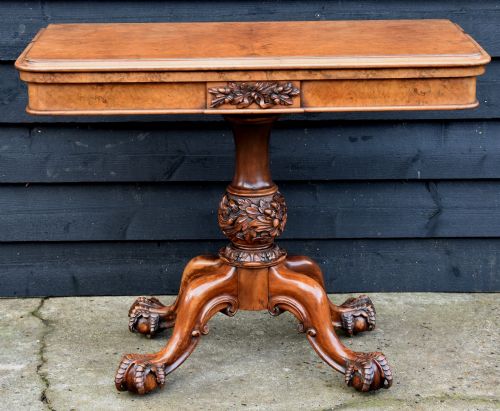
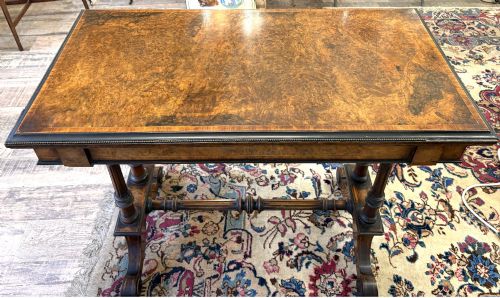
The most common examples on this page date from the mid-nineteenth century, typically featuring a swivel or pivoting top that reveals a concealed well or compartment beneath. Forms vary from serpentine and demi-lune shapes to rectangular side tables supported by carved pedestals, pillar bases, or slender cabriole legs.
Originating predominantly from British and French workshops, these pieces reflect changing social habits of the nineteenth century, where flexible furniture was essential for entertaining in parlours and drawing rooms. Whether configured as simple games surfaces or elaborate sewing combinations, they remain central examples of period cabinet work.
Materials and construction
The characteristic appearance of these tables relies on burr walnut veneers, prized for their swirling, knotted grain patterns, which are applied to solid timber carcases of pine or mahogany. Cabinet makers enhanced these striking natural figures with contrasting boxwood stringing, floral marquetry, or Tunbridge ware inlays set into the top surface.
Structural embellishments frequently incorporate cast brass mounts, ormolu details, and ceramic castors concealed beneath carved wooden feet or pedestal bases. Internal framing utilises solid secondary woods, while the fold-over mechanism relies on sturdy wooden hinges or pivoting brass pivots to support the weight of the hinged leaf.
Burr Walnut Fold Over Table Retail Price Guide 2026
Typical asking prices for burr walnut fold over table among the pieces listed under this phrase on Sellingantiques today, from the lower quarter to the upper quarter. They describe what is for sale here now, not the wider market.
Many a Victorian card table still hides the faint impression of chalk scores from high-stakes parlor games played under gaslight.
Distinctions in quality
Quality in these tables is determined by the density and symmetry of the burr walnut veneer selection, where book-matched grain patterns across the folding top create a balanced mirror image. Finer examples display meticulous attention to secondary details, such as crisp hand-carved basket bases, intricate marquetry, and seamless joints that remain stable when the top is open.
The integrity of the pivoting mechanism and the precision with which the folded top aligns with the frieze indicate the skill of the original maker. Poorer examples may show lifting veneer, mismatched grain sections, or loose pivots from heavy use, whereas superior pieces maintain structural rigidity and smooth operation over the centuries.
Edwards and Roberts·Epstein and Co
The Burr Walnut Fold Over Table Glossary
- Burr walnut
- A veneer sliced from the deformed growths or warts on walnut trees, yielding intricate, swirling grain patterns. It is highly valued for decorative furniture surfaces.
- Fold-over top
- A hinged wooden surface that doubles in area when opened, commonly found on card and games tables. It often conceals a storage well or baize playing field underneath.
- Serpentine
- A furniture front or top shaped with a double curve, convex in the centre and concave at the ends. This contour requires precise woodworking skill.
- Marquetry
- The art of applying decorative pieces of veneer to a structural structure to form pictorial or geometric designs. It frequently incorporates light woods like boxwood against darker walnut.
- Ormolu
- Gilded bronze ornamentation applied to furniture, popular in French-influenced revival styles. It adds metallic contrast to wooden surfaces.
- Cabriole leg
- A furniture leg that curves outward and then tapers inward, typically ending in a pad or claw foot. This form is characteristic of Queen Anne and Louis XV revival styles.
Burr Walnut Fold Over Table: Frequently Asked Questions
What was a burr walnut fold over table used for?
These tables functioned primarily as dual-purpose furniture for the Victorian drawing room, serving as decorative console or side tables when closed against a wall. When unfolded, they provided a stable surface for card games, board games, or sewing.
Many examples feature a hidden compartment beneath the hinged top for storing playing cards, counters, or needlework supplies. This flexibility made them essential items for entertaining guests in homes with limited space.
How do I tell a Victorian table from a later revival?
Victorian tables typically exhibit heavier timber framing, hand-carved pedestal supports, and traditional joinery methods suited to mid-nineteenth-century production. The patination of the walnut wood often shows deeper ageing and wear.
Later revival pieces from the early twentieth century, such as those inspired by Queen Anne or Louis XV styles, may feature machine-cut elements or lighter secondary woods. Examining the interior construction and the wear patterns on the pivots helps clarify the period.
How should I care for burr walnut veneer?
Burr walnut veneer requires a stable indoor environment away from direct sunlight and heat sources to prevent the thin wooden surface from drying out or warping. Dusting with a soft, dry cloth is sufficient for routine maintenance.
Avoid using silicone-based polishes or excessive moisture, which can damage the historic polish or seep into the grain joints. Periodic application of quality furniture wax helps preserve the lustre of the wood.
Do all these tables have storage space inside?
Most card and games tables incorporate a shallow well or recess beneath the folding leaf, designed specifically to hold playing cards, dice, or sewing implements when closed. Some combination tables pair this games surface with a sewing basket base.
Simple side or console variations may lack an internal well, consisting solely of a solid or veneered folding top supported by a central pillar or legs.