

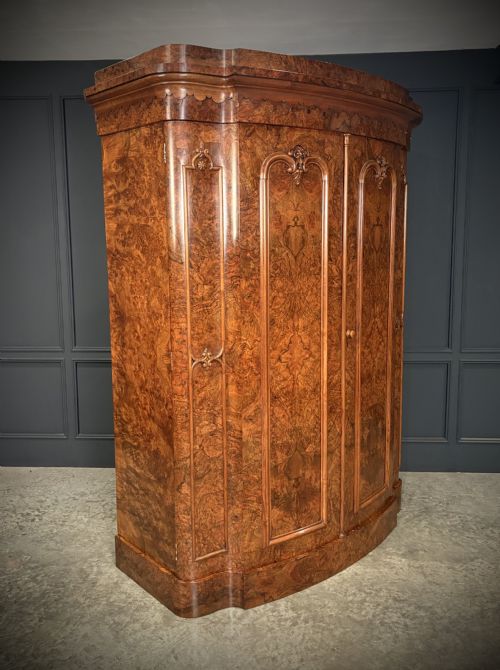


Burr Walnut Closet
A burr walnut closet brings figured timber and generous proportions to a bedroom, offering a practical space for clothes.
Burr Walnut Closet
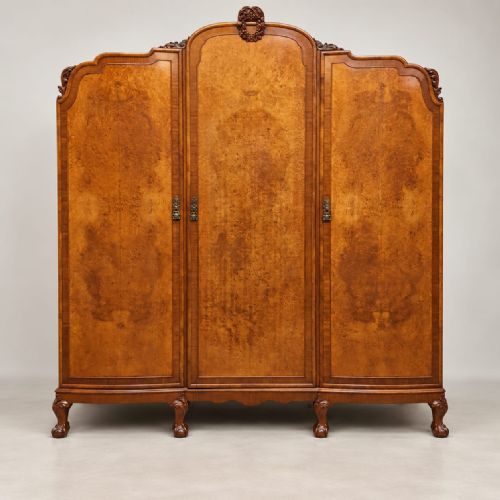
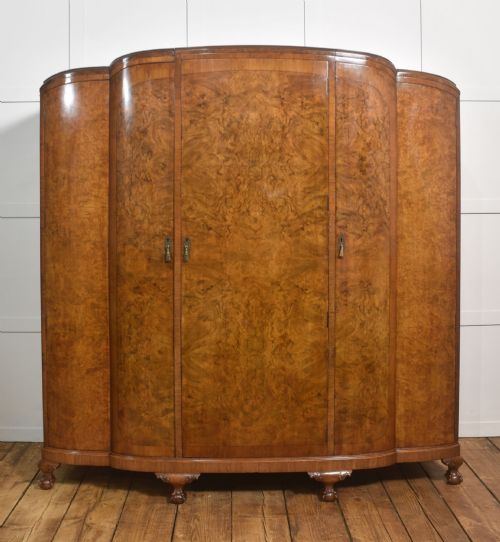
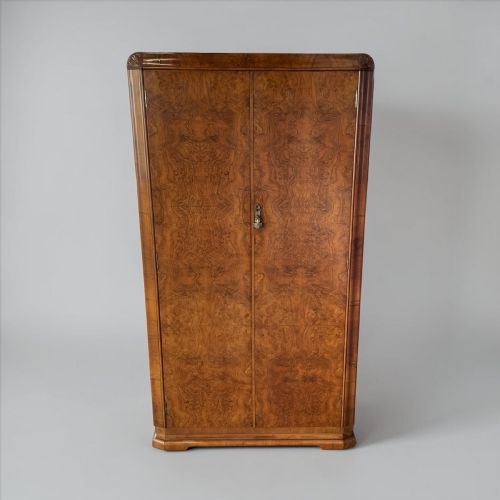
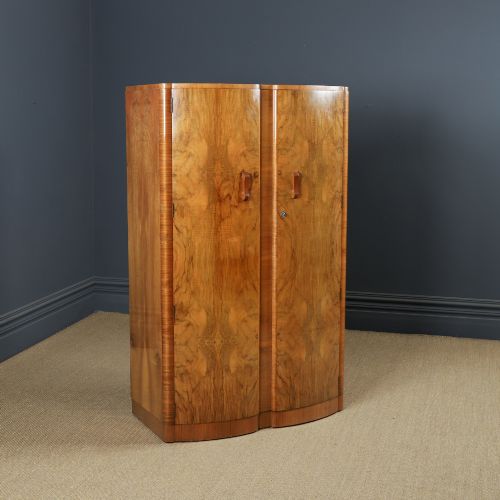
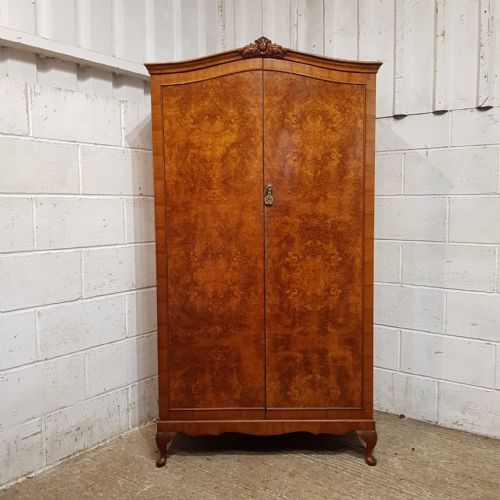
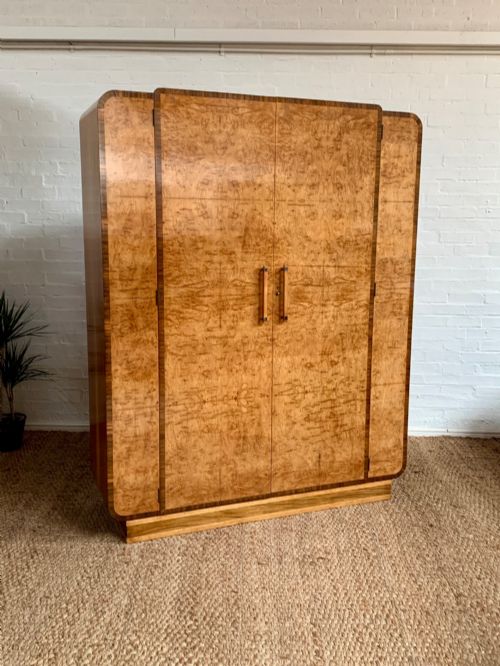
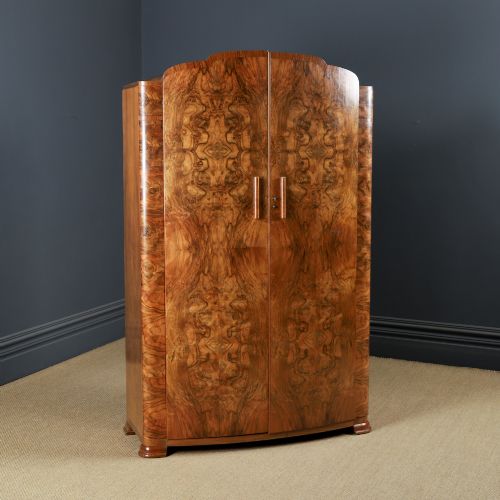
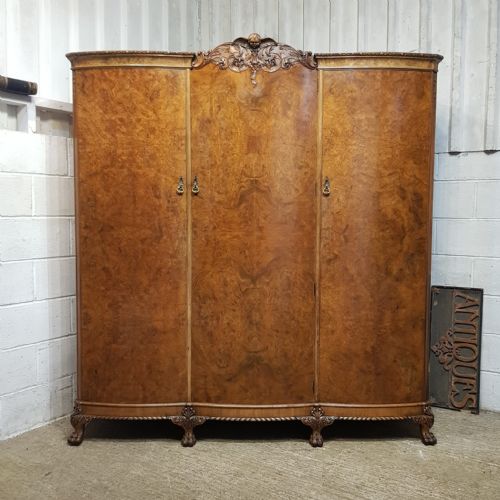
A burr walnut closet is a substantial piece of bedroom furniture designed to store garments, most frequently encountered as a wardrobe or armoire from the Art Deco period or the nineteen-twenties and nineteen-thirties. These large storage pieces often feature fitted interiors behind panelled doors, ranging from two-door configurations to expansive triple wardrobes.
The selection on this page spans several distinct eras, stretching from mid-Victorian bow front designs of eighteen-fifty through to the clean lines of nineteen-twenty and nineteen-thirty pieces. Buyers frequently encounter Queen Anne Revival influences alongside streamlined Art Deco forms, uniting rich wooden surfaces with functional interior compartments.
Makers and designers of note contributed to this category, including Waring and Gillow alongside Harry and Lou Epstein during the Art Deco era. Their work defines the twentieth-century examples on offer, contrasting with the heavier proportions seen in earlier Victorian iterations.
Construction and Materials
These items rely on timber construction, combining solid oak for internal framing and structural stability with walnut and burr walnut veneers applied to external visible surfaces. The distinctive swirling grain patterns of burr walnut veneer create decorative panels across doors and drawer fronts, matched symmetrically by skilled cabinetmakers.
Brass hardware such as handles, hinges and lock escutplements provides functional contrast to the dark brown tones of the polished wood. Secondary timbers like walnut and burr maple also appear internally or as contrasting stringing details within the decorative scheme.
Burr Walnut Closet Retail Price Guide 2026
Typical asking prices for burr walnut closet among the pieces listed under this phrase on Sellingantiques today, from the lower quarter to the upper quarter. They describe what is for sale here now, not the wider market.
Burr walnut veneers are born from tree burls, turning knotted trunk deformities into mesmerising symmetrical swirls on wardrobe doors.
Judging Quality
The division between standard and superior pieces rests upon the selection and matching of the wood veneer across the front elevation. Premium examples display book-matched burr walnut panels that create mirrored patterns, whereas lesser items utilise plain walnut boards with minimal figuring.
Construction methods and interior fitted arrangements further separate the categories, with high-end closets offering custom compartments, cedar linings and brass fittings. The integration of complex shapes such as serpentine or bow front designs requires advanced joinery skills not found in simpler flat-fronted carcasses.
Waring and Gillow·Harry and Lou Epstein
The Burr Walnut Closet Glossary
- Burr walnut
- A prized veneer sliced from the gnarled growth on a walnut tree. This wood displays irregular, swirling grain patterns that are highly decorative.
- Wardrobe
- A tall piece of furniture used for hanging clothes. These large units often incorporate shelves and drawers alongside hanging space.
- Art Deco
- A design style from the nineteen-twenties and nineteen-thirties characterised by sleek geometric shapes, streamlined forms and polished surfaces.
- Veneer
- A thin layer of superior wood glued to a base of secondary timber. This technique allows cabinetmakers to utilise expensive woods economically while preventing warping.
- Bow front
- A convex, outward-curving front elevation on a cabinet or wardrobe. This shape softens the bulk of large pieces and demands precise carpentry.
Burr Walnut Closet: Frequently Asked Questions
What is a burr walnut closet?
A burr walnut closet is a large wardrobe or armoire surfaced with decorative burr walnut veneer. These pieces provide hanging space and internal storage for clothing.
They appear primarily in Art Deco and nineteen-twenties styles, combining functional compartments with striking figured wood panels.
How do I date a walnut wardrobe?
Dating depends on the overall style, proportions and construction methods visible on the piece. Victorian examples from eighteen-fifty show heavier proportions and bow fronts.
Nineteen-thirty Art Deco models display geometric lines and streamlined forms, while nineteen-twenty items often reflect Queen Anne Revival influences.
Where should I place a large wardrobe?
These large storage units require a bedroom or dressing room with adequate wall space and ceiling height to accommodate their substantial bulk. Placement away from direct heat sources protects the walnut veneer and polished finish.
Ensure the room has sufficient clearance for doors to open fully, particularly on triple or serpentine designs.
What is the difference between a wardrobe and an armoire?
While both terms describe tall storage furniture for clothes, an armoire traditionally refers to a movable cupboard with doors enclosing shelves or hanging space. A wardrobe specifically designates a piece built primarily for hanging garments on rails.
In modern antique trading, the terms are frequently used interchangeably to describe these large bedroom closets.