




Burr Walnut Bookshelf
A burr walnut bookshelf offers rich figuring and warm tone, bringing refined display space to a room.
Burr Walnut Bookshelf
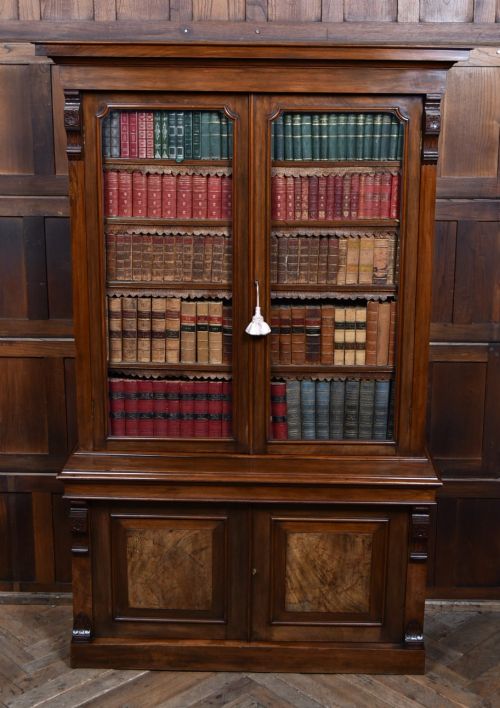
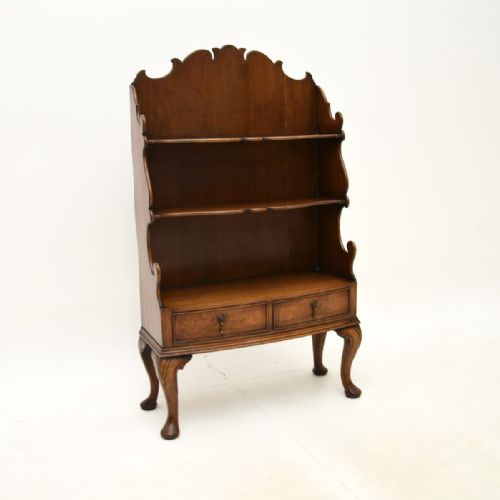
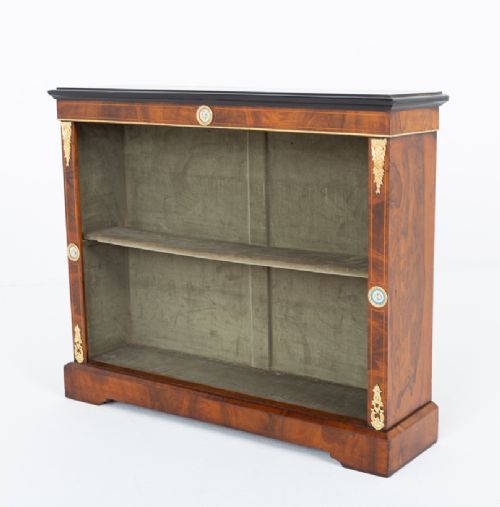
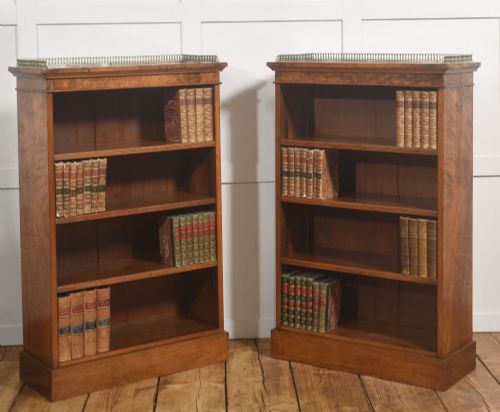
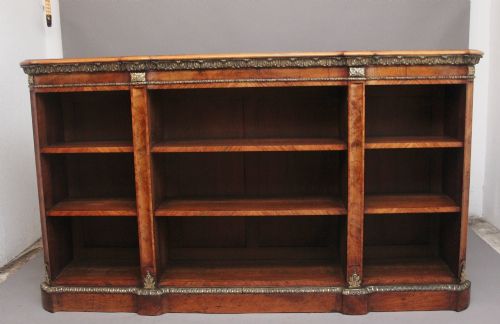
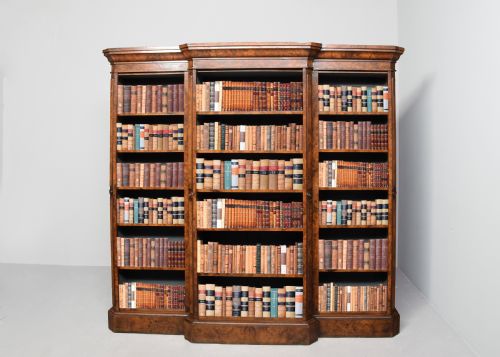
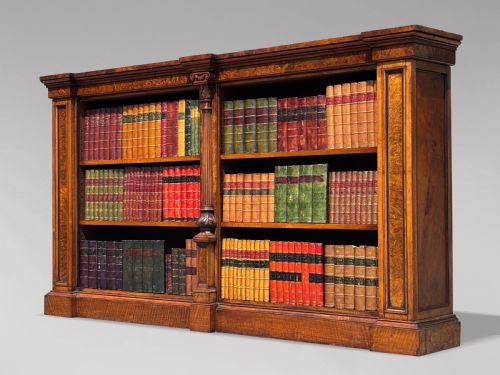
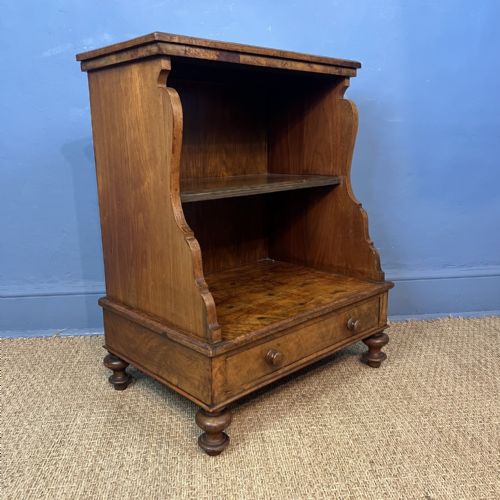
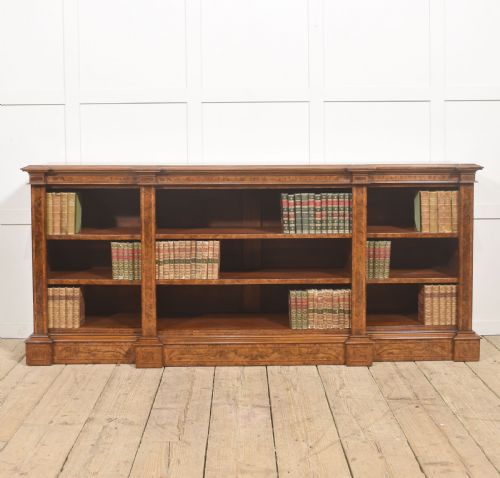
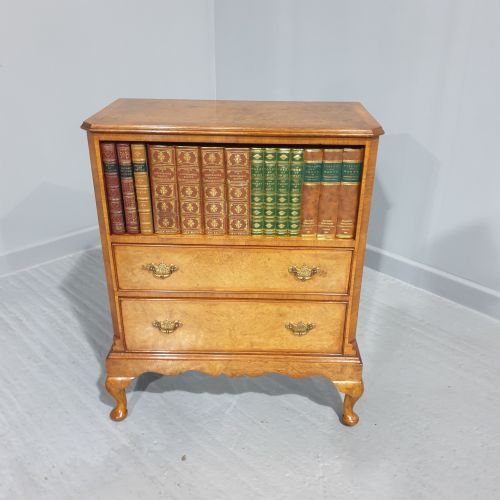
A burr walnut bookshelf brings rich, swirling grain patterns and warm timber tones to a room, serving as both practical storage and a statement piece. When searching for a burr walnut bookshelf, you encounter various forms ranging from low open bookcases to multi-tiered whatnots and breakfront designs.
Most examples date from the nineteenth century, including Victorian and William IV periods, alongside later twentieth-century revivals in Queen Anne and Regency styles. These pieces often feature adjustable shelves, brass details, or integrated drawers, designed to house octavos and display cherished volumes.
Assessing quality and craftsmanship
Quality rests in the intensity and symmetry of the burr walnut veneering, where skilled selection creates continuous, harmonious grain patterns across large surfaces like breakfront doors and shelves. Finer pieces display meticulous cabinet work, substantial timber thickness, and crisp carving rather than relying on surface patterns alone.
Proportion and decorative restraint separate standard production from exhibition pieces, with superior examples incorporating refined architectural details, quality brass hardware, and integrated drawers that operate smoothly within solid carcases.
Burr Walnut Bookshelf Retail Price Guide 2026
Typical asking prices for burr walnut bookshelf among the pieces listed under this phrase on Sellingantiques today, from the lower quarter to the upper quarter. They describe what is for sale here now, not the wider market.
Listings feature Victorian, William IV, and early twentieth-century periods alongside Queen Anne and Regency styles.
Johnstone and Jeanes
The Burr Walnut Bookshelf Glossary
- Burr walnut
- Timber taken from a tree growth or excrescence, yielding intricate, swirling grain patterns highly prized for cabinet making. This veneer forms the primary decorative surface on these bookcases.
- Breakfront
- A piece of furniture where the central section projects forward from the flanking wings. This architectural layout creates depth and visual interest on larger nineteenth-century bookcases.
- Whatnot
- An open shelving unit designed for displaying books, ornaments, or small objects. These pieces often feature multiple tiers supported by slender uprights.
- Ormolu
- Gilding bronze applied to decorative furniture mounts and accents. This technique adds metallic warmth and contrast to the dark timber.
- Faux burr walnut
- A painted or treated surface finish designed to imitate the natural figuring of burr walnut. This technique provides the visual effect of burl timber at a different scale of production.
Burr Walnut Bookshelf: Frequently Asked Questions
What is a burr walnut bookshelf?
A burr walnut bookshelf is an open storage unit veneered in highly figured timber knots and growths. These pieces provide display space while showcasing rich swirling grain patterns.
Most examples date from the nineteenth century and early twentieth century, appearing in low formats, breakfront designs, and multi-tiered whatnots.
How do I care for burr walnut?
Protect burr walnut from direct sunlight and steady heat sources to prevent the veneer from drying out or fading. Maintain a stable room environment to preserve the timber and polish.
Dust regularly with a soft, dry cloth and apply occasional specialist wax appropriate for antique timber surfaces.
Are the shelves adjustable?
Many nineteenth-century and later open bookcases feature adjustable wooden shelves supported by brass pegs or rack systems. This allows you to alter shelf heights for different book sizes.
Some smaller or earlier whatnots and cabinets have fixed shelving built into the standing structure.
How do I date a burr walnut bookcase?
Dating relies on stylistic clues, construction methods, and materials such as brass fittings or ormolu mounts. Pieces span the Victorian, William IV, and revival periods of the nineteenth and early twentieth centuries.
Examine the backboards, timber thickness, and jointing techniques to understand the period of manufacture.