

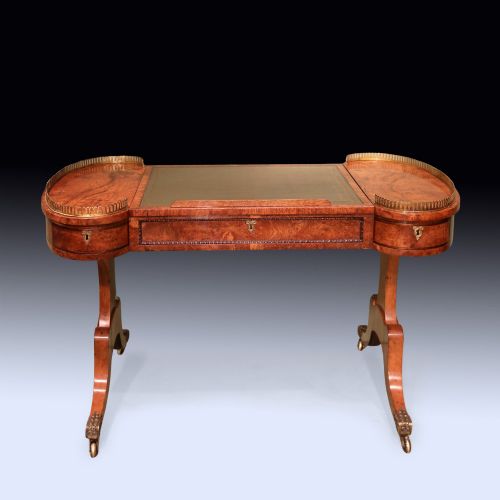
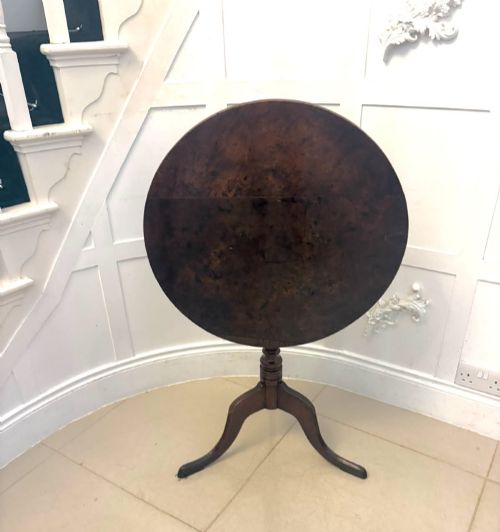
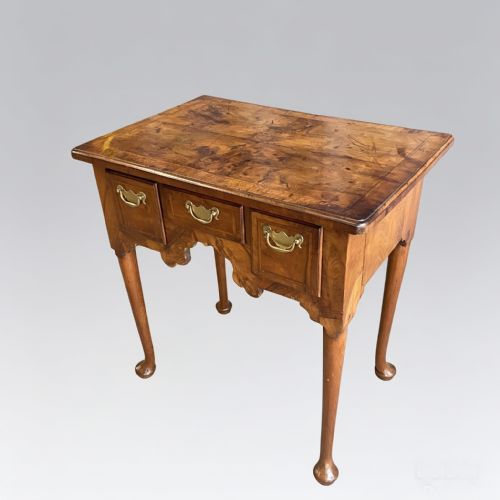
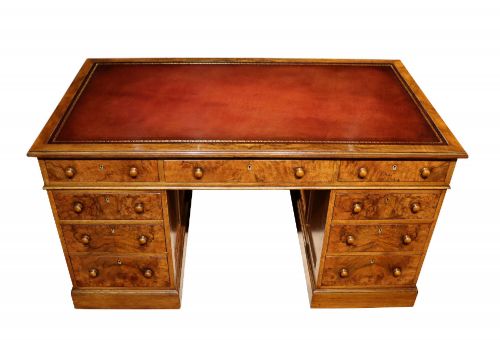



Burr Oak Table
A burr oak table brings intricate timber figure into rooms through dining tables, desks, and small lamp stands.
Burr Oak Table
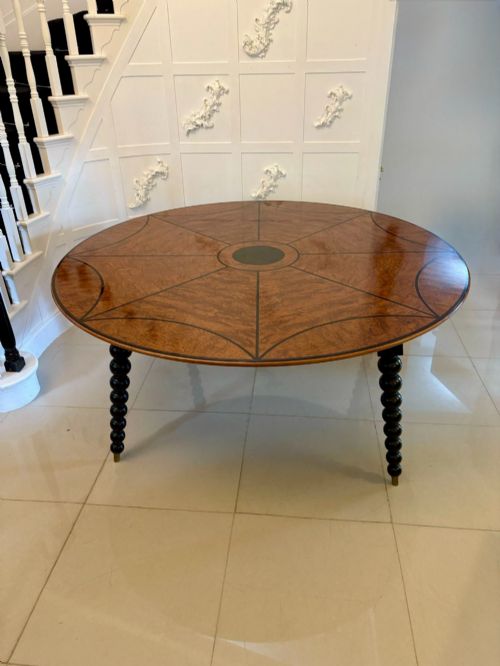
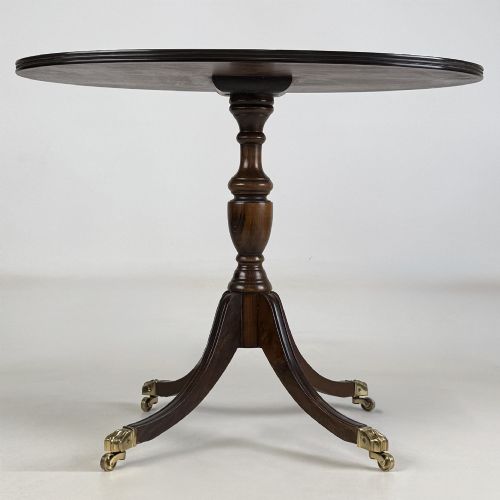
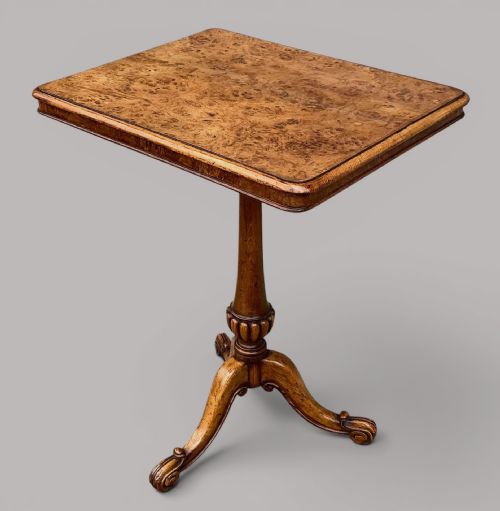
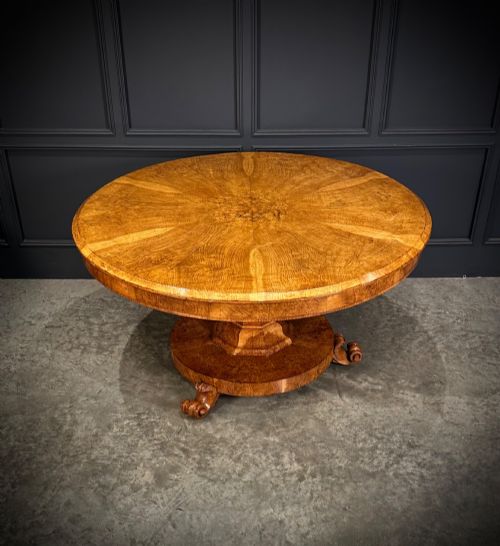
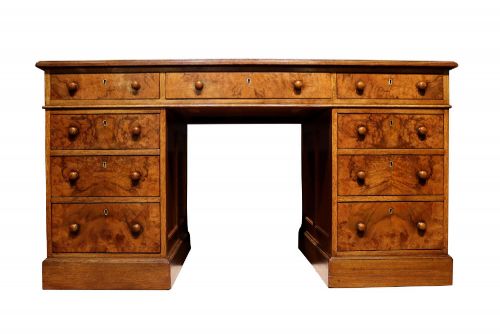
When you search for a burr oak table, you encounter pieces spanning from the 18th century through to the 1930s, encompassing Georgian, Regency, and Victorian eras. The selection ranges from compact tripod lamp stands and wine tables to large dining tables, centre tables, and partners desks.
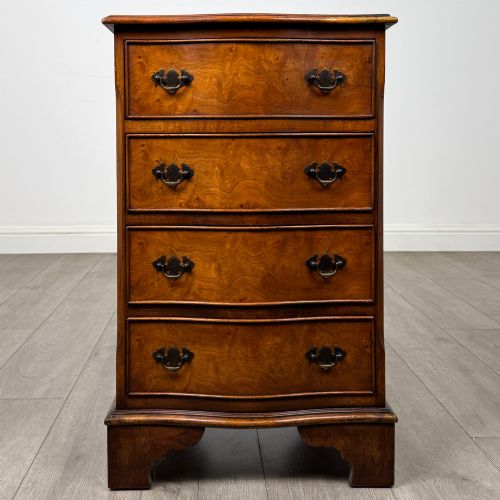
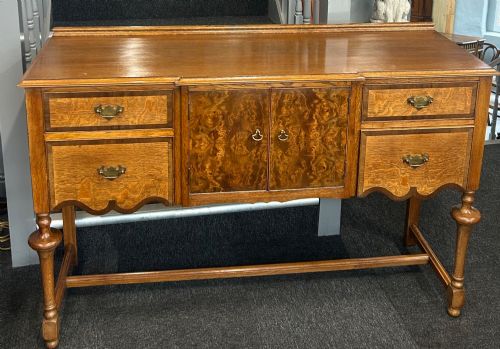
Smaller occasional pieces and side tables appear frequently alongside writing tables and library tables. Cabinetmakers utilised the highly figured timber for prominent surfaces such as table tops and desk fronts, pairing it with sturdy structural woods.
The aesthetic reflects major stylistic shifts, moving from early Georgian proportions through the classical lines of the Regency period to later revivals. Each era handled the timber differently, creating distinct silhouettes tailored to domestic and library use.
Materials and Construction
Cabinetmakers selected burr oak for its swirling, knotted grain patterns, often slicing it into thin veneers applied to stable secondary timbers like solid oak. Related woods such as pollard oak and burr walnut appear alongside ebony and satinwood inlays, creating contrasting borders and geometric banding.
Tripod tables utilise tilting mechanisms and turned pedestals, while larger library and centre tables employ robust pedestals or stretcher bases to support heavy panelled tops. Brass handles, leather inserts on writing surfaces, and detailed ebony stringing complete the construction of the finer desks and tables.
Burr Oak Table Retail Price Guide 2026
Typical asking prices for burr oak table among the pieces listed under this phrase on Sellingantiques today, from the lower quarter to the upper quarter. They describe what is for sale here now, not the wider market.
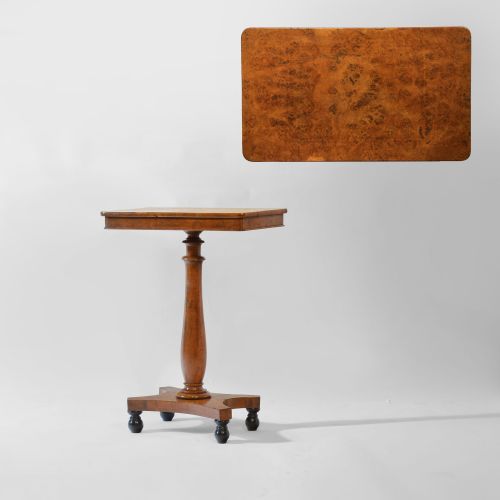
Tables featuring tilt-top mechanisms let small lamp stands double as space-saving wall decorations when folded upright after the candles went out.
Grading Quality
The density and movement of the burr figure across the timber surface determine visual impact, with tightly clustered knots commanding greater interest than sparse grain. Cabinetwork execution distinguishes standard production from exceptional pieces, particularly in the precision of segmented tops and inlaid borders.
Patination and natural colour depth play a major role in how the timber ages, revealing warm honey tones and rich brown hues. Original brass hardware, well-preserved leather writing inserts, and documented maker attribution elevate the standing of individual examples.
William Trotter·James Winter and Sons·Williams and Gibton
The Burr Oak Table Glossary
- Burr oak
- A growth deformity on an oak tree that produces a swirling, highly figured grain pattern when sliced into veneer. This timber was prized by cabinetmakers for decorative table tops and drawer fronts.
- Tripod table
- A small occasional table supported by a central pillar resting on three legs, frequently designed with a tilting top mechanism. These pieces served versatile functions as lamp, wine, or candle stands.
- Centre table
- A freestanding table designed to be viewed from all sides rather than pushed against a wall. They appear frequently in 19th-century libraries and grand reception rooms.
- Partners desk
- A large double-sided desk configured with drawers and cupboards on both faces, allowing two people to work opposite one another. These substantial pieces often feature leather-lined writing surfaces.
- Pollard oak
- Timber sourced from trees that were cut back close to the trunk to encourage dense, branching growth and distinct grain figures. It shares visual similarities with burr oak and appears in similar furniture forms.
Burr Oak Table: Frequently Asked Questions
How do I clean a burr oak table?
Dust the surface regularly with a soft, dry cloth to prevent grit accumulation in the intricate grain crevices. Avoid using modern silicone sprays or harsh chemical polishes that can damage the historic polish and timber.
Apply traditional beeswax periodically to nourish the wood and maintain a gentle sheen. Keep the table away from direct heat sources and strong sunlight to prevent the timber from drying out or fading.
Can I use a burr oak table every day?
These tables served practical domestic purposes for centuries, handling daily tasks from writing letters to holding lamps and drinks. Their robust underlying construction makes them entirely suitable for contemporary living.
Protect the figured veneer from moisture and extreme temperature changes by using coasters and mats. Treating the surface with care ensures the antique finish remains intact through regular household use.
How do I date a burr oak table?
Examine the construction methods, secondary timbers, and overall stylistic proportions to determine the period of origin. Georgian pieces often display simpler tripod mechanisms and smaller proportions, while Regency and Victorian examples introduce more elaborate pedestals and brass details.
Look for tool marks, fixing types, and wear patterns beneath the table top and inside drawer joints. Cabinetmaking conventions shifted across decades, providing clear physical clues regarding when the piece was constructed.
What is the difference between burr oak and pollard oak?
Burr oak forms from a natural tree growth anomaly that creates dense, swirling clusters of small knots across the grain. This figuration occurs spontaneously and creates highly decorative patterns.
Pollard oak comes from trees managed through regular pruning of the upper branches, which forces dense and speckled grain growth. While both timbers yield highly figured surfaces with similar visual warmth, their botanical origins differ.