


Burr Maple Desk
A burr maple desk brings striking figured timber to a study, pairing intricate grain patterns with practical writing surfaces.
Burr Maple Desk
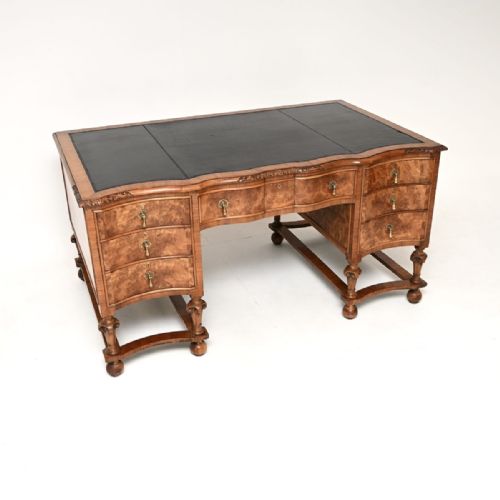
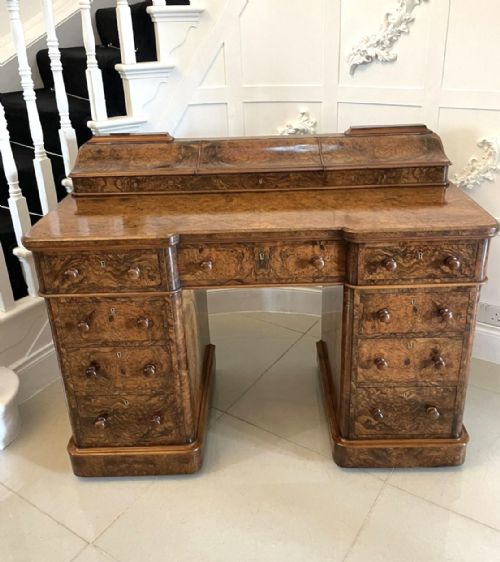
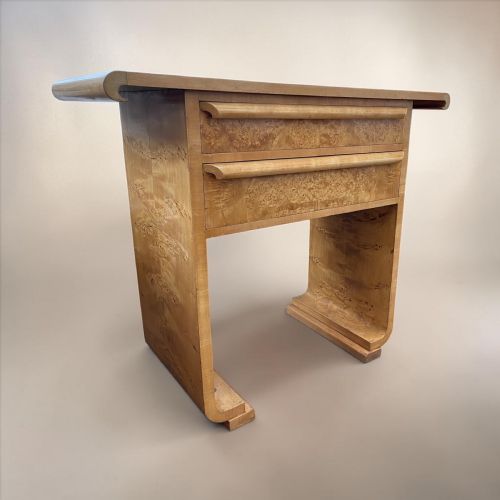
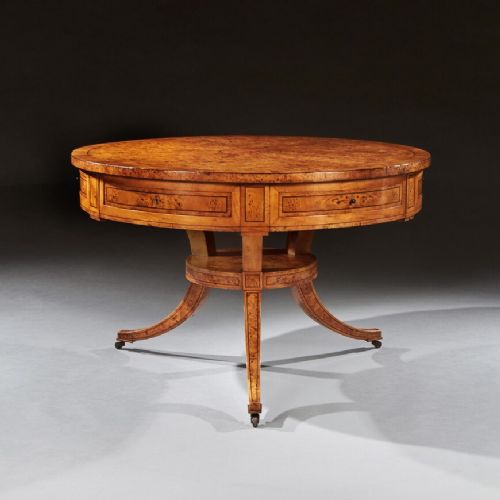
A burr maple desk showcases the knotted, swirling growth patterns characteristic of maple timber, often formed into writing tables, pedestal desks, and compact Davenport forms. These pieces span the nineteenth and twentieth centuries, taking influence from Victorian, Georgian, and Art Deco design vocabularies.
While walnut and other timbers appear frequently alongside maple in these listings, the defining focus remains the pale, golden warmth of figured burr wood. Buyers encounter various formats, from grand partner desks to smaller writing tables lined with burr maple interiors.
Materials and construction
Cabinet makers utilised thin veneers of burr maple and walnut applied to solid timber carcases, creating symmetrical grain patterns across the desktop and drawer fronts. Secondary materials such as brass handles, leather writing inserts, and satinwood stringing provide structural and decorative contrast.
Traditional joinery methods govern the construction of the drawers and pedestals, ensuring stability alongside the decorative timber surfaces. Interior compartments in pieces like Davenport desks often combine solid maple secondary woods with secret drawer mechanisms.
A ship's purser desk managed to keep ledgers steady while navigating rough seas.
Assessing quality and craftsmanship
The distinction between standard and exceptional pieces rests upon the intensity and book-matching of the burr veneer across large surfaces. Superior examples demonstrate continuous grain patterns that flow seamlessly across drawer fronts and top panels without awkward interruptions.
Makers' marks and hardware integration also separate workshop standards, with robust brass fittings and well-fitted internal drawers indicating high-tier production. The preservation of the original leather writing surface and the depth of the polished timber finish further influence the standing of each piece.
Maple and Co·Fortnum and Mason·Wiggers
The Burr Maple Desk Glossary
- Burr maple
- A wood derived from the abnormal growth or burl of a maple tree, prized for its swirling, highly figured grain patterns. It provides a pale, luminous surface when polished.
- Davenport desk
- A compact Victorian writing desk featuring a sloping desktop above a bank of side drawers. The interior often contains small compartments lined with contrasting timbers.
- Partners desk
- A large double-sided pedestal desk designed for two people to work opposite one another. These pieces incorporate drawers and cupboards on both faces.
- Veneer
- A thin slice of decorative wood adhered to a stable secondary timber base. This technique allows cabinet makers to display expensive figured grains without structural warping.
Burr Maple Desk: Frequently Asked Questions
What periods do these desks come from?
The pieces available range from the nineteenth century through the Victorian era and into the twentieth century. Earlier examples often show Georgian or Regency influences, while later items embrace Art Deco styling.
Cabinet makers during the Victorian period frequently utilised burr veneers for grand pedestal and kneehole forms. Twentieth-century makers continued this tradition with cleaner lines and geometric inlays.
Where were these desks used historically?
These writing tables and pedestal desks served primarily in private libraries, drawing rooms, and executive offices. Larger partner formats accommodated dual occupancy in professional or domestic settings.
Compact variations like the Davenport were traditionally placed in parlours or bedrooms for private correspondence. Their enclosed compartments kept writing materials neatly organised out of sight.
How can I identify original hardware?
Original brass handles and pulls typically show natural age patination, wear patterns around the grip, and precise casting details. Screw heads on the interior should match the period of manufacture, usually featuring hand-cut or early slotted designs.
Replacement hardware often leaves filled screw holes or mismatched impressions on the surrounding timber. Examining the interior plates and backplates can reveal ghost marks from earlier fittings.