


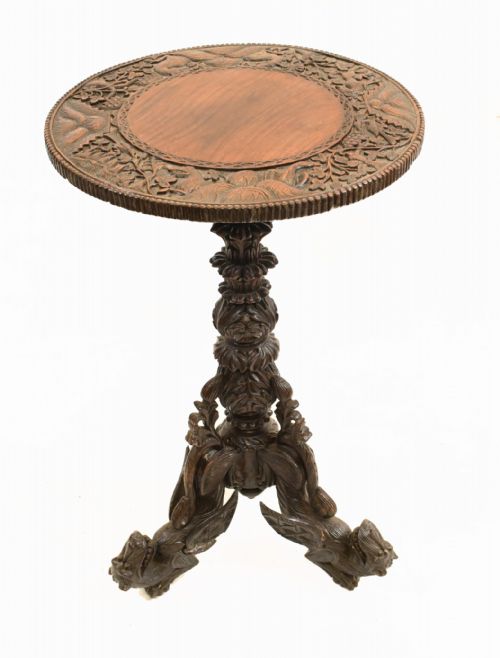


Burmese Wood Table
A burmese wood table brings intricate colonial craftsmanship into a room, offering rich carving and deep timber tones.
Burmese Wood Table
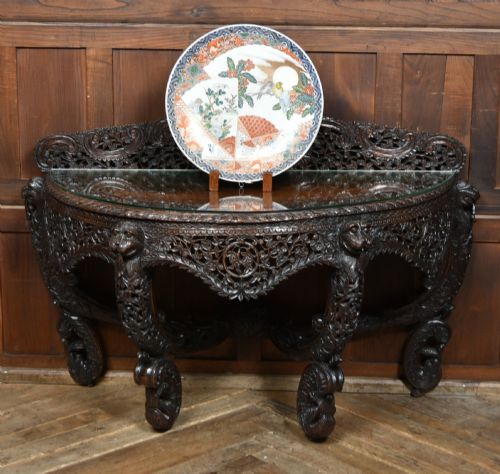
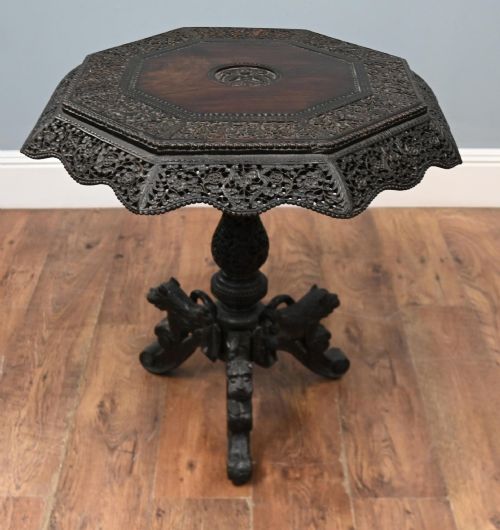
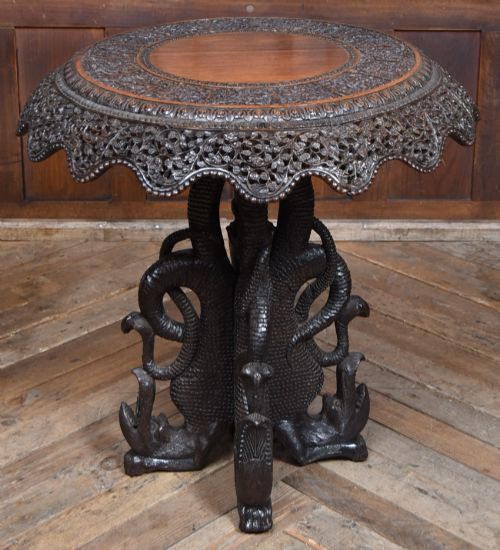
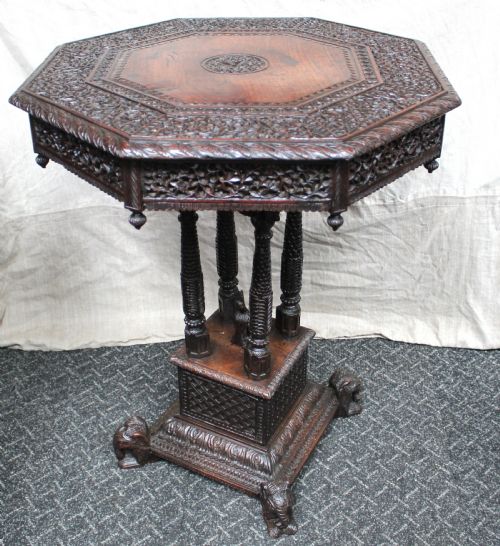
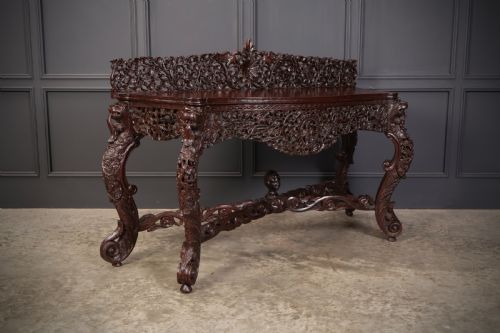
A burmese wood table spans domestic forms from compact side tables and occasional stands to large dining tables and multi-tiered consoles. These pieces emerge primarily from the nineteenth century, including Victorian examples and specific decades such as the eighteen-eighties and eighteen-nineties.
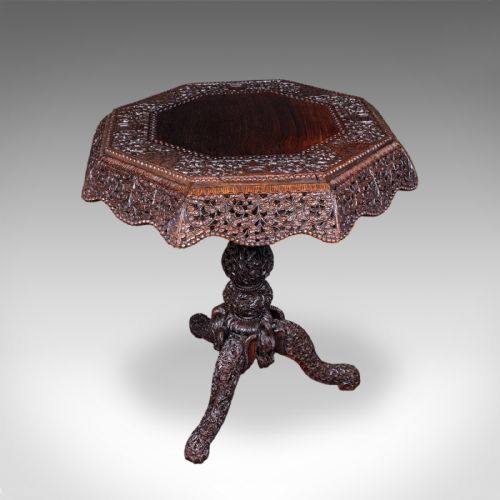
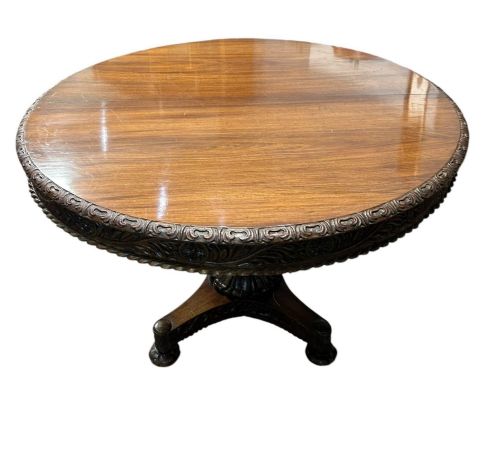
The standard encounter on this page is a heavily carved occasional or side table, often featuring round, octagonal, or tilt-top surfaces. Colonial production also yields centre tables and dining furniture, reflecting nineteenth-century trade and craftsmanship in Burma and Myanmar.
How they were made
Makers utilise dense Asian hardwoods, specifically teak and padauk wood, alongside supplementary materials like bone and brass fittings. These timbers provide the heavy, durable structure necessary for deep relief carving.
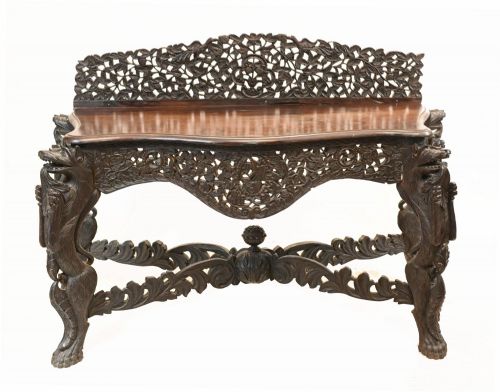
Craftspeople execute elaborate ornamentation by hand, cutting deep floral and figural motifs directly into the solid wood. Construction methods include tilt-top mechanisms, multi-tiered framing, and sculptural supports such as elephant legs.
Burmese Wood Table Retail Price Guide 2026
Typical asking prices for burmese wood table among the pieces listed under this phrase on Sellingantiques today, from the lower quarter to the upper quarter. They describe what is for sale here now, not the wider market.
Materials recorded across the inventory include teak, padauk wood, bone, and brass.
What varies in quality
Depth and clarity of the hand carving dictate the distinction between standard production and superior examples. Crisp undercut relief and well-proportioned figural elements separate the finest tables from simpler, shallower ornamentation.
The choice of dense timber, such as heavy padauk or select teak, influences the longevity and visual richness of the surface. Superior stability in tilt-top mechanisms and multi-tier joints also marks better execution.
The Burmese Wood Table Glossary
- Padauk
- A heavy, durable tropical hardwood with a reddish-brown colour used extensively in colonial Burmese furniture. It takes fine detail during carving.
- Tilt top
- A tabletop mounted on a hinge mechanism that allows the surface to pivot vertically when not in use. This design saves space in domestic interiors.
- Anglo-Burmese
- A style describing furniture made in Burma during the colonial period for British or international markets. It combines local craftsmanship with European furniture forms.
- Console table
- A table designed to stand against a wall, often supporting decorative objects or serving as a sideboard. These pieces frequently feature elaborate front legs.
Burmese Wood Table: Frequently Asked Questions
What is a burmese wood table?
A burmese wood table is a nineteenth-century colonial piece, typically fashioned from teak or padauk and characterised by dense hand-carved ornamentation.
These tables range from small occasional and side stands to large dining and console tables.
How do I date a carved table?
Dating relies on recorded periods such as Victorian decades, construction styles, and timber types.
Nineteenth-century examples often display specific colonial design traits and heavier wood selection than later reproductions.
Where were these tables made?
These pieces originate from Burma, also known as Myanmar, during the nineteenth-century colonial era.
Local workshops produced them for both domestic use and export to British markets.
How do I care for padauk furniture?
Maintain the timber by keeping it away from direct heat sources and sudden humidity changes to prevent wood movement.
Dust regularly with a dry cloth and avoid heavy chemical polishes that dull the natural finish.