



Burgundy Button Back Chair
A burgundy button back chair brings deep red warmth and deep tufting to a room.
Burgundy Button Back Chair
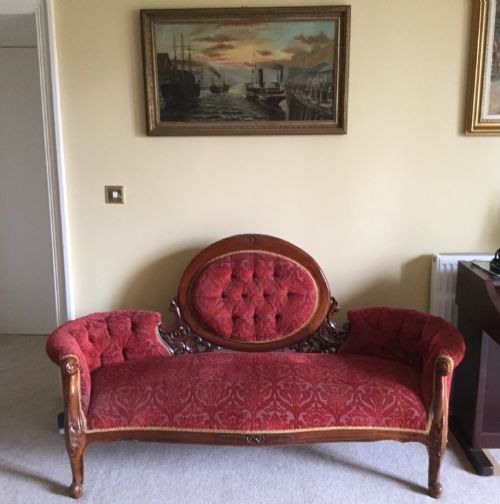
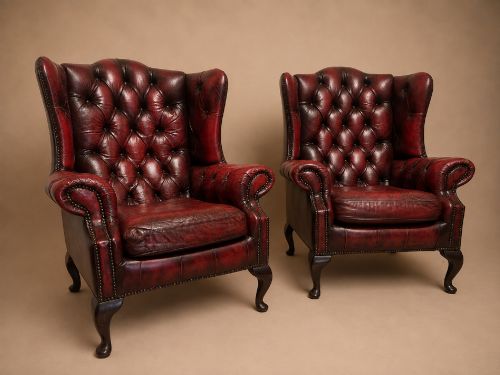
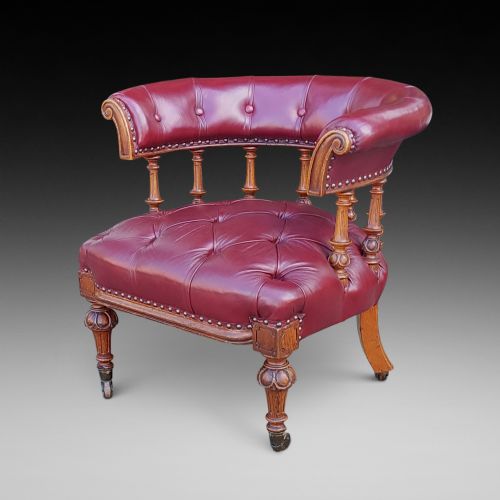
When you search for a burgundy button back chair, you encounter a selection of seating upholstered in dark red leather or brocade, featuring tufted buttoning across the backrest. These pieces range from Victorian armchairs and club elbow chairs to library and desk chairs spanning the nineteenth and early twentieth centuries.
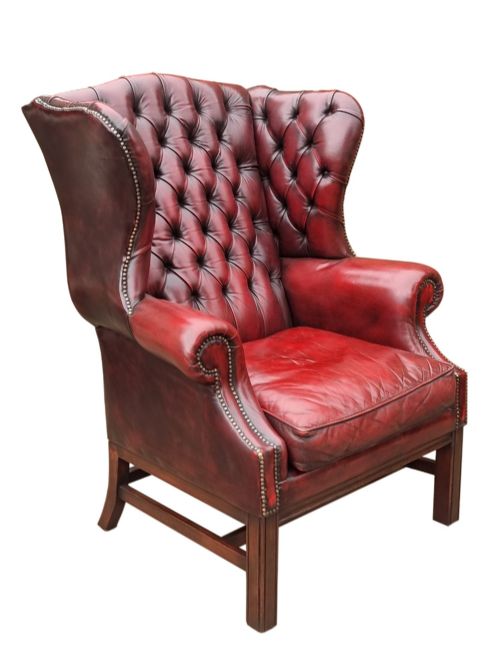
The versions most commonly met on this page include Victorian mahogany framed armchairs and oak or iron framed seating upholstered in leather or deep pile brocade. Alongside standard armchairs, the selection incorporates wing chairs, salon chairs, and desk chairs originating from the eighteen fifties onwards.
How they were made
Makers constructed the frames of these chairs using solid timbers such as mahogany, oak, and other hardwoods, occasionally incorporating iron or brass elements. Frames often featured polished wood structures designed to support sprung seats and padded armrests.
Upholstery techniques combined deep buttoning with materials like leather, velvet, and brocade. Craftsmen secured the deep tufting by pulling cords or threads through the padding to create the distinctive button back pattern.
Cockfighting chairs feature low seats designed to let gentlemen straddle the furniture backwards while watching a match.
What varies in quality
Quality differences stem from the timber selection and the precision of the frame construction, with dense hardwoods providing greater structural integrity than simpler frameworks. The refinement of the turning and carving on mahogany or oak components separates standard utilitarian seating from finer salon and library pieces.
The grade of the upholstery material and the execution of the buttoning dictate the visual impact of the chair. Supple leathers and richly textured brocades applied with even tufting distinguish the upper tier of pieces from simpler examples.
The Burgundy Button Back Chair Glossary
- Button back
- A style of upholstery where buttons are pulled deep into the padding to create a quilted, geometric pattern of indentations. This technique provides both decorative relief and structural stability to the cushioning.
- Brocade
- A rich shuttle-woven fabric featuring raised patterns, often utilised in heavier weights for period upholstery. It offers a textured surface distinct from plain leathers and velvets.
- Club elbow chair
- A sturdy upholstered armchair with low arms, designed for comfort in studies and smoking rooms. These pieces typically feature robust wooden frames and leather coverings.
- Wing chair
- An armchair with high cheek pieces or wings attached to the back, originally designed to deflect drafts. The style persists in various period forms with deep buttoned upholstery.
- Sprung settee base
- A seat foundation constructed with integrated metal springs to provide elasticity and comfort. This method replaced simpler webbing and stuffing techniques in later seating.
Burgundy Button Back Chair: Frequently Asked Questions
What is a burgundy button back chair?
A burgundy button back chair is an antique or period seat upholstered in dark red leather or fabric with deep tufted buttoning. The selection spans nineteenth-century library chairs, Victorian armchairs, and early twentieth-century wing chairs.
These pieces combine functional seating with decorative upholstery styles. They serve as statement items in studies, libraries, and living spaces.
How were these chairs used historically?
These chairs served varied functions depending on their form, from desk and library seating for reading and writing to fireside lounging in wing chairs. Gentlemen's gaming chairs and club chairs accommodated extended periods of sitting in studies and parlours.
Their robust frames and comfortable sprung or padded bases made them suitable for daily use in formal rooms. Salon chairs fulfilled lighter duties in reception spaces.
How do I live with a leather button chair?
Living with a leather buttoned chair involves placing it away from direct heat sources to prevent the material from drying out. Regular conditioning maintains the suppleness of the dark red leather and preserves the finish.
The deep tufts require occasional gentle dusting to prevent debris from settling in the folds. These chairs anchor a room's colour scheme and pair well with traditional wooden furniture.
How can I tell Victorian chairs apart?
Victorian chairs vary according to their timber frames, such as polished mahogany, oak, or iron, and their specific functional forms like captain's desks chairs or club armchairs. Examining the woodwork and upholstery style helps distinguish nineteenth-century pieces from later reproductions.
Details such as George III style influences or William IV characteristics provide clues to the design lineage. The presence of brocade versus leather also indicates different periods of manufacture or later reupholstery.