
Bureau Plat Table
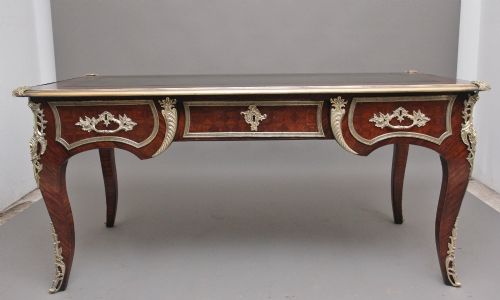
When you search for a bureau plat table, you are looking at a freestanding writing desk designed to sit proudly in the centre of a room rather than against a wall.
Bureau Plat Table
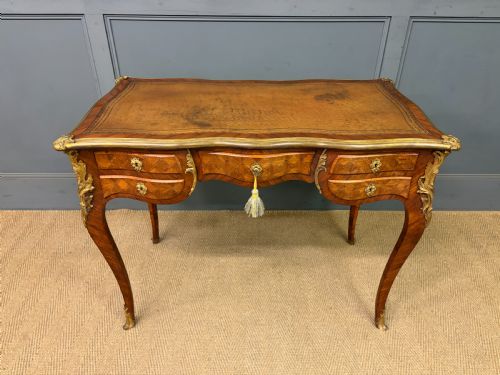
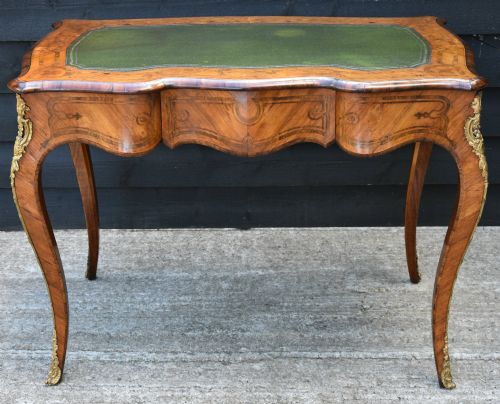
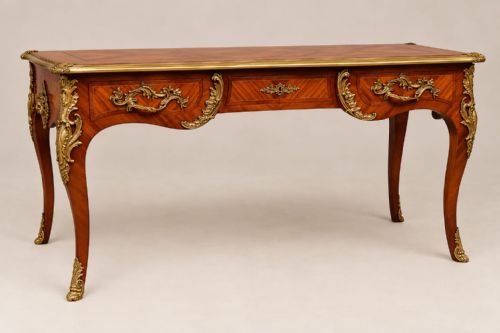
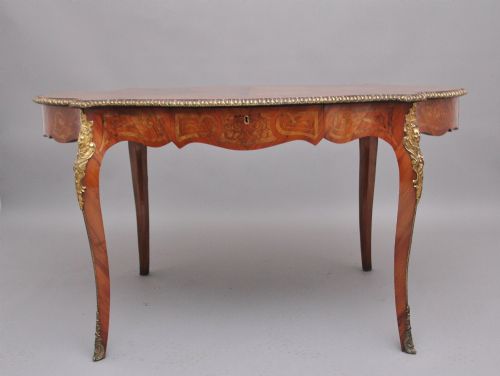
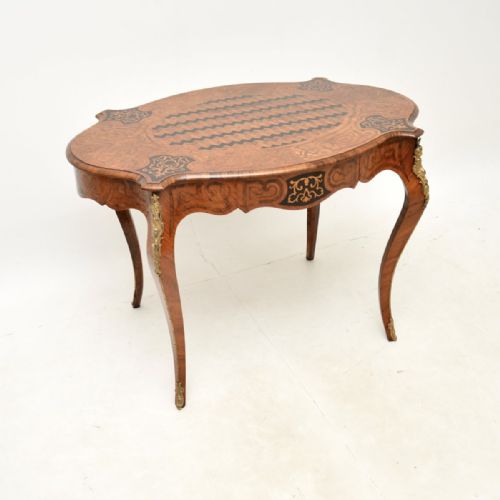
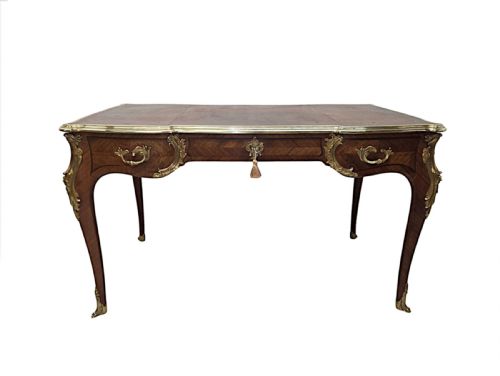
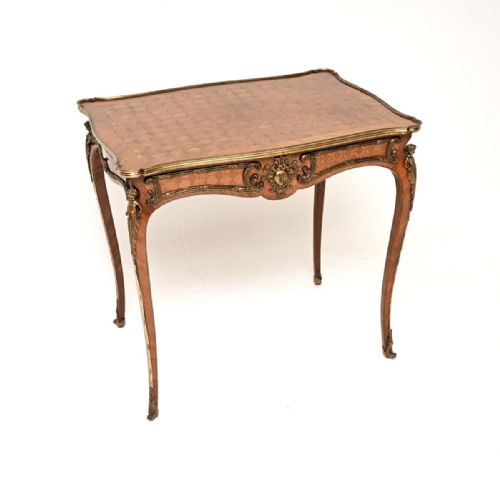
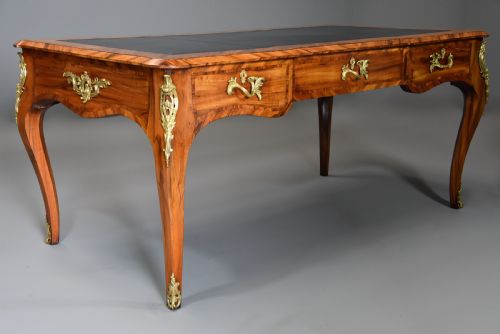
A bureau plat table provides a generous writing surface surrounded by ornamental borders and supported by slender legs. These freestanding tables frequently appear from nineteenth-century French workshops and English Victorian iterations.
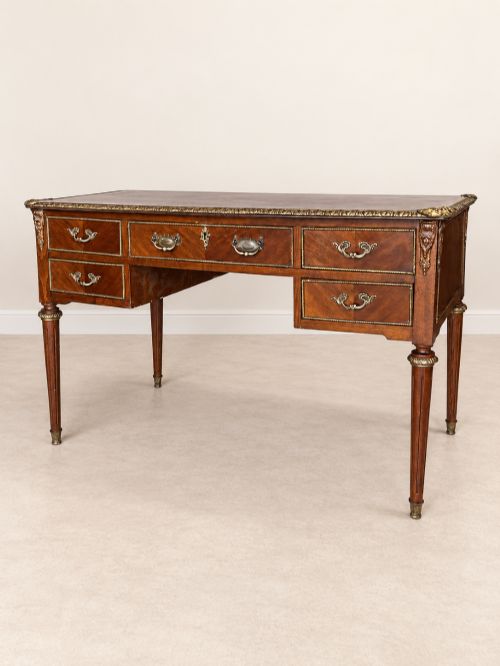
Makers often shaped the top with serpentine curves or straight rectangular edges, frequently inset with tooled leather writing panels. They serve as functional desks or decorative centre tables within principal rooms.
The design draws heavily on historical French decorative movements, principally Louis XV and Louis XVI revivals. You will encounter compact ladies writing desks alongside large library tables.
Materials and Construction
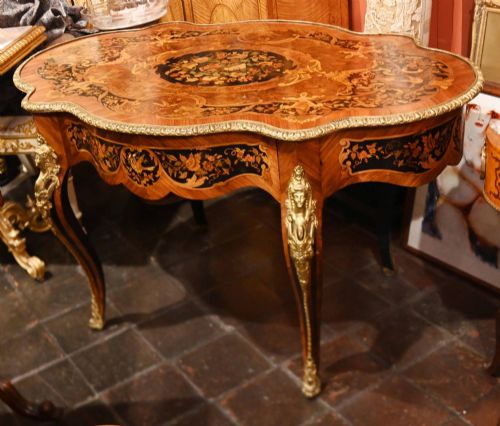
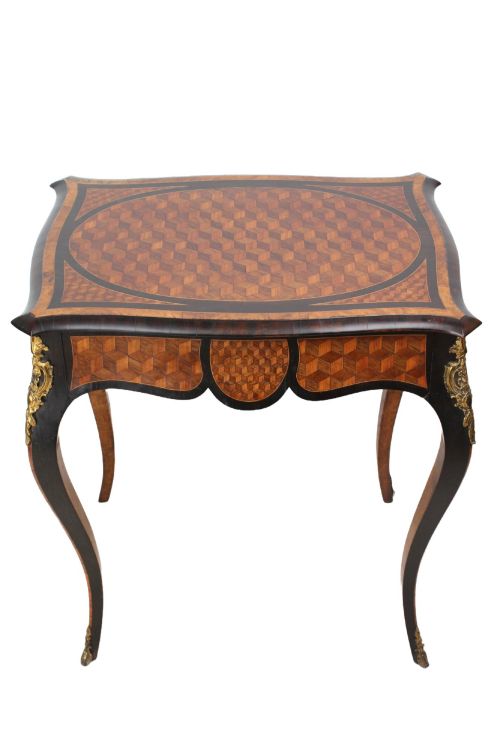
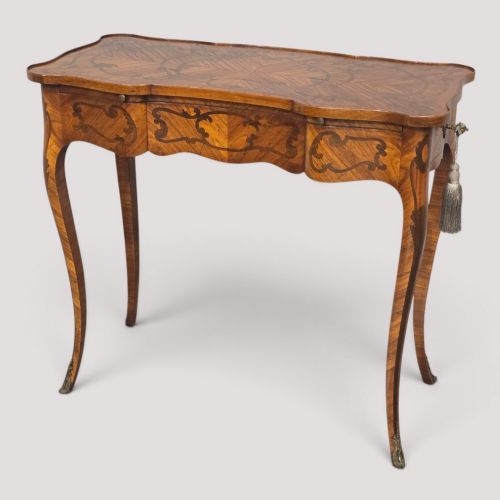
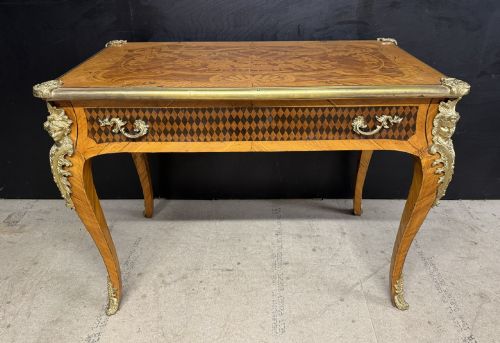
Cabinets rely on dense structural timbers like mahogany, walnut, and oak, overlaid with decorative exotic veneers such as kingwood, rosewood, and amboyna. Artisans utilised intricate marquetry and parquetry patterns to create geometric or floral motifs across the surfaces.
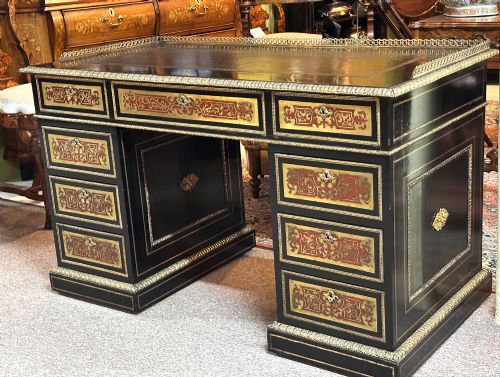
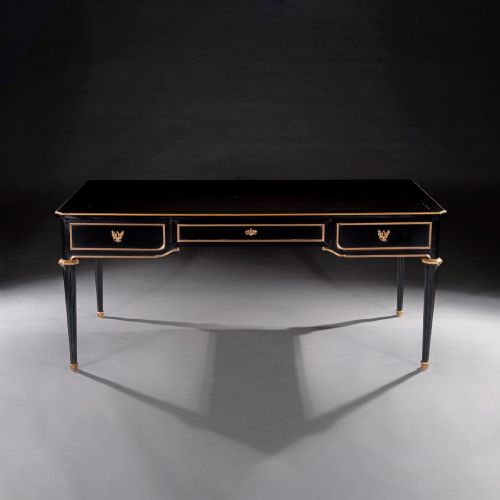
Gilt bronze and ormolu mounts punctuate the corners, drawer edges, and legs, often cast and chased with botanical scrolls. Brass inlay, ebonised finishes, and boulle work complete the ornamental vocabulary of the finer pieces.
Some nineteenth-century writing desks include hidden compartments for secret love letters.
Assessing Quality
Quality rests upon the precision of the cabinetmaker's joinery and the crispness of the cast bronze mounts. Superior examples display seamless veneer matching and substantial, finely chased ormolu rather than lightweight stamped brass.
The choice of secondary woods and the depth of the hand-rubbed polish signal the standard of production. Pieces bearing the signatures of noted makers demonstrate greater refinement in every structural detail.
JAS Shoolbred·Francois Linke·Edwards and Roberts·Ch Jeanselme and Co·Durand·Alphonse Tahan·Hobbs and Co
The Bureau Plat Table Glossary
- Bureau plat
- A freestanding writing table, usually fitted with drawers and a leather inset top. This form originated in France and gained immense popularity during the nineteenth-century revival periods.
- Ormolu
- Gilt bronze mounts applied to furniture edges and corners for decoration. The process involves coating bronze with a mercury and gold amalgam before firing.
- Marquetry
- Decorative veneer work forming pictorial or floral patterns using various coloured woods. Craftsmen cut these delicate designs from thin sheets of timber to fit exact recesses.
- Parquetry
- Geometric wood veneer patterns such as cubes or chequers. This technique highlights the natural grain variations of timbers like kingwood and mahogany.
- Boulle work
- Inlay of tortoiseshell and brass developed in France. The contrasting materials create elaborate metallic designs across ebonised surfaces.
Bureau Plat Table: Frequently Asked Questions
Where should I place a bureau plat table?
Because these tables are finished on all sides, they are designed to float in the middle of a room rather than being pushed against a wall. They make exceptional centrepieces in a study, library, or drawing room.
Positioning the desk away from direct sunlight protects the delicate veneers and leather writing surfaces from fading over time.
How do I care for the leather top?
The leather writing surface benefits from occasional cleaning with a slightly damp cloth followed by a neutral leather cream to keep the material supple. Avoid using harsh chemical cleaners or abrasive polishes on the gold tooling.
Keep the timber surrounds dusted with a soft cloth and feed the wood polish sparingly to preserve the depth of the French polish.
How can I tell a Louis XV style from Louis XVI?
Louis XV style tables feature curving cabriole legs, asymmetrical floral marquetry, and exuberant serpentine outlines. The ornamentation leans towards organic scrolls and rococo motifs.
Louis XVI style pieces display straight, tapered fluted legs, neoclassical symmetry, and restrained geometric parquetry. The overall silhouette is much more rectilinear and architectural.
Were these tables used only for writing?
While primarily designed for correspondence and administrative tasks, many served multiple functions within the nineteenth-century home. They frequently doubled as dressing tables, sewing tables, or decorative centre display pieces.
The inclusion of multiple drawers allowed owners to store stationery, documents, and personal items securely.