
Bureau Plat
A bureau plat antique is a freestanding writing table designed to sit in the middle of a room rather than against a wall.
Bureau Plat
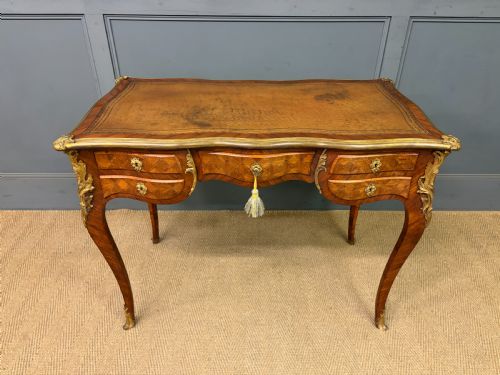
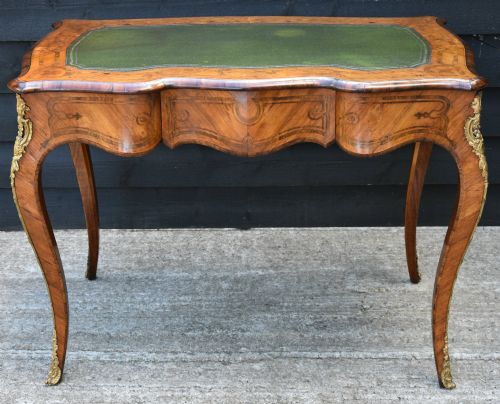
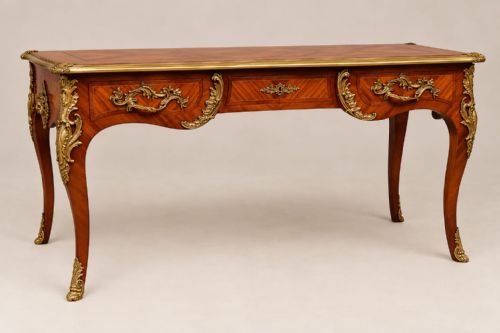
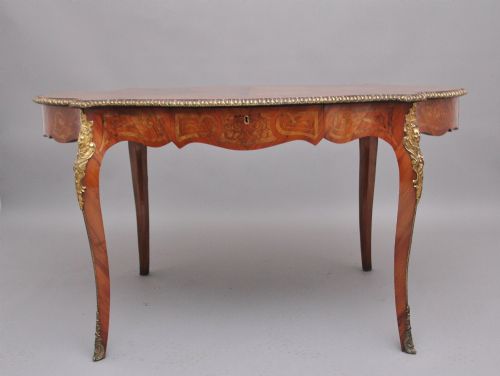
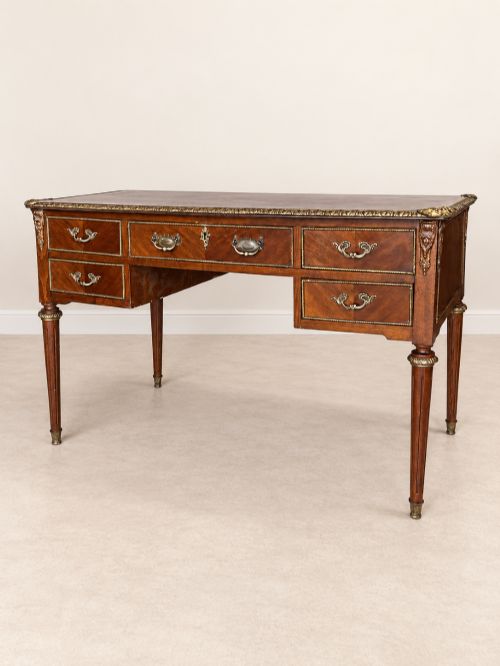
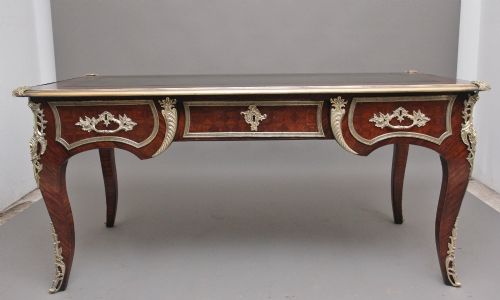
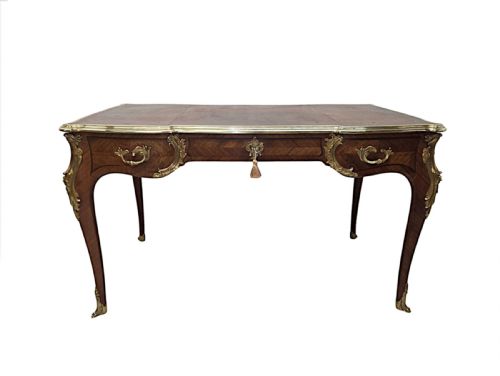
A bureau plat antique is a freestanding writing desk or table designed to sit away from the walls in the centre of a room. These pieces typically take the form of a rectangular writing surface set above a frieze with one or more drawers, often raised on slender cabriole or tapered legs.
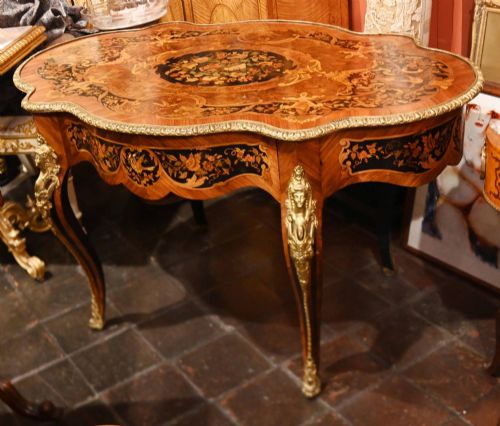
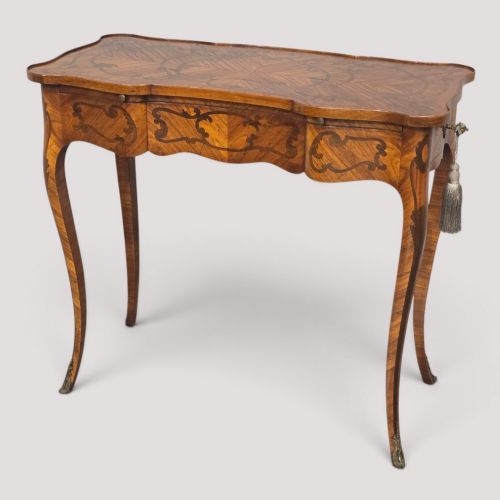
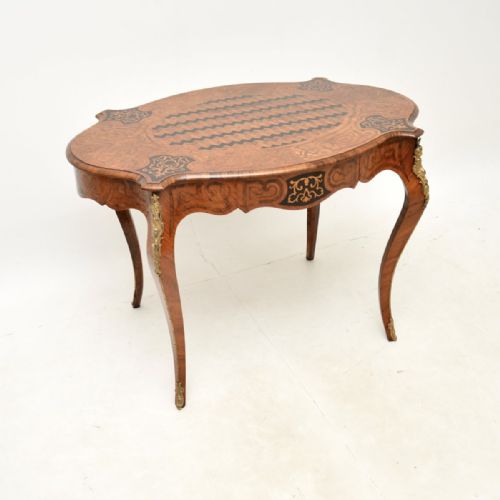
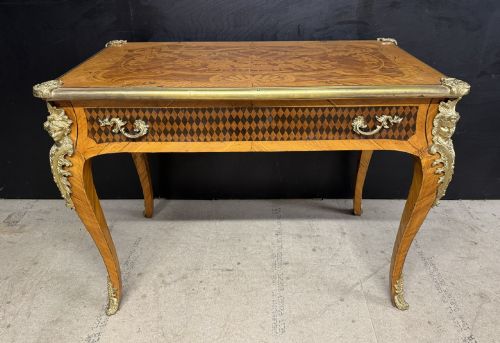
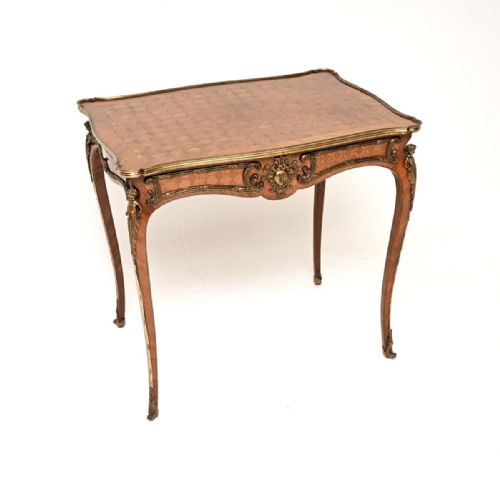
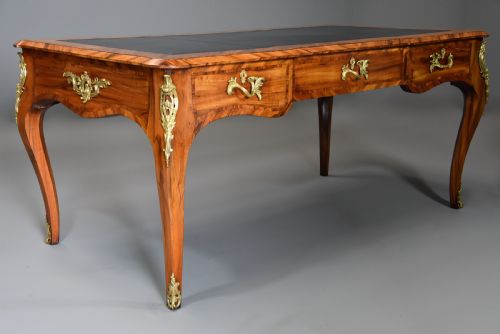
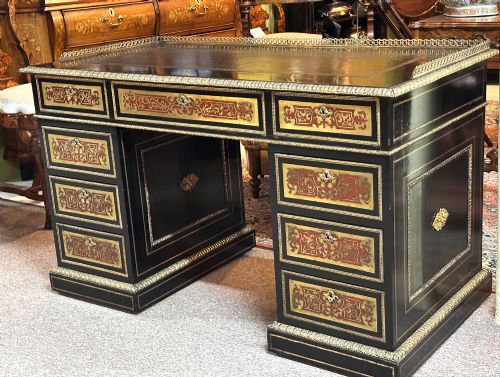
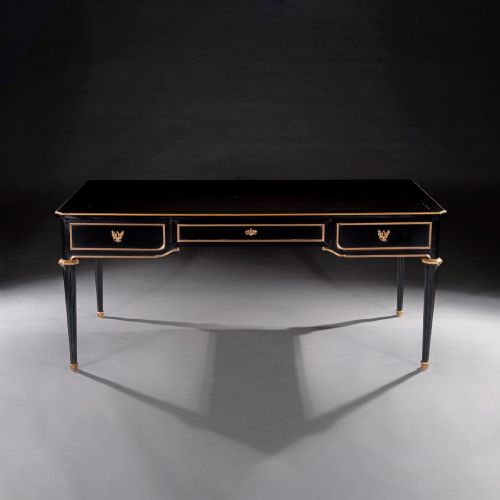
Buyers browsing this selection will most frequently encounter 19th-century French interpretations, particularly pieces finished in the Louis XV and Louis XVI styles. The materials range from richly figured timbers like kingwood and walnut to elaborate parquetry and marquetry surfaces mounted in gilt bronze or ormolu.
The objects listed serve equally as writing surfaces and centre tables, combining functional drawers with decorative parquetry or leather writing inserts. Their finished backs and sides allow them to be viewed from any angle within an interior scheme.
How they were made
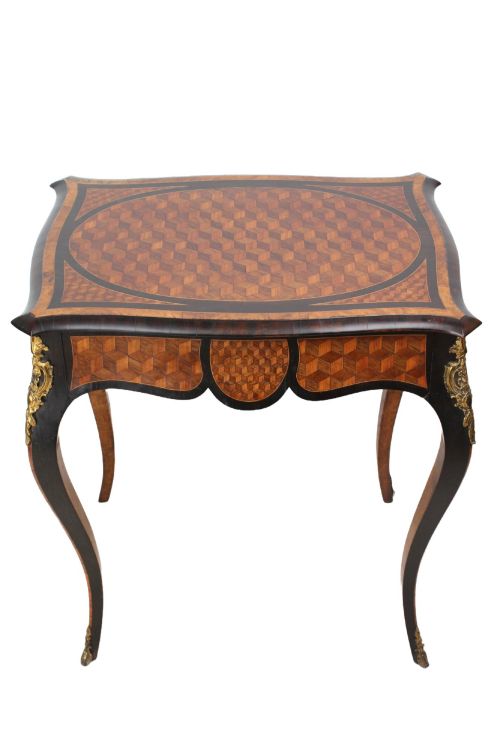
Cabinet makers constructed the carcases of these tables using solid foundational timbers such as mahogany, walnut, or oak, which were then veneered with decorative woods like kingwood, rosewood, and satinwood. Parquetry and marquetry patterns were meticulously hand-cut and pieced together to form geometric designs or floral motifs across the top and sides.
Cast gilt bronze and ormolu mounts were heavily utilised to accent the corners, drawer edges, and legs, providing structural protection as well as visual flourish. Leather writing inserts, often tooled with gold leaf, were traditionally inset into the top surface to create a durable writing plane.
Commonly employed materials across the selection include kingwood, walnut, mahogany, and gilt bronze mounts.
What varies in quality
The distinction between standard examples and the finest work lies primarily in the precision of the cabinet work and the crispness of the bronze mounts. Master makers employed finely chased ormolu and intricate, varied wood veneers that remain tight and flush with the timber carcase over time.
Proportion and the handling of secondary details also divide the range, with superior pieces displaying balanced symmetry in their marquetry and smoothly operating drawer construction lined in secondary hardwoods.
JAS Shoolbred·CH. Jeanselme & Co·Durand·François Linke
The Bureau Plat Glossary
- Bureau plat
- A freestanding writing table or desk, typically fitted with drawers in the frieze and designed to be placed in the centre of a room rather than against a wall.
- Ormolu
- Gilt bronze mounts applied to furniture for decoration and edge protection, cast and chased by hand to achieve sharp detail.
- Marquetry
- The art of applying decorative pieces of veneer to a structural structure to form pictorial or floral designs.
- Parquetry
- Geometric wood inlay work creating repeating patterns such as cubes or chequers across the surface of the timber.
- Frieze
- The horizontal band running directly beneath the top surface of the table, which commonly houses the drawers.
Bureau Plat: Frequently Asked Questions
Where should a bureau plat be placed?
Because these tables feature finished decoration on all four sides, they are traditionally positioned in the middle of a study or drawing room rather than pushed against a wall.
This freestanding nature allows them to function as a focal point within an open interior space.
How do I care for the leather top?
The leather insert requires gentle dusting and occasional conditioning with appropriate leather balms to prevent it from drying out over the decades.
Avoid placing excessive moisture directly on the surface and use a blotter when writing.
What is the difference between Louis XV and Louis XVI styles?
Louis XV pieces are characterised by flowing serpentine curves, cabriole legs, and asymmetrical rococo ormolu mounts.
Louis XVI furniture introduces a return to classical straight lines, symmetrical parquetry, and fluted tapered legs.
Are these desks suitable for daily use?
Many examples remain sturdy enough for contemporary writing tasks, provided the joints and drawers are treated with care.
Their historical timber and veneer surfaces do benefit from protection against heavy wear and direct sunlight.