
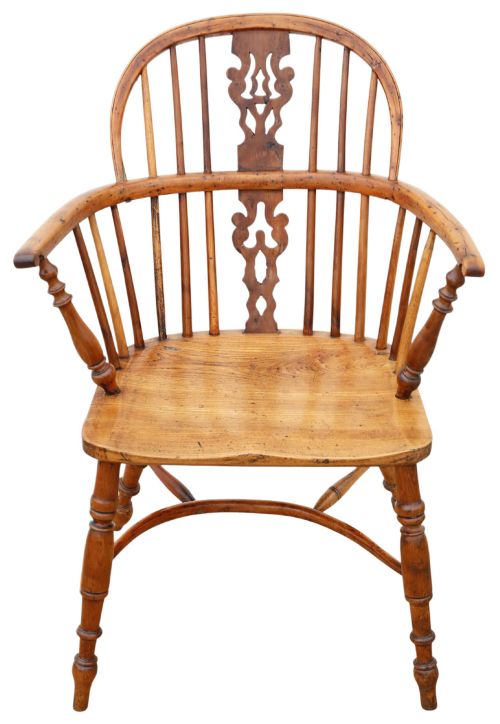
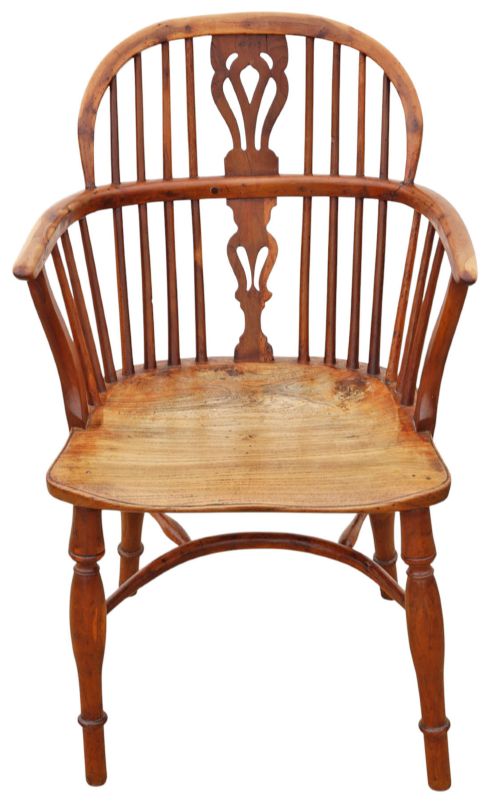
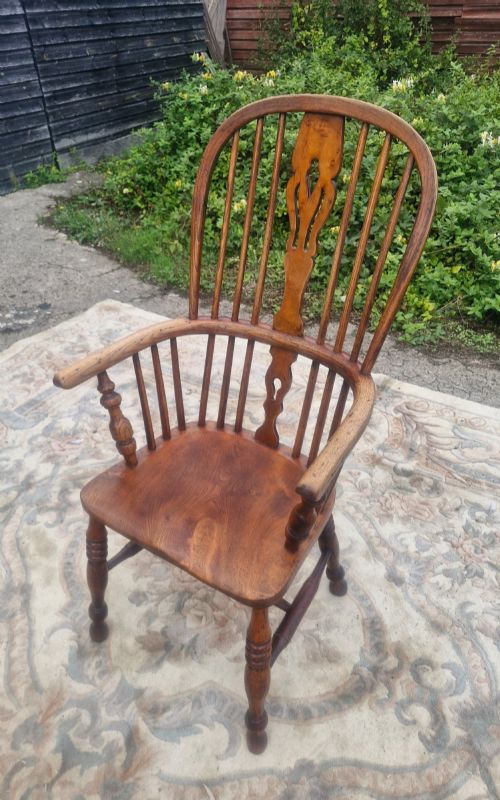


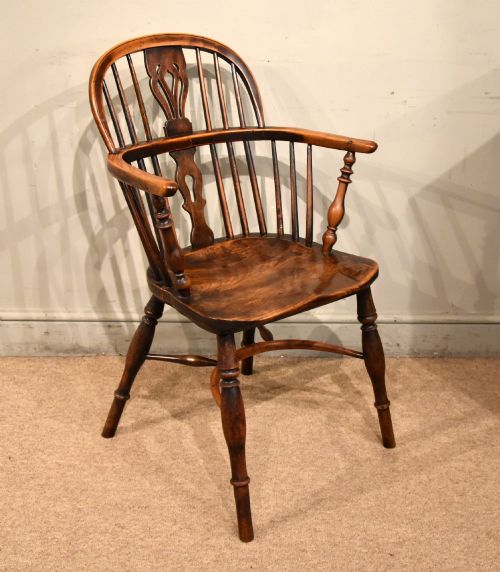
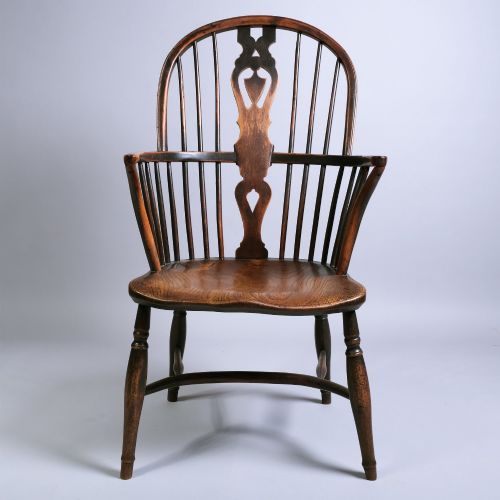
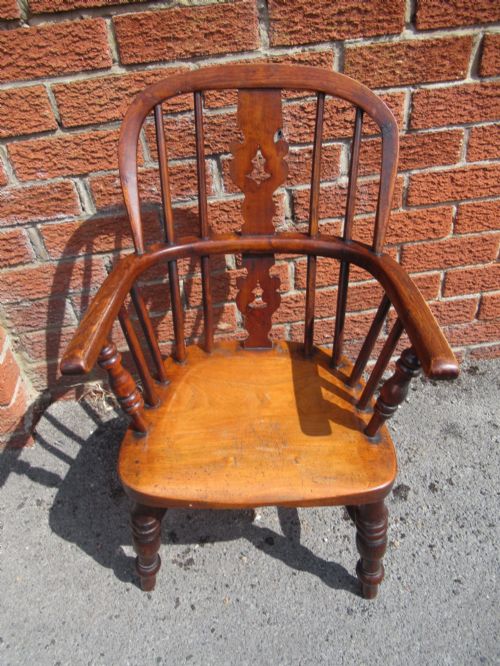
Brown Yew Windsor Chair
A brown yew windsor chair brings tactile warmth and vernacular character to a room through traditional English timber construction.
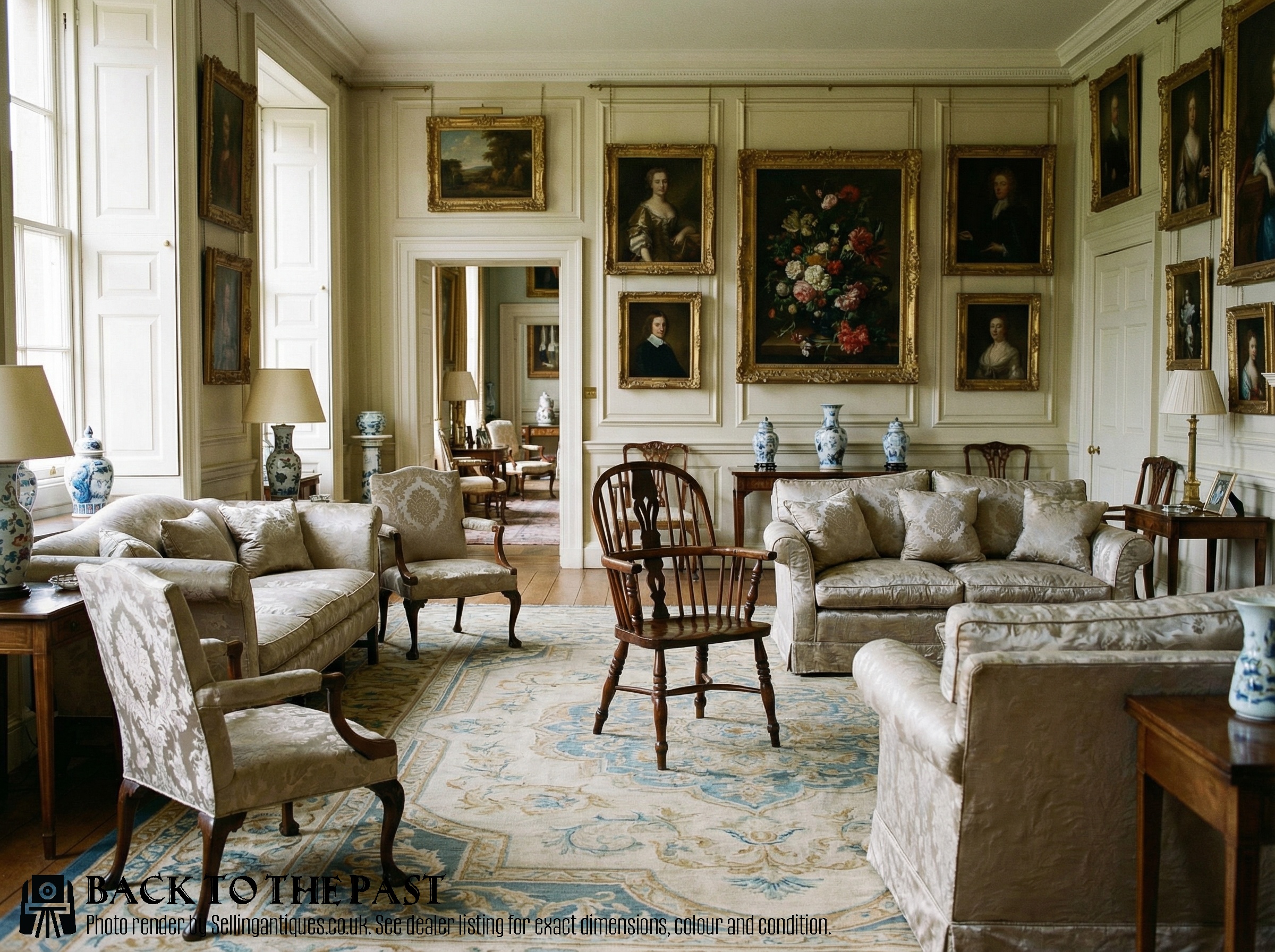
Brown Yew Windsor Chair
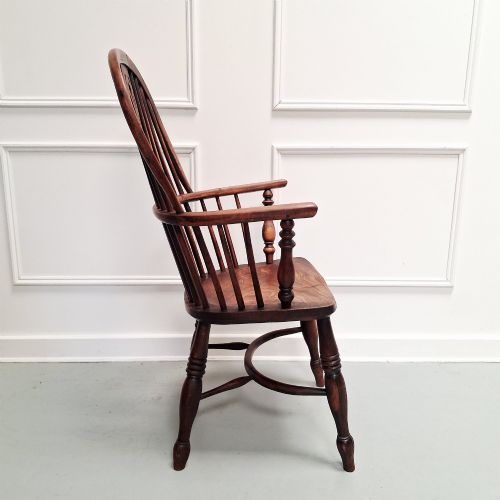
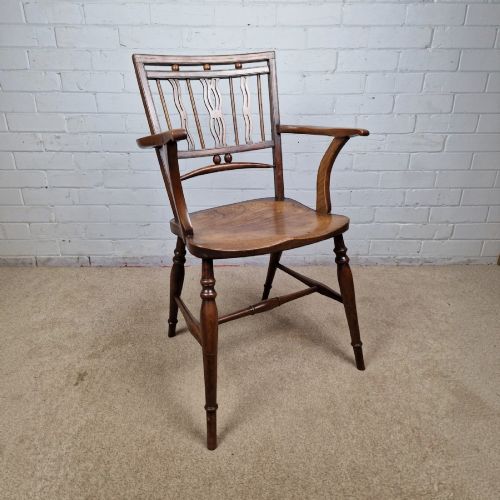
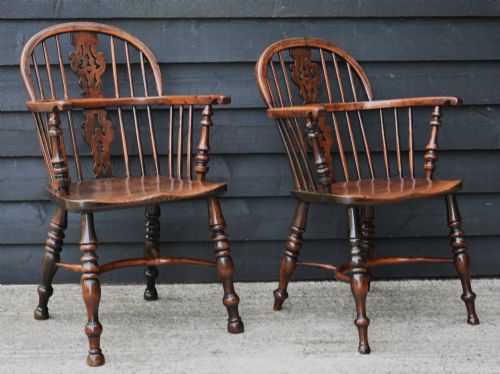
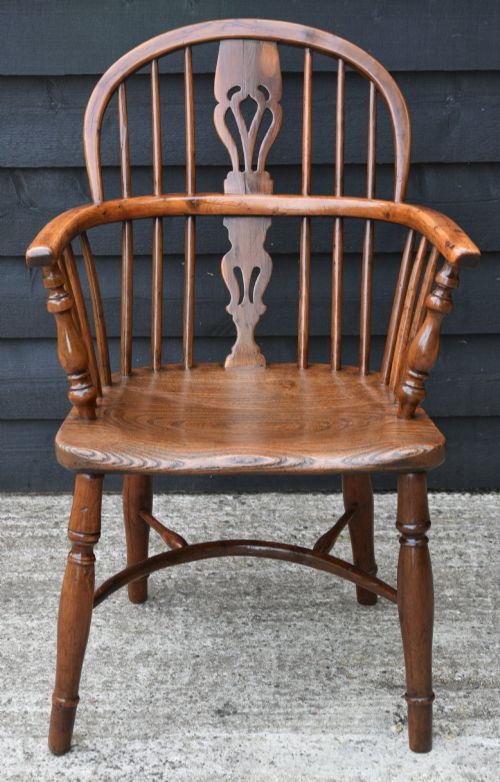
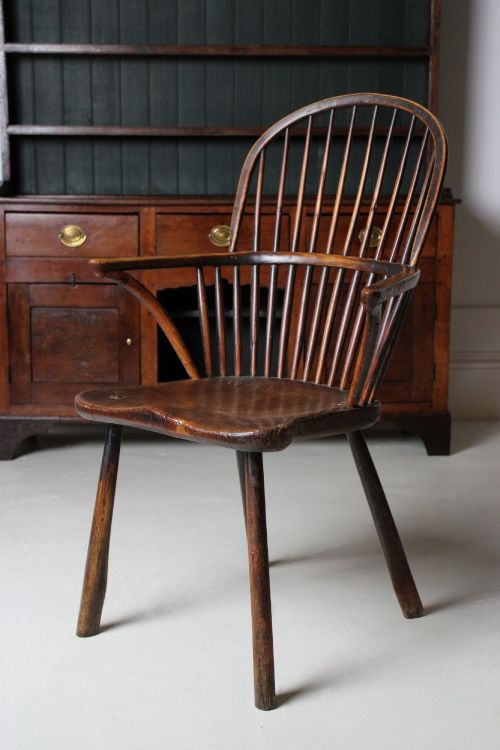
When you search for a brown yew windsor chair, you encounter seating built with a distinct stick-back structure where the components fit directly into a solid wooden seat. These pieces emerge from eighteenth, nineteenth and early twentieth century English workshops, ranging from simple vernacular forms to refined regional armchairs.
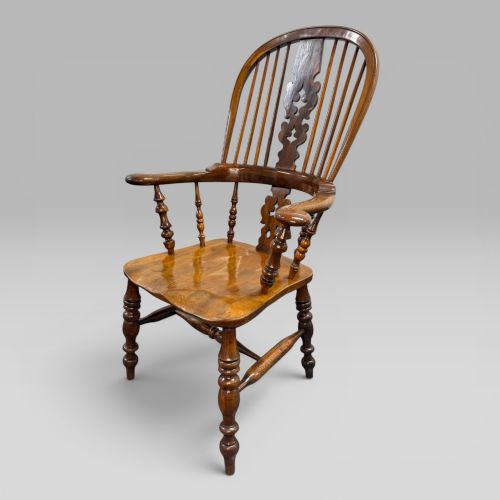
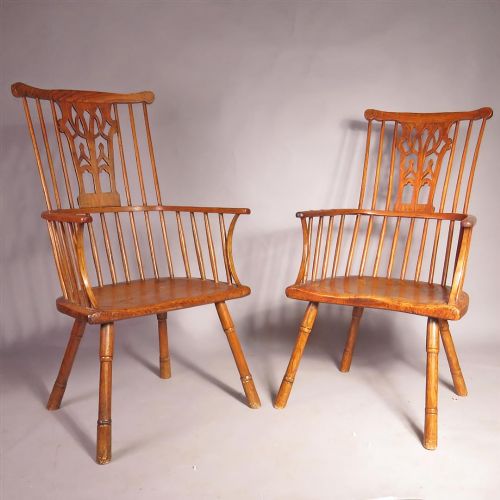
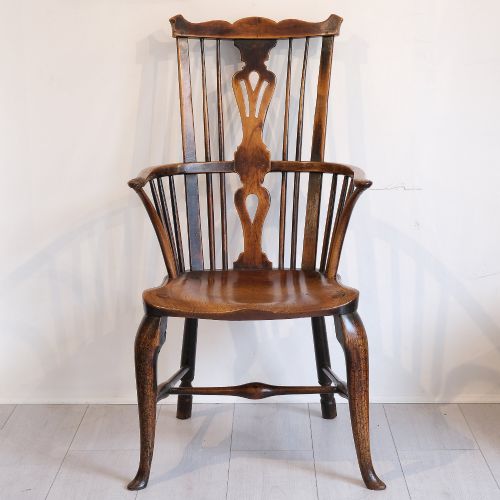
The most common examples on this page pair yew wood with elm seats, often taking the form of high-back, low-back, or comb-back armchairs. Makers also utilised ash, beech, fruitwood and oak, shaping regional variations such as Thames Valley and Yorkshire styles.
Materials and construction
Makers selected yew for its rich grain and flexibility, turning spindles and bending hoops while timber remained green. Seats were carved from solid elm blocks, providing a heavy and stable foundation that resisted splitting under the stress of daily use.
Individual parts were joined using traditional mortise and tenon methods alongside wedged spindles. Regional makers strengthened the legs further by incorporating crinoline stretchers, binding the underframe together for lasting rigidity.
Materials recorded across the inventory include yew wood, elm, ash, beech, oak and fruitwood.
Evaluating quality and character
The distinction between standard seating and superior examples rests on timber selection and sculptural fluency. Grain patterning within the yew wood, particularly burr figuring on back splats, elevates the visual presence of a piece.
Proportion and comfort define the better examples, where arms sweep outwards in continuous curves and turned spindles maintain balanced spacing. The depth of the carved elm seat and the integrity of the original joints govern the structural success of each chair.
J Spencer·Rockley Maker
The Brown Yew Windsor Chair Glossary
- Hoop back
- A continuous bentwood bow forming the back and arms of the chair. This steam-bent element distributes weight evenly down to the wooden seat.
- Crinoline stretcher
- A curved underframe brace linking the legs of a chair. It adds structural stability and takes its name from the shape of nineteenth-century hoop skirts.
- Comb back
- A Windsor chair style featuring a horizontal crest rail supported by vertical spindles that project above the main arm rail. This resembles the top of a traditional hair comb.
- Broad arm
- A chair design featuring widened, flat wooden armrests intended for writing or resting. These generous proportions are typical of regional English country seating.
- Carver
- An armchair designed to match a set of smaller dining chairs. They usually sit at the head of a table or serve as occasional parlour seating.
Brown Yew Windsor Chair: Frequently Asked Questions
What is a brown yew windsor chair?
A brown yew windsor chair is a traditional wooden seat featuring a stick-back construction where turned spindles connect a solid elm seat to a bentwood hoop or comb.
These chairs developed through English regional vernacular traditions, combining various native hardwoods like yew, ash and beech to create sturdy, ergonomic seating.
How do I date a windsor chair?
Dating relies on examining construction techniques, wood species combinations, and stylistic evolution from eighteenth-century comb backs to nineteenth-century high-back and low-back variants.
Early pieces often display primitive regional traits and thicker character lines, while Victorian examples introduce more refined turnings and standardised assembly methods.
Where were these chairs made?
These chairs originated across various English regions, with distinct stylistic groups emerging from the Thames Valley, Yorkshire, and other rural cabinet-making centres.
Local timber availability influenced production, leading workshops to combine yew upper frames with durable elm seats and ash or beech underframes.
How do I live with a windsor chair?
These chairs integrate easily into both modern and traditional interiors as desk chairs, reading seats, or standalone accents in a hallway.
Position them away from direct heat sources and sudden humidity changes to protect the historic timber and maintain the stability of the traditional joints.