







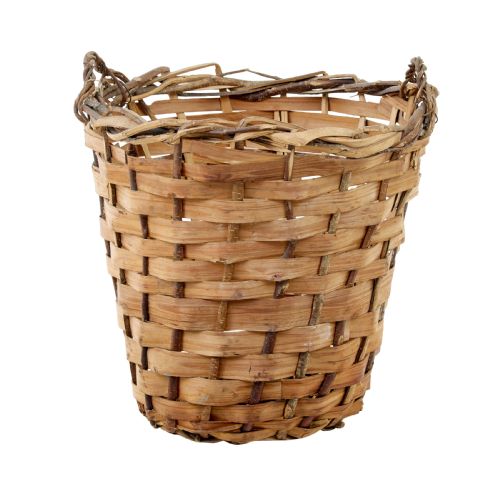
Brown Woven Basket
These brown woven basket pieces bring honest utility and texture into a room, forged from willow, cane, and bamboo across a century.
Brown Woven Basket
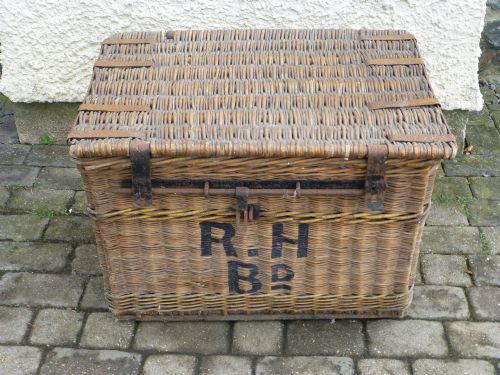
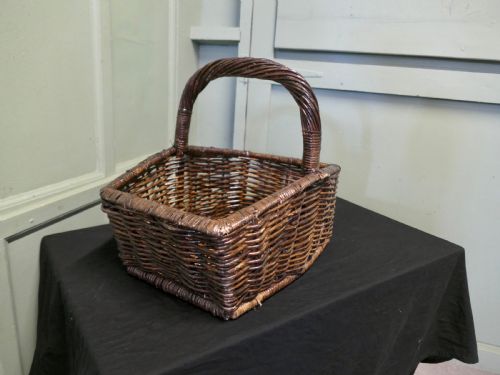
When you search for a brown woven basket, you are looking at practical storage and display vessels built to hold everything from French grapes to Japanese flowers. These pieces span the nineteenth century through the early twentieth century, taking forms such as industrial trunks, market hampers, and delicate floral arrangements.
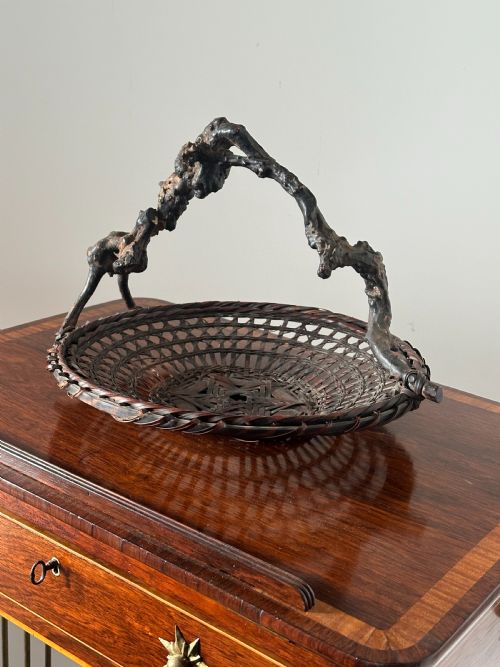
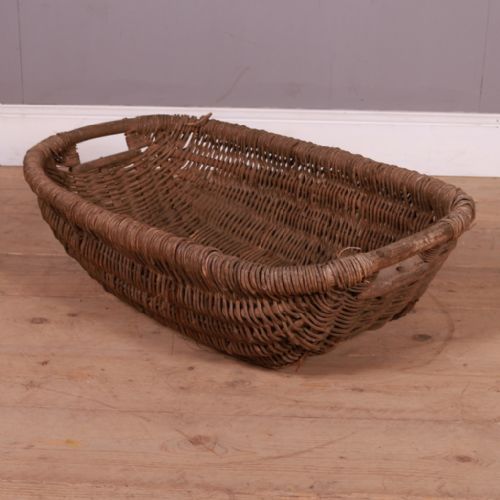
You are most likely to meet French harvest baskets and Japanese flower baskets on this page, reflecting agricultural utility alongside delicate craftsmanship. The materials shift from sturdy European willow and cane to fine Asian bamboo and rattan.
How they were made
Makers utilised natural plant fibres such as willow, wicker, bamboo, cane, and rattan, weaving them tightly around structural frames of wood, iron, or metal. The resulting vessels range from heavy industrial trunks to light, organic forms shaped for specific domestic and agricultural tasks.
Techniques varied by region, combining European stake-and-strand work for heavy agricultural hods and trunks with intricate Japanese binding for bamboo flower vessels. Metal or iron elements occasionally reinforced rims and handles, ensuring the baskets could bear heavy loads of fruit, logs, or textiles.
Brown Woven Basket Retail Price Guide 2026
Typical asking prices for brown woven basket among the pieces listed under this phrase on Sellingantiques today, from the lower quarter to the upper quarter. They describe what is for sale here now, not the wider market.
The listings span the nineteenth century up to the 1930s, utilising willow, wicker, bamboo, cane, rattan, wood, and iron.
What varies in quality
Quality rests in the tightness of the weave, the integrity of the natural materials, and the survival of original structural framing. Pieces that retain their intended form under heavy use demonstrate superior underlying construction.
The sophistication of the shaping distinguishes utilitarian farm carriers from refined decorative pieces. Finer examples display meticulous handling of bamboo or cane, whilst robust industrial trunks rely on sheer density of willow and iron reinforcement.
Hozan
The Brown Woven Basket Glossary
- Wicker
- A method of weaving flexible materials into vessels or furniture. It describes the technique rather than a specific plant.
- Ikebana
- A Japanese flower arranging basket designed to hold seasonal stems. These pieces often feature complex bamboo construction.
- Hotte
- A traditional French harvest basket designed to be carried on the back. These large containers were utilised for gathering grapes during the vintage.
- Cane
- The peeled, inner core of rattan palms utilised for flexible binding and weaving. It offers high tensile strength for structural handles and rims.
Brown Woven Basket: Frequently Asked Questions
How were French harvest baskets used?
French harvest baskets and grape hods were carried by agricultural workers during the vintage to collect fruit from the vines. Their robust construction allowed them to withstand heavy daily loads in the fields.
Over time, these utilitarian vessels transitioned into decorative home storage pieces. Today, owners utilise them to hold logs, blankets, or laundry.
How do I date an antique basket?
Dating relies on examining the materials, construction methods, and overall wear patterns. Pieces from the nineteenth century often show heavier iron work and dense willow construction.
Later pieces from the early twentieth century introduce finer bamboo work and distinct regional styles. Comparing the form to documented agricultural or decorative types helps narrow the origin.
Can I use antique baskets for storage?
Antique baskets serve well for everyday storage when handled with reasonable care. Sturdy wicker trunks and mill baskets easily accommodate heavier items like books or logs.
Lighter bamboo and cane pieces suit dry storage such as textiles or decorative objects. Keeping them away from excessive moisture preserves the natural plant fibres.