

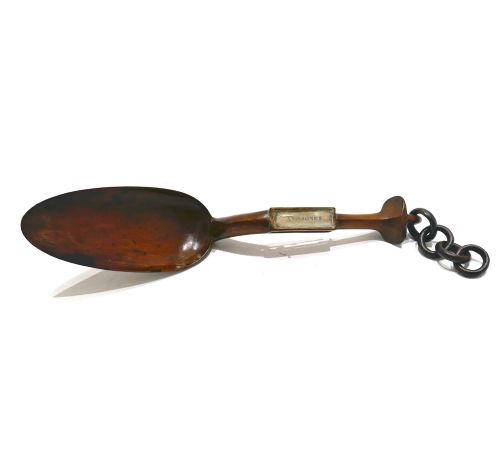
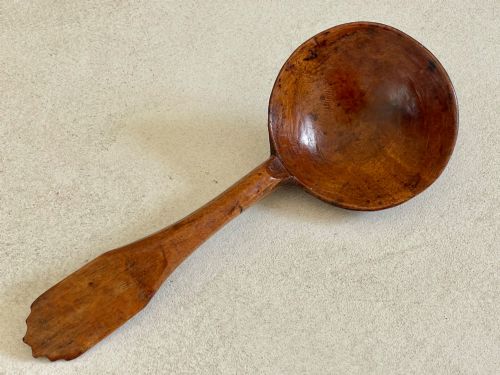
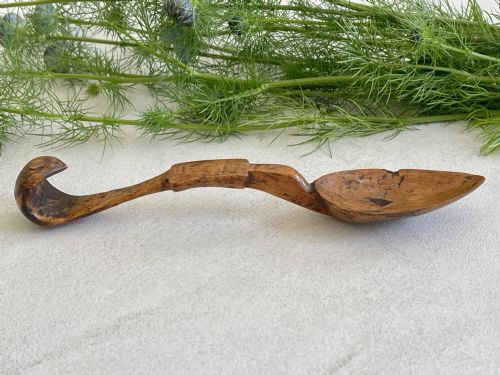


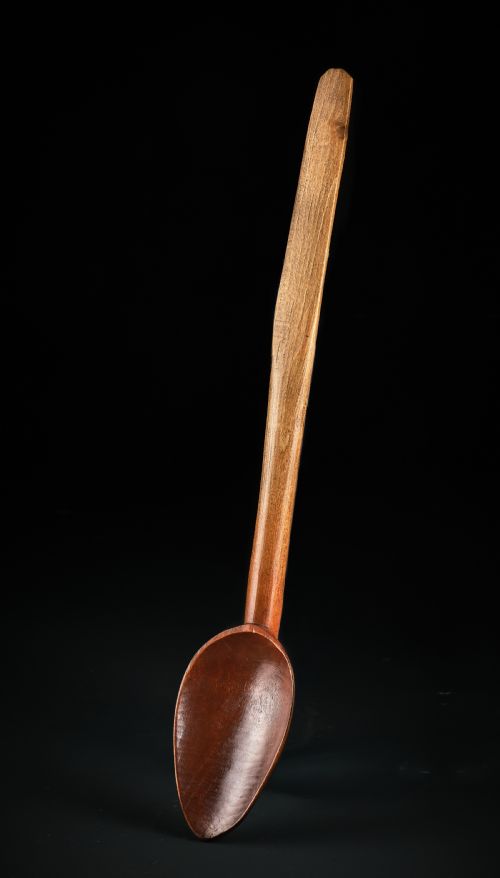


Brown Wooden Treen Spoon
These brown wooden treen spoons are practical domestic implements and carved folk art tokens, shaped by hand from dense timbers to serve daily life or mark courtships.
Brown Wooden Treen Spoon
A brown wooden treen spoon encompasses small utility eating utensils, deep kitchen ladles and carved lovespoons originating across domestic and regional traditions. When exploring this selection, buyers frequently encounter pieces fashioned from dense timbers during the eighteenth and nineteenth centuries.
The objects span practical kitchenalia such as basting spoons and scoops alongside decorative folk art pieces including lovespoons and christening spoons. Regional styles from Welsh, Scandinavian and Swiss traditions shape the distinctive profile of these carved wooden items.
Makers shaped these spoons for specific domestic uses, ranging from table service and sugar handling to complex courtship gifts adorned with engraved details and hook terminals. Fruitwood and sycamore predominate among the surviving examples gathered here.
How they were made
Craftsmen carved these spoons directly from solid blocks of timber using hand tools such as gouges and knives to achieve the bowl and handle contours. Fruitwood, beech and sycamore provide the dense, close-grained surface necessary for shaping smooth utility implements and delicate handles.
Certain utilitarian ladles incorporate alternative materials, combining turned coquilla nut with silver mounts and wooden treen handles for punch or toddy service. Engraved decoration relies on precise incised lines cut into the surface of fruitwood to record dates, initials or folk motifs.
Brown Wooden Treen Spoon Retail Price Guide 2026
Typical asking prices for brown wooden treen spoon among the pieces listed under this phrase on Sellingantiques today, from the lower quarter to the upper quarter. They describe what is for sale here now, not the wider market.
The listings span the eighteenth, nineteenth and early twentieth centuries, featuring regional folk art from Wales, Scandinavia and Switzerland alongside standard Georgian utility forms.
What varies in quality
Quality rests upon the proportion and balance of the carved form, where fluid handle curves and well-proportioned bowls demonstrate confident tool work. Thicker, heavy-handed carving yields clumsy utility shapes, while superior examples display crisp detailing and well-defined terminals.
The depth of the patina and the condition of the wood surface distinguish exceptional pieces from ordinary utilitarian survivors. Frequent handling over generations develops a deep, lustrous warmth across fruitwood and sycamore that mechanical cleaning diminishes.
The Brown Wooden Treen Spoon Glossary
- Treen
- Small handmade wooden domestic objects produced before the widespread adoption of modern plastics and mass manufacturing. This encompasses everything from spoons and ladles to bowls and small scoops.
- Lovespoon
- An elaborate carved wooden spoon traditionally presented as a token of affection or courtship in folk art traditions. Welsh examples frequently feature complex pierced decoration and symbolic motifs.
- Fruitwood
- Timber derived from fruit-bearing trees such as apple, pear or cherry, prized by turners and carvers for a fine, even grain. It takes a smooth finish and develops a rich patina over time.
- Coquilla nut
- The hard, aromatic seed of the Brazilian palm Leopoldina piassaba, resembling vegetable ivory. Carvers utilised it for small turned vessels and luxury toddy ladle bowls during the eighteenth century.
- Basting spoon
- A large utility spoon designed for culinary service and basting roasting meats in the kitchen. Georgian examples often feature sturdy hardwood construction to withstand heavy domestic use.
Brown Wooden Treen Spoon: Frequently Asked Questions
What is a brown wooden treen spoon?
A brown wooden treen spoon is a hand-carved utility utensil or decorative folk art token fashioned from timbers such as fruitwood or sycamore. These objects range from practical kitchen ladles to intricately carved lovespoons originating in regional traditions.
Craftsmen produced them for everyday domestic tasks or as sentimental gifts during the eighteenth and nineteenth centuries. The use of dense hardwoods allowed these spoons to survive generations of handling.
How were old wooden spoons used?
Historic wooden spoons served a variety of domestic purposes, including food preparation, table service and specific culinary tasks like basting roasts or scooping sugar. Larger ladles handled liquids such as punch or broth in busy kitchens.
Decorative variants like lovespoons and christening spoons functioned primarily as sentimental or ceremonial gifts rather than daily eating utensils. Their intricate carving reflected personal affection or important family milestones.
How should I care for antique treen?
Antique treen requires stable indoor humidity away from direct heat sources and strong sunlight to prevent the timber from splitting or warping. Gentle dusting with a dry cloth maintains the surface without stripping the historic patina.
Avoid washing historic wooden spoons in water or applying modern synthetic polishes. Natural beeswax applied sparingly can nourish dry fruitwood surfaces when necessary.
What woods are common in antique spoons?
Makers most frequently selected close-grained hardwoods like fruitwood, sycamore, beech and cherry for carving spoons and ladles. These timbers offered the density required to shape thin bowls and slender handles without snapping.
Uncommon materials occasionally appear in specialised utility items, such as imported coquilla nut paired with silver mounts on drinking ladles. Each timber dictates the natural brown tone and texture of the finished piece.